
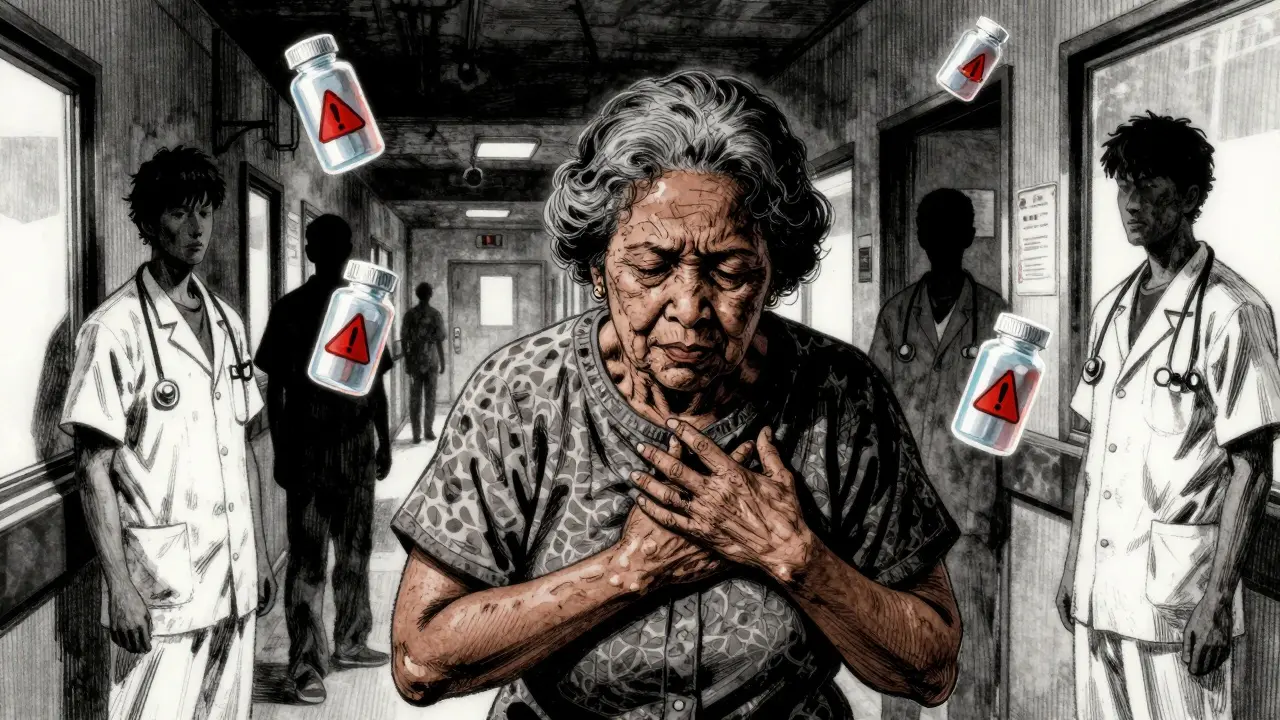
Every year, tens of thousands of people in the U.S. are harmed or die because of medication errors - and the people most at risk aren’t random. They’re often Black, Hispanic, elderly, non-English speakers, or low-income patients. These aren’t accidents. They’re symptoms of broken systems that ignore who patients are and how they experience care.
Medication Errors Don’t Affect Everyone Equally
A study across five NHS hospitals in 2021 found that patients from certain racial and ethnic groups had far fewer medication incidents reported - not because they made fewer mistakes, but because their concerns were ignored, misunderstood, or dismissed. Black, Hispanic, and Asian patients were significantly less likely to have their medication concerns documented, even when they reported problems. Why? Language barriers. Cultural mistrust. Clinicians assuming patients don’t understand their meds. Or worse - assuming they don’t care enough to speak up.
This isn’t just about communication. It’s about power. When a patient says, ‘I feel dizzy after taking this pill,’ and the doctor says, ‘That’s normal,’ without checking the dose or reviewing their full history, that’s a safety failure. And it happens more often to people of color. A 2024 study in JAMA Network Open found that implicit bias leads clinicians to prescribe fewer pain medications to Black patients, misjudge their ability to manage complex regimens, and overlook warning signs because they assume the patient won’t follow through.
Who Gets Tested? Who Gets Help?
New drugs are approved every year. But who are they tested on? From 2014 to 2021, Black Americans made up only one-third of the participants in clinical trials for conditions they suffer from at higher rates - like hypertension, diabetes, and certain cancers. The result? Drugs are approved based on data from mostly white patients. That means side effects, dosing guidelines, and safety warnings may not apply to others.
Take the 2021 U.S. Preventive Services Task Force decision on colorectal cancer screening. Black Americans have the highest rates of death from this cancer. But because there wasn’t enough data from Black participants in past studies, the task force couldn’t issue specific screening recommendations for them. That’s not science. That’s neglect.
And even when new, safer medications become available, cost blocks access. In 2022, nearly 19% of Hispanic Americans and 11.5% of Black Americans were uninsured. For White Americans, it was 7.4%. A life-saving medication that costs $500 a month might as well be science fiction if you’re working two jobs and skipping meals to pay rent.
Why Reporting Doesn’t Work for Everyone
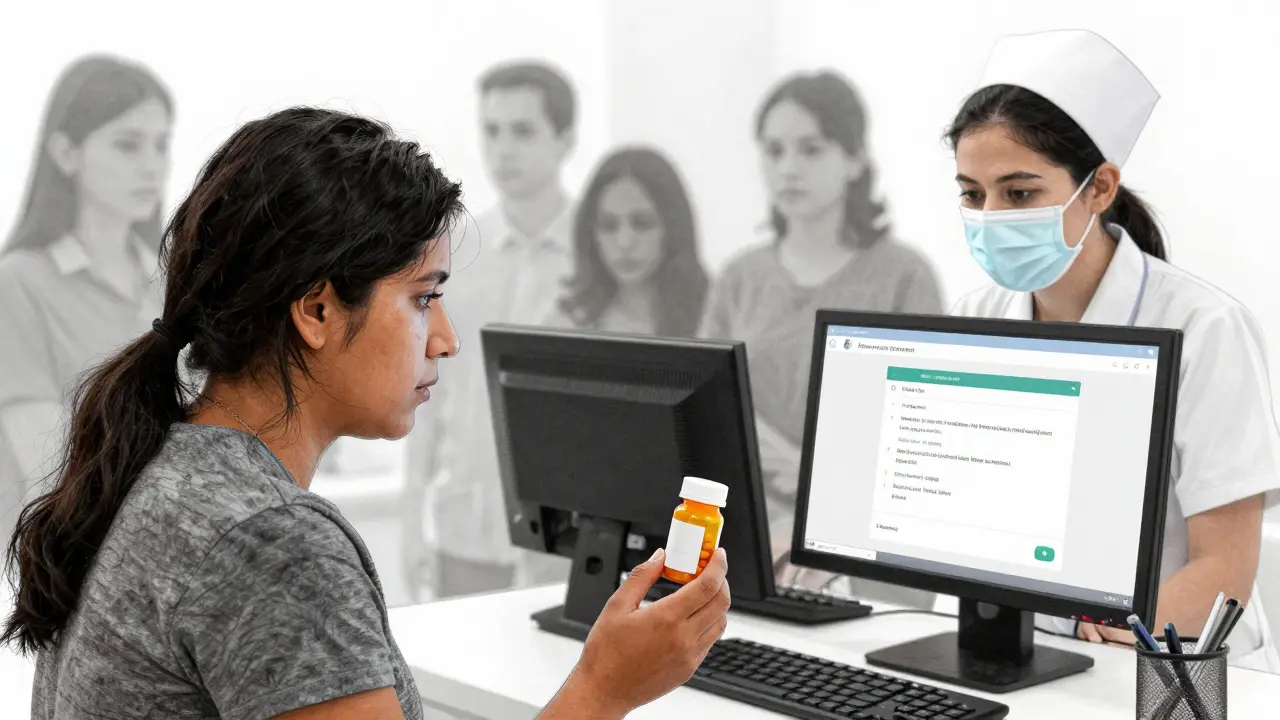
Health systems rely on incident reports to fix problems. But if patients don’t report errors, the system thinks everything’s fine. Why don’t they report? Many don’t know they can. Others fear being labeled as ‘difficult’ or ‘noncompliant.’ Some, especially immigrants, don’t trust the system after past experiences with discrimination or deportation threats.
One patient on Reddit shared how her elderly mother, who spoke only Spanish, was given the wrong dose of blood pressure medication. The nurse didn’t have an interpreter. The mother didn’t understand the warning labels. She didn’t say anything - she thought the dizziness was normal aging. Three days later, she had a stroke. No incident report was filed. No one was held accountable.
This isn’t rare. The BMJ Open Quality study from April 2025 confirmed: patients from minority groups are systematically underrepresented in safety data. That means the solutions hospitals design - new apps, checklists, staff training - are built on incomplete information. They’re designed for a patient who speaks English, has insurance, and trusts doctors. But that’s not most patients.
What’s Being Done - And What’s Missing
The World Health Organization launched ‘Medication Without Harm’ in 2017 to cut global medication-related harm by 50% in five years. It’s a strong framework. But only 32% of U.S. hospitals have formal programs to address racial and ethnic disparities in medication safety, even though 78% say it’s a priority.
The Joint Commission added a new patient safety goal in 2024: improve equity. That’s progress. But goals without action are just words. What’s missing? Concrete steps. Training that doesn’t feel like a box-ticking exercise. Real interpreters - not phone apps that freeze mid-sentence. Community health workers who speak the same language as the patients. Data systems that track errors by race, language, and income - not just by department or date.
Some hospitals are trying. One in Chicago hired bilingual patient navigators to follow up with high-risk patients after discharge. Another in Atlanta uses AI to flag when a patient’s medication list doesn’t match their reported symptoms - and cross-checks that against their race and language data. If a Black patient on a new anticoagulant reports fatigue but their chart shows no follow-up, the system alerts the care team. That’s innovation with equity built in.
The Path Forward: Real Change, Not Just Good Intentions
Solving this isn’t about more money. It’s about changing how we think. Medication safety isn’t just about pills and prescriptions. It’s about power, dignity, and trust.
Here’s what works:
- Train staff in cultural humility, not just cultural competence. Humility means listening more than lecturing. It means admitting you don’t know what your patient’s life is like.
- Use professional interpreters - not family members, not Google Translate. A 2023 study showed that using trained interpreters cut medication errors by 42% in Spanish-speaking patients.
- Collect and publish equity data. If you’re not tracking errors by race, language, or income, you can’t fix them. Hospitals should be required to report this data publicly.
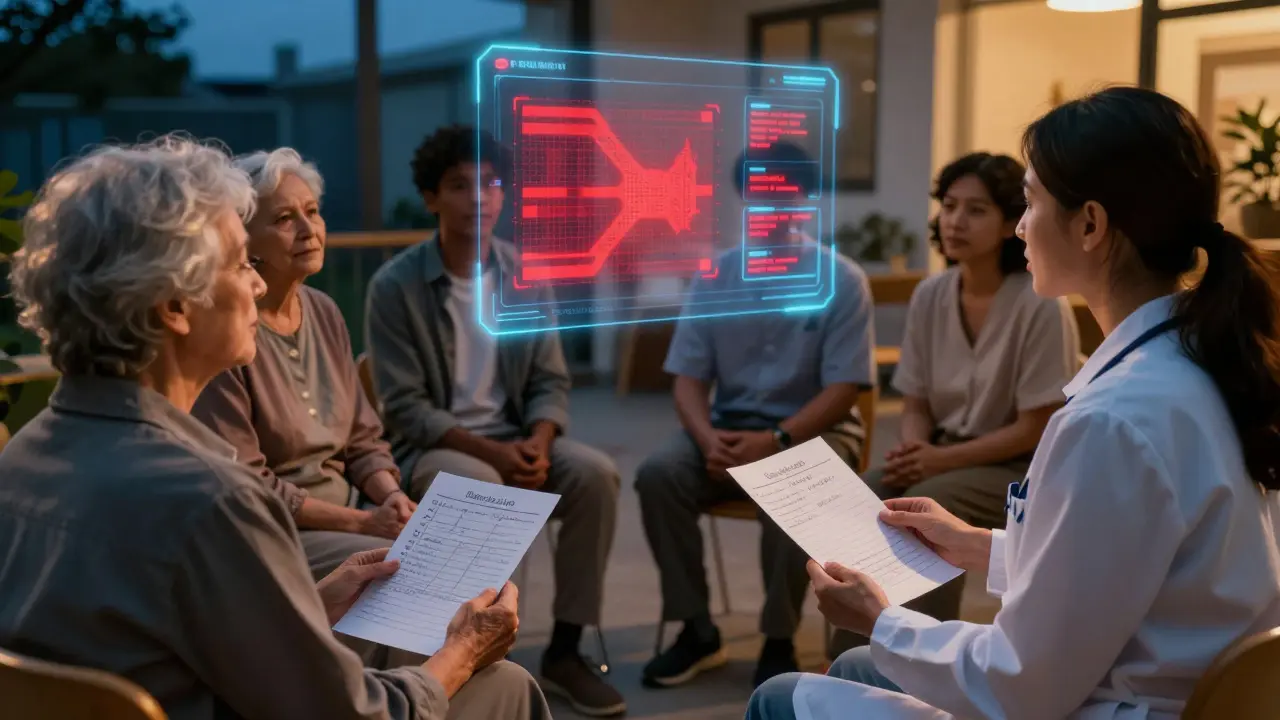
- Involve communities in designing solutions. Don’t hold focus groups in a hospital conference room. Go to churches, barbershops, community centers. Ask: ‘What scares you about your meds?’ Listen. Then act.
- Hold tech companies accountable. AI tools that predict patient risk can reinforce bias if trained on flawed data. If an algorithm says a Black patient is ‘less likely to adhere’ to treatment - that’s not prediction. That’s prejudice dressed up as math.
The global patient safety market is expected to hit $12.4 billion by 2030. But if that growth doesn’t include better safety for marginalized people, it’s not progress - it’s profit with a blind spot.
Why This Matters Beyond the Hospital
When a Black grandmother can’t get her blood thinner right because no one explained it in her language, her whole family suffers. Missed work. Lost income. Fear. That’s not a healthcare issue. It’s a justice issue.
Medication safety isn’t just about avoiding mistakes. It’s about making sure every person - no matter their skin color, income, or accent - has the same chance to live safely with their medicine.
The tools exist. The data is clear. The will? That’s what’s missing. And until we treat equity as a core part of safety - not a side project - the same people will keep getting hurt. And the system will keep pretending it didn’t see it coming.
Himanshu Singh
December 31, 2025 AT 06:01man i never thought about how meds can kill people just bc they dont speak english 😔 my uncle in delhi had a stroke bc the doctor gave him the wrong dose and no translator was there... same shit here in the states. we gotta fix this.
Jasmine Yule
January 1, 2026 AT 15:52THIS. I work in ER and see this daily. A woman came in with a swollen leg-she’d been on warfarin for years but no one checked her INR because she ‘didn’t seem to understand.’ Turns out she’s bilingual but the nurse talked to her like she was a child. She cried. I cried. We need interpreters. Not apps. Not family. Real people. 🤍
Greg Quinn
January 2, 2026 AT 02:55It’s funny how we build algorithms to predict ‘noncompliance’ but never ask why someone might not take their meds. Is it the cost? The side effects? The fact that the pill bottle instructions are in a language they’ve never seen? We mistake silence for compliance, and then we blame the patient. The system isn’t broken-it was designed this way.
Lisa Dore
January 3, 2026 AT 09:40I’ve trained new nurses for 12 years and I tell them: ‘If you don’t know what your patient’s life looks like, you don’t know their meds.’ We need community health workers in every clinic-not as assistants, but as leaders. They know the culture, the fears, the slang for side effects. One lady in my town calls dizziness ‘the spins’-if you don’t know that, you miss the warning. Let’s stop pretending ‘cultural competence’ is a PowerPoint slide.
Sharleen Luciano
January 4, 2026 AT 03:08Let’s be real: most of these disparities aren’t due to bias-they’re due to incompetence disguised as systemic racism. You can’t fix a problem you refuse to measure. If you’re not tracking errors by zip code, income bracket, and literacy level, you’re not solving anything-you’re performing. And yes, I’m calling out every hospital that puts ‘equity’ on their annual report but still uses Google Translate for Spanish-speaking patients. Pathetic.
Henriette Barrows
January 5, 2026 AT 11:00My grandma’s doctor told her her dizziness was ‘just old age’-she was on 4 meds, none of which were reviewed together. She ended up in the hospital. We didn’t know she couldn’t read the labels. No one asked. No one checked. I’m so tired of being told ‘it’s not personal’ when it’s literally someone’s life. We need to stop waiting for policy. Start asking patients: ‘What scares you about your meds?’ and mean it.
Teresa Rodriguez leon
January 6, 2026 AT 20:28Why do we keep pretending this is about ‘health’ and not about who gets to live? People die because they’re poor, brown, or old. And the system doesn’t care. It’s not broken-it’s working exactly as intended. You want change? Stop patting yourselves on the back for ‘goals.’ Start firing people who ignore patients because they ‘don’t speak up.’
David Chase
January 7, 2026 AT 18:00STOP USING RACE AS AN EXCUSE!! This is about personal responsibility!! If you can’t read English, learn it!! Why are we rewarding people who don’t take initiative?? My grandma came here with nothing and learned English in 6 months-she took her meds, she lived!! Why can’t everyone just be like her?? #AmericaFirst #StopTheBias
Duncan Careless
January 8, 2026 AT 00:13David, your comment is not only wrong-it’s dangerous. This isn’t about laziness or lack of will. It’s about power. People don’t ‘choose’ not to learn English when they’re working 60 hours a week, raising kids, and scared of being reported. You’re not helping. You’re hurting. And if you really cared, you’d be advocating for interpreters, not blaming the sick.