
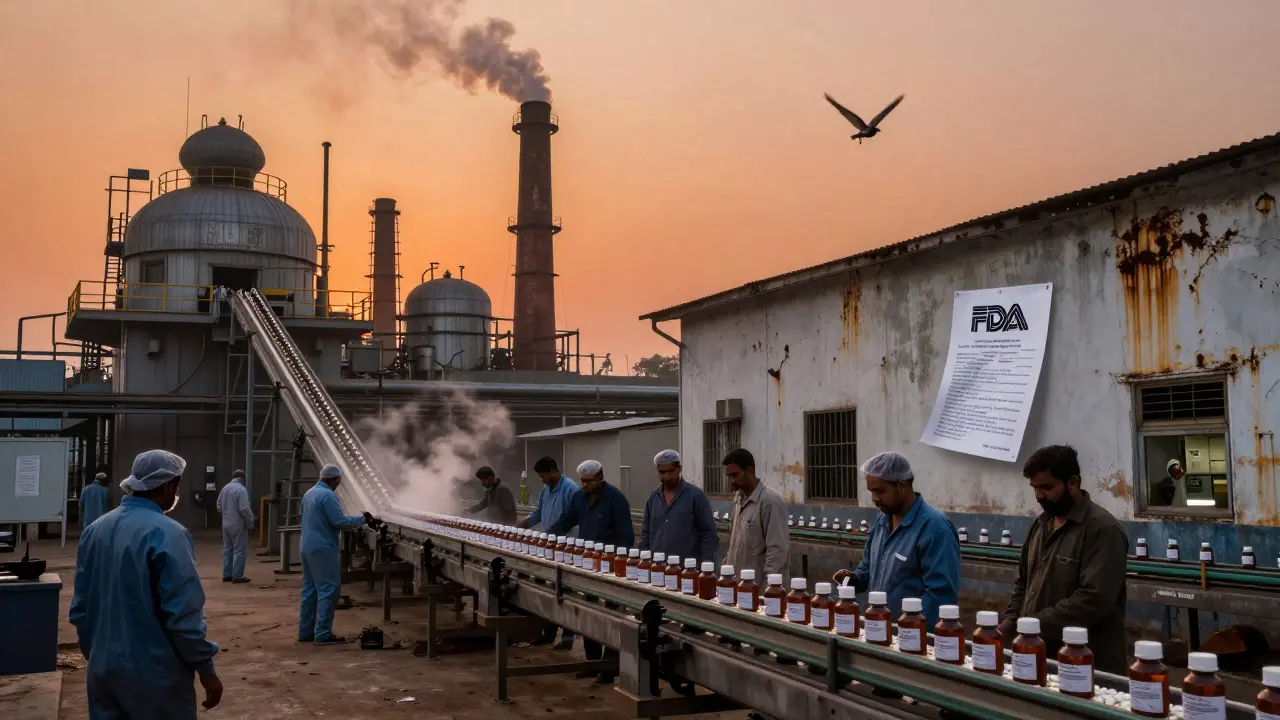
When you pick up a bottle of antibiotics, blood pressure pills, or diabetes medication, there’s a good chance it came from Asia. Not just any part of Asia - India and China together make up the backbone of the world’s generic drug supply. While Western countries focus on brand-name innovation, Asia has built an entire industry around making proven medicines cheaply, reliably, and at scale. But behind the numbers, there’s a deeper story: two giants with very different strategies, and a new wave of players stepping into the shadows.
India: The Volume King with a Quality Gap
India doesn’t just make generics - it moves them. In 2024, it exported $24.2 billion worth of pharmaceuticals, with 87% of that being generic drugs. That’s more than any other country on Earth. It supplies over 60% of the world’s vaccines and 40% of all generic drugs sold in the U.S. That’s not luck. It’s policy. Back in the 1970s, India rewrote its patent laws to let companies copy drugs as long as they changed the manufacturing process. That opened the floodgates. Companies like Sun Pharma and Cipla turned that loophole into a global advantage. Today, India has over 3,000 manufacturing facilities approved by the U.S. FDA - more than any other country. But here’s the catch: only 15% of those can handle advanced biologics. Most still churn out simple pills and capsules. That’s why India ranks third globally in volume but only 14th in market value. It’s selling a lot of low-cost stuff. The trade-off? Quality consistency. In 2024, the FDA issued 87 warning letters to Indian manufacturers - less than China, but still too many. One procurement manager in Germany told me his team tests three times as many batches from Indian suppliers because of unpredictable potency levels. What keeps India competitive? Speed and communication. If you need a custom formulation, Indian manufacturers often deliver in 14 days. Chinese suppliers? 30 to 45. U.S. pharmacy chains report a 60% drop in customer service issues when sourcing from India. And on Trustpilot, Indian pharma suppliers average 4.1 out of 5 - higher than China’s 3.8. That’s not accidental. It’s built into their culture. Customer support is available 24/7. Sales reps don’t wait for emails - they call.China: The API Powerhouse Moving Upmarket
China doesn’t make pills. It makes the stuff inside them. Roughly 70% of the world’s Active Pharmaceutical Ingredients (APIs) come from China. That’s the chemical foundation of every generic drug. India alone imports 68% of its APIs from China - despite spending billions trying to fix that with its Pharma Vision 2020 plan. The result? India still only produces 18% of its own API needs. China’s $80.4 billion pharmaceutical market in 2024 is bigger than India’s, and it’s growing faster in dollar terms. Why? Because China isn’t just selling cheap chemicals anymore. It’s moving into biologics - complex, high-value drugs like cancer treatments and insulin biosimilars. Between 2020 and 2024, 45% of new manufacturing plants built in China were for biologics. That’s a strategic pivot. While India is still stuck in volume mode, China is chasing margins. But quality remains a problem. In 2024, the FDA issued 142 warning letters to Chinese manufacturers - nearly double India’s. Some of those were for data manipulation, unclean facilities, or falsified test results. It’s why big buyers now use dual-sourcing: 68% of U.S. pharmacy chains get 40-60% of their generics from India and 25-35% from China. It’s not about trust - it’s about risk control. China’s advantage? Scale and cost. Chinese API suppliers are 20% cheaper than Indian ones. Their regulatory system is more centralized - 8 national agencies versus India’s 17 federal and state bodies. That means fewer delays once you’re approved. But getting approved? You need a local partner with 51% ownership. That’s a barrier most Western firms can’t jump over.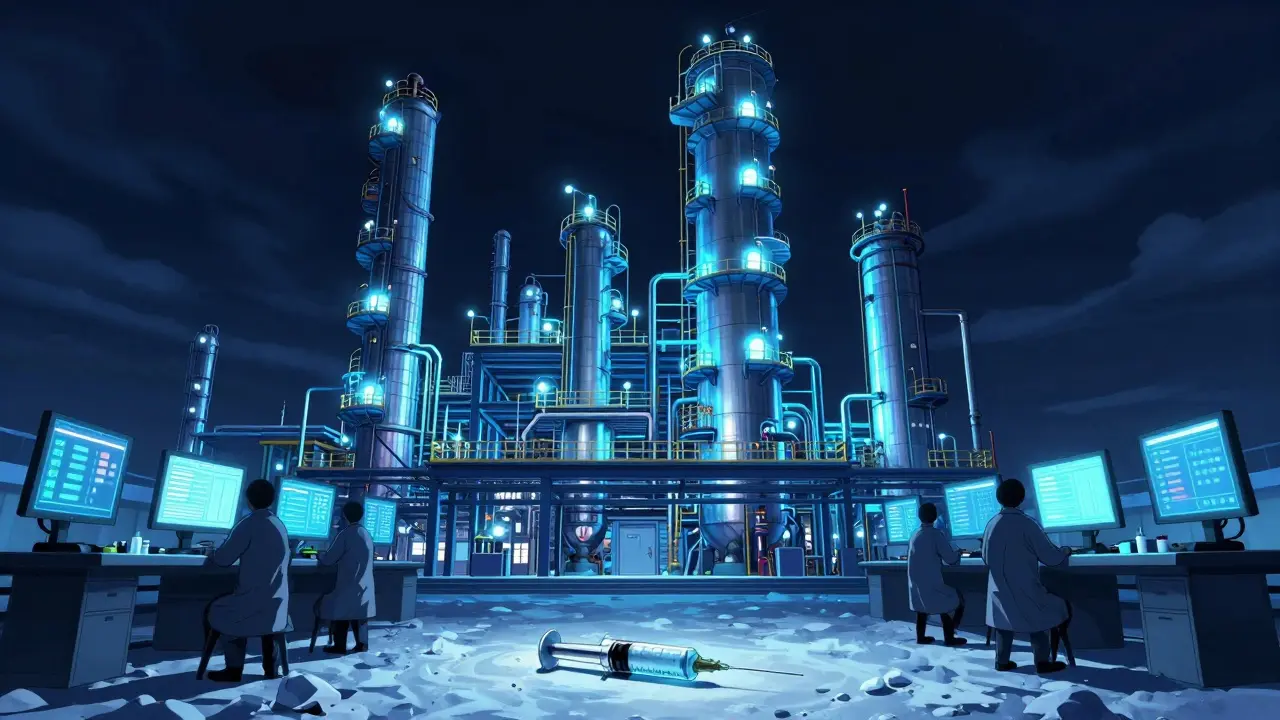
Emerging Economies: The Quiet Contenders
While India and China fight for dominance, smaller countries are carving out niches. Vietnam, for example, grew its pharmaceutical exports by 24.7% in 2024 to $2.8 billion - mostly antibiotic intermediates. It’s not making finished drugs yet, but it’s building the supply chain pieces that India and China need. Cambodia? It’s not even in the drug game. It’s assembling low-cost medical devices like syringes and IV sets, growing at 18% a year thanks to ASEAN trade deals. These countries aren’t trying to replace India or China. They’re filling gaps. Vietnam’s strength? Specialization. It focuses on one or two high-demand chemicals. Cambodia’s edge? Low labor costs and political stability. Neither has the scale, but both have lower regulatory friction. For a small U.S. distributor needing 500kg of a niche antibiotic precursor, Vietnam is faster and cheaper than waiting for a Chinese factory to clear customs.The Real Battle: Innovation vs. Self-Sufficiency
Both India and China are trying to move beyond being the world’s drug factories. India’s new Pharma 2047 plan promises $13.4 billion to cut API imports from 68% to 30% by 2030. Twelve new API parks are under construction. But can they catch up? China already controls the raw material. Without secure, high-quality API access, India’s ambitions are just paper. China’s answer? $22.8 billion under its Healthy China 2030 plan - 40% of that going to biologics R&D. By 2030, it wants 25% of its exports to be high-value biologics. Right now, it’s only 8%. That’s a massive leap. India? Only 1.2% of its exports are novel drugs. China’s is 8.5%. The innovation gap isn’t closing - it’s widening. The real winner? The global market. As both countries push for self-sufficiency, they’re flooding the market with excess API capacity. S&P Global warns this could trigger a 15-20% price drop in APIs between 2026 and 2027. That’s bad news for manufacturers, but great for hospitals and patients. More competition means cheaper drugs.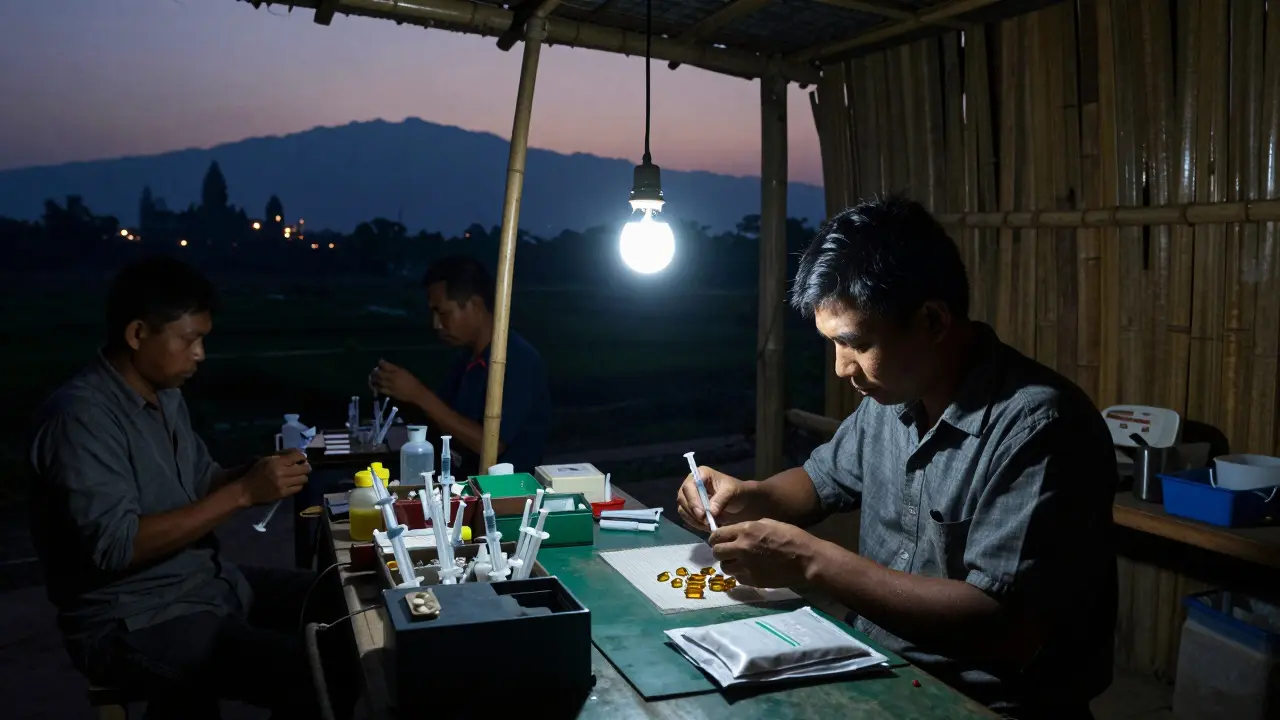
Matt Beck
January 6, 2026 AT 10:20So let me get this straight… India makes the pills, China makes the magic powder inside, and we’re all just lucky no one’s mixing rat poison by accident?? 😅💉 #PharmaWildWest
Kelly Beck
January 8, 2026 AT 07:04This is actually one of the most important stories no one talks about-imagine if your insulin or blood pressure meds suddenly disappeared because of a factory shutdown halfway across the world… it’s terrifying. But also kind of beautiful how these countries stepped up to keep people alive when the West focused on profit over people. 🌍❤️ We owe them so much more than just cheap prices.
Katie Schoen
January 9, 2026 AT 18:52China’s 142 FDA warning letters? Yeah, and India’s 87? Cute. Meanwhile, my local pharmacy just got a shipment from Germany and it cost $200 more. So… we’re paying more for less? 😏
Tiffany Adjei - Opong
January 9, 2026 AT 19:52Actually, the whole 'India is better at customer service' thing is a myth. I worked with a Mumbai supplier last year-email went unanswered for 11 days. Their '24/7 support' was a voicemail that played 'Namaste' on loop. Meanwhile, my Chinese supplier responded in 3 hours with a 17-page compliance dossier. So… who’s really better? 🤔
Lily Lilyy
January 11, 2026 AT 13:02God bless India and China for making medicine affordable. Everyone deserves to live. We should thank them every day. 🙏💛
Mukesh Pareek
January 12, 2026 AT 21:39Let’s be clear: India’s API dependency on China is a strategic vulnerability of epic proportions. The CDSCO’s inability to enforce GMP compliance across 3,000 facilities is not a 'quality gap'-it’s systemic regulatory failure. And your '24/7 customer service' narrative is just marketing fluff masking operational entropy. The real metric? Batch-to-batch CV in potency-India’s is 18.7%, China’s is 12.1%. That’s not 'faster,' that’s statistically noisier.
Jeane Hendrix
January 14, 2026 AT 03:36Wait so if China makes 70% of APIs and India makes 40% of U.S. generics… does that mean India is just a middleman? Like… a very big, very loud middleman? 😅 Also, why does everyone keep saying 'dual-sourcing' like it's a new idea? My grandpa had his meds shipped from two different places in the 80s.
Rachel Wermager
January 15, 2026 AT 05:49Actually, the '20% cheaper' claim is misleading. That’s pre-compliance cost. Once you factor in FDA audits, third-party testing, and shipping delays from port congestion, China’s effective cost per unit is only 7% lower than India’s. And don’t even get me started on the lead time for NMPA approvals-it’s 14 months minimum. So no, they’re not 'faster.' They’re just better at hiding delays.
Tom Swinton
January 17, 2026 AT 02:29I just want to say thank you to every single worker in these factories-especially the ones doing the night shifts, the ones who test batches after 12-hour days, the ones who pack pills while their kids sleep. This isn’t just business-it’s human life, every single pill. I cried reading this. We don’t talk about the people enough. 🫂
Leonard Shit
January 17, 2026 AT 23:43So… Vietnam’s growing 24%? Cool. But they’re still just making intermediates. Like… the Lego bricks before you build the castle. Meanwhile, Cambodia’s making syringes? That’s not pharma-that’s medical supply chain cosplay. 😴
Gabrielle Panchev
January 19, 2026 AT 03:45Wait, so the 'real winner' is the global market because prices are going to drop? But isn’t that just a recipe for a race to the bottom? Companies will cut corners even harder. And who pays? The patients. The FDA's 'Project BioSecure'? More paperwork, not more safety. This whole thing is just capitalism with better PR.
Katelyn Slack
January 19, 2026 AT 20:59ty for writing this. i learned a lot. also i think vietnam is underrated. they’re quiet but getting stuff done. 🤫