
What Is Cold-Induced Urticaria?
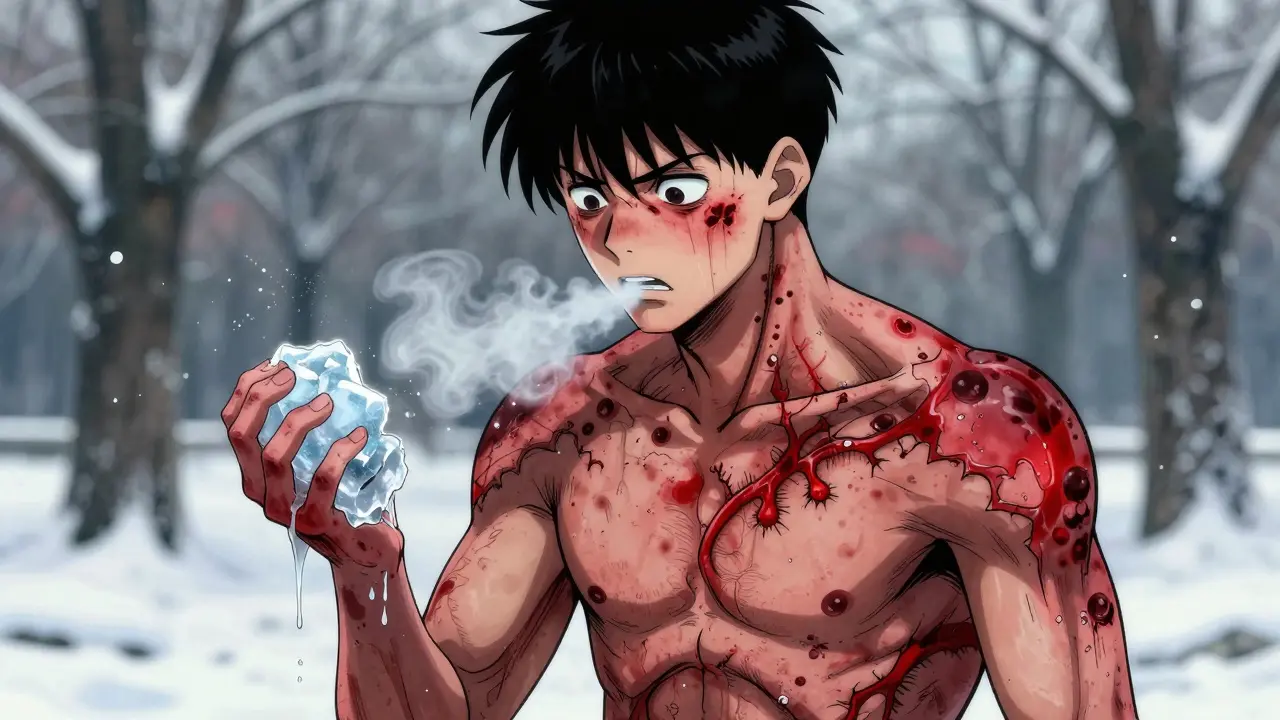
When your skin breaks out in itchy red welts after touching ice, stepping into a cold room, or even drinking a chilled soda, you might be dealing with cold-induced urticaria. This isn’t just a bad reaction to the weather-it’s a specific type of allergic response where your body overreacts to cold temperatures. Unlike seasonal allergies, this one is triggered by physical contact with cold, not pollen or dust. It’s rare, affecting about 1 in 2,000 people, but it can be serious-even life-threatening in extreme cases.
The condition shows up as hives, swelling, or both, usually within minutes after cold exposure. The itching and redness don’t always happen right away while you’re still cold. Often, they flare up as your skin warms back up. That’s why people sometimes think they’re fine in the snow, only to break out in hives minutes after coming inside.
How Does Cold Trigger Hives?
Your body has immune cells called mast cells, scattered under your skin. Normally, they help fight infections. But in cold-induced urticaria, cold temperatures make them release histamine and other chemicals by accident. That’s what causes the swelling, redness, and itching. It’s not an allergy to cold itself-it’s your immune system misfiring.
Most cases (about 95%) have no clear cause. These are called idiopathic. The rest are linked to something else-like a recent infection, an autoimmune condition, or even certain cancers. Rarely, it runs in families. In those cases, it’s not just hives-it’s part of a broader genetic disorder called familial cold autoinflammatory syndrome, which also causes fever and joint pain.
What Are the Symptoms?
Symptoms vary widely from person to person. Some people only get a few hives on their hands after holding a cold drink. Others break out all over after swimming in a cool pool. Common signs include:
- Itchy, raised red welts (hives) on skin exposed to cold
- Swelling of the lips, tongue, or throat after eating or drinking something cold
- Swelling of the hands when gripping cold objects
- Dizziness, headache, or rapid heartbeat during severe reactions
- Nausea, wheezing, or fainting in rare, full-body responses
One of the most dangerous situations is swimming in cold water. A sudden drop in skin temperature can trigger a massive release of histamine, causing low blood pressure, difficulty breathing, or even drowning. There are documented cases of people collapsing in lakes or pools and not being able to call for help.
How Is It Diagnosed?
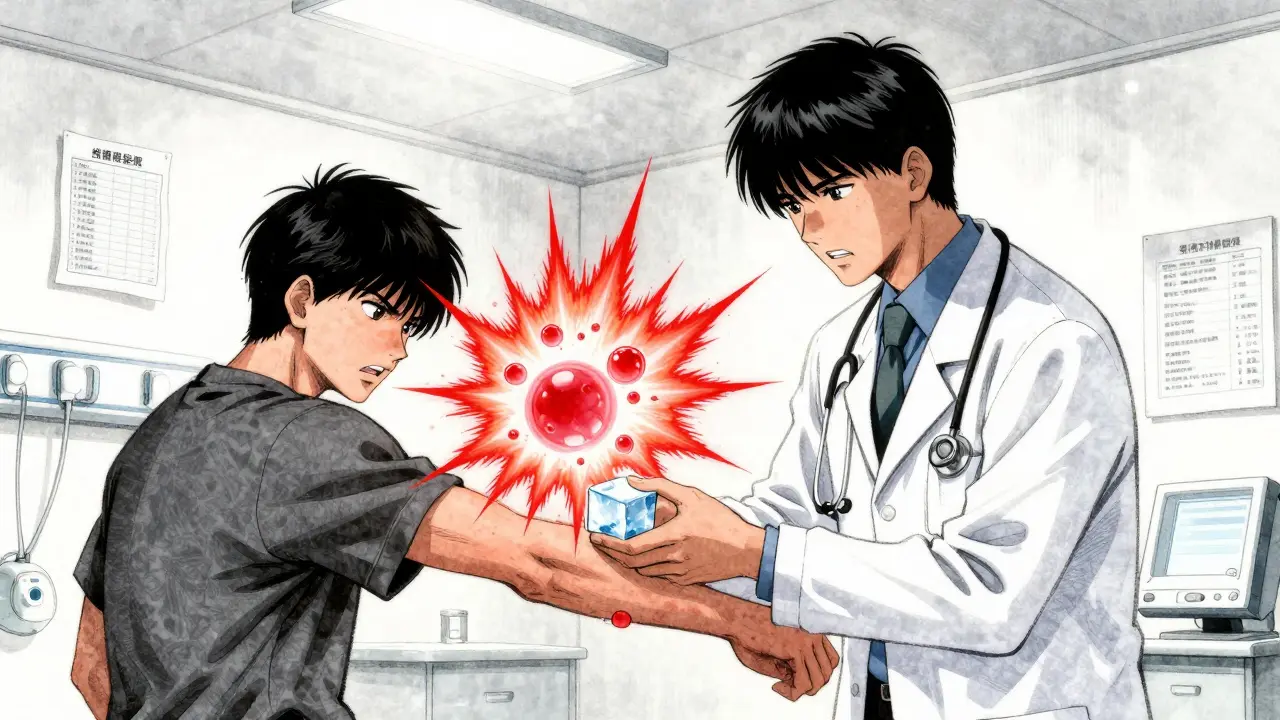
Doctors don’t rely on blood tests alone. The go-to test is simple: the ice cube test. A doctor places an ice cube on your forearm for 4 to 5 minutes. If you develop a raised, red welt in that area within 10 minutes after removing the ice, you likely have cold-induced urticaria. This test is accurate in over 98% of cases.
If your symptoms are severe or started after an illness, your doctor may order blood work to rule out underlying issues like cryoglobulinemia, hepatitis, or Lyme disease. Keeping a symptom diary helps too-note what you were doing, how cold it was, and how long it took for hives to appear. This helps identify your personal cold threshold. Some people react at 68°F (20°C), others only below freezing.
Treatment: What Actually Works
There’s no cure, but most people can manage symptoms effectively. The first step is always avoiding triggers-wearing warm clothing, avoiding icy drinks, and never swimming alone in cold water. But when avoidance isn’t enough, medication helps.
Second-generation antihistamines like cetirizine (Zyrtec), loratadine (Claritin), and desloratadine (Clarinex) are the standard first-line treatment. Many patients need higher doses-up to four times the usual amount-to get relief. That’s safe under a doctor’s supervision.
If antihistamines don’t work, the next option is omalizumab (Xolair). Originally used for asthma, this injectable drug blocks IgE, the antibody involved in allergic reactions. In clinical trials, it reduced symptoms by 60-70% in patients who didn’t respond to antihistamines.
For those with the rare genetic form (FCAS), treatments like anakinra (Kineret)-an interleukin-1 blocker-are used instead. These aren’t antihistamines; they target the root of the inflammation.
Emergency Preparedness
If you’ve ever had trouble breathing, swelling in your throat, or dizziness after cold exposure, you need an epinephrine autoinjector (like an EpiPen). Your doctor should prescribe one and teach you how to use it. Don’t wait until you’re in crisis to learn.
Always tell medical staff before any surgery or procedure. Cold IV fluids, chilly operating rooms, or even cold wipes can trigger a reaction. Hospitals now have protocols to warm fluids and maintain room temperatures above 70°F for patients with this condition.
Emerging Treatments and New Hope
Research is moving fast. A drug called berotralstat (Orladeyo), approved for a different condition called hereditary angioedema, showed a 58% reduction in cold urticaria symptoms in a 2023 trial. It’s now being studied for broader use.
Another promising area is cold desensitization. Some patients slowly expose themselves to colder temperatures over weeks-starting with cool showers, then colder ones. About 70% stick with it for the first 12 weeks, and some report fewer reactions over time. But it’s risky and should only be done under medical supervision.
Low-dose naltrexone, a drug used for chronic pain and autoimmune conditions, is also being tested. Early results show about 45% symptom improvement after six months.

Practical Daily Tips
Managing cold-induced urticaria isn’t just about medicine-it’s about lifestyle changes:
- Wear moisture-wicking base layers under winter clothes to keep skin dry and insulated
- Test water temperature before swimming-dip one hand in for 5 minutes first
- Avoid ice-cold foods and drinks, especially if you’ve had throat swelling before
- Use apps like Urticaria Tracker to log triggers and spot patterns
- Carry your epinephrine pen in a warm pocket, not a cold bag
- Never swim alone in water below 68°F
Wearable sensors like the Cold Alert device can now warn you when ambient temperatures drop below your personal threshold. In a 2022 trial, users reported 92% accuracy in predicting reactions.
Will It Go Away?
Good news: many people see improvement over time. About 35% of patients experience spontaneous remission within five years. Those who developed it suddenly after an infection are more likely to recover than those with long-term, chronic cases. But for others, it’s a lifelong condition that requires ongoing management.
Frequently Asked Questions
Can cold-induced urticaria be cured?
There’s no known cure yet, but symptoms can be controlled effectively with medication and lifestyle changes. Some people experience spontaneous remission within 5 years, especially if the condition started after an infection. For others, long-term management with antihistamines or biologics like omalizumab is needed.
Is cold urticaria the same as a regular allergy?
No. Regular allergies involve immune responses to proteins like pollen or peanuts. Cold urticaria is a physical urticaria-it’s triggered by temperature change, not an allergen. Your body reacts to cold as if it’s a threat, even though it’s not harmful.
Can I still swim if I have cold urticaria?
Swimming in cold water is dangerous and can trigger life-threatening reactions. If you want to swim, only do so in heated pools or warm ocean water. Always test your reaction by dipping a hand in first. Never swim alone. Carry your epinephrine pen on the poolside.
Why do hives appear when I warm up, not when I’m cold?
The cold triggers the release of histamine, but the actual reaction-swelling and itching-happens as your skin rewarms. This is because blood flow increases during rewarming, carrying more histamine to the surface and amplifying the immune response.
Are antihistamines safe long-term?
Yes, second-generation antihistamines like cetirizine and loratadine are safe for daily, long-term use. Many patients take them for years without side effects. Higher doses (up to 4x standard) are also considered safe under medical supervision. Always check with your doctor before adjusting your dose.
Can children get cold-induced urticaria?
Yes, though it’s less common than in adults. Most cases begin between ages 18 and 25, but children can develop it after viral infections. If a child breaks out in hives after cold exposure, see a pediatric allergist. Diagnosis and treatment are similar to adults, but dosing is adjusted for weight and age.
Lisa McCluskey
January 29, 2026 AT 14:27Worst part? People think I'm just being dramatic when I won't touch a cold soda.
Claire Wiltshire
January 30, 2026 AT 11:26Mike Rose
January 31, 2026 AT 08:47Niamh Trihy
February 2, 2026 AT 06:54Sazzy De
February 3, 2026 AT 10:56Natasha Plebani
February 4, 2026 AT 18:30owori patrick
February 6, 2026 AT 05:09Darren Gormley
February 6, 2026 AT 16:00Meanwhile, I just avoid cold. No meds. No apps. No epipens. Just don't go outside in winter. Simple. Why is this even a medical condition? You're not allergic to winter. You're just weak. 😂
Russ Kelemen
February 7, 2026 AT 05:59Diksha Srivastava
February 8, 2026 AT 13:03Adarsh Uttral
February 9, 2026 AT 08:15April Allen
February 11, 2026 AT 00:44