
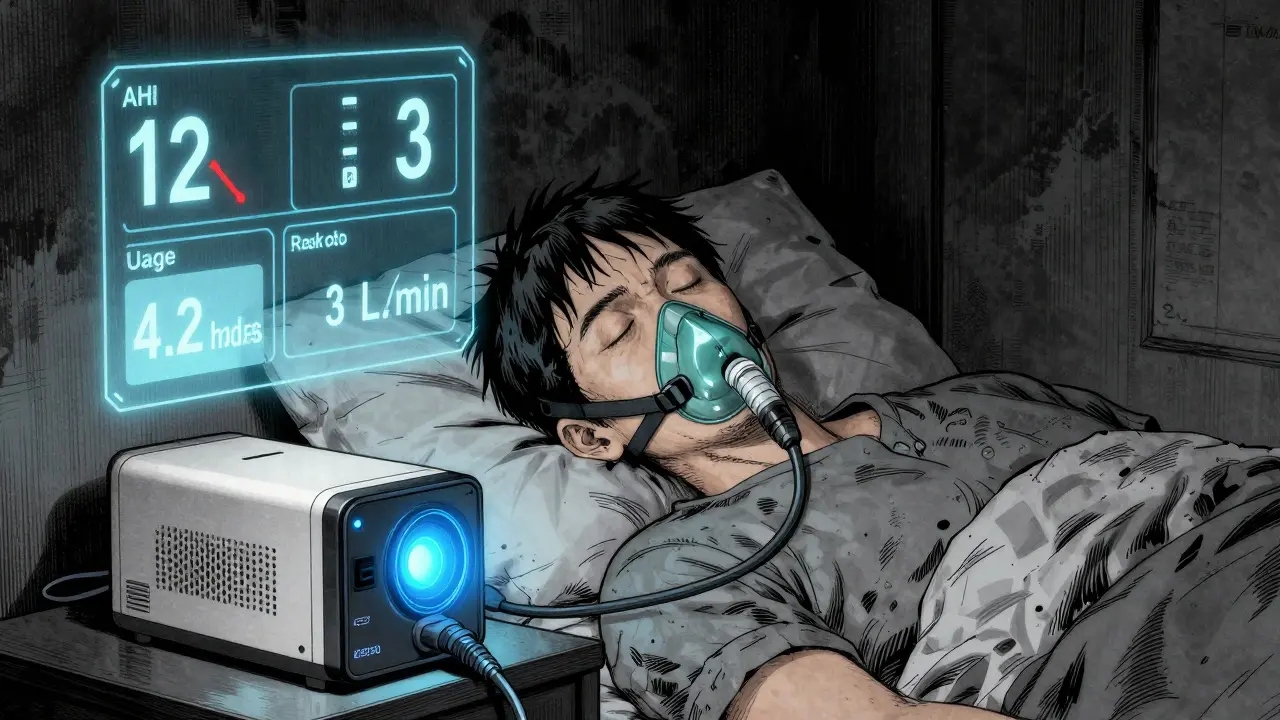
Getting a good night’s sleep shouldn’t feel like a battle. But if you have obstructive sleep apnea (OSA), your airway collapses every few minutes while you sleep, choking off oxygen and leaving you exhausted by morning. That’s where CPAP machines come in. They’re not glamorous, but they work. In fact, they’re the most effective non-surgical treatment for moderate to severe sleep apnea, cutting your breathing disruptions by over 80% when used correctly. Yet, nearly half of people who get prescribed a CPAP machine stop using it within three months. Why? It’s not because the machine doesn’t work-it’s because the mask hurts, the air feels forced, or the setup is too complicated. This guide cuts through the noise. We’ll break down the different types of CPAP machines, how to find a mask that actually fits, and real strategies that help people stick with it long-term.
What Kind of CPAP Machine Do You Need?
Not all CPAP machines are the same. Choosing the wrong type can make therapy harder than it needs to be. There are four main kinds, each designed for different needs.
Traditional CPAP delivers one steady pressure all night-like a constant breeze holding your airway open. It’s simple, reliable, and costs between $500 and $1,000. Popular models like the ResMed AirSense 10 and Philips DreamStation fall into this category. If your breathing pattern is stable and your doctor has already determined the exact pressure you need, this is a solid, budget-friendly choice.
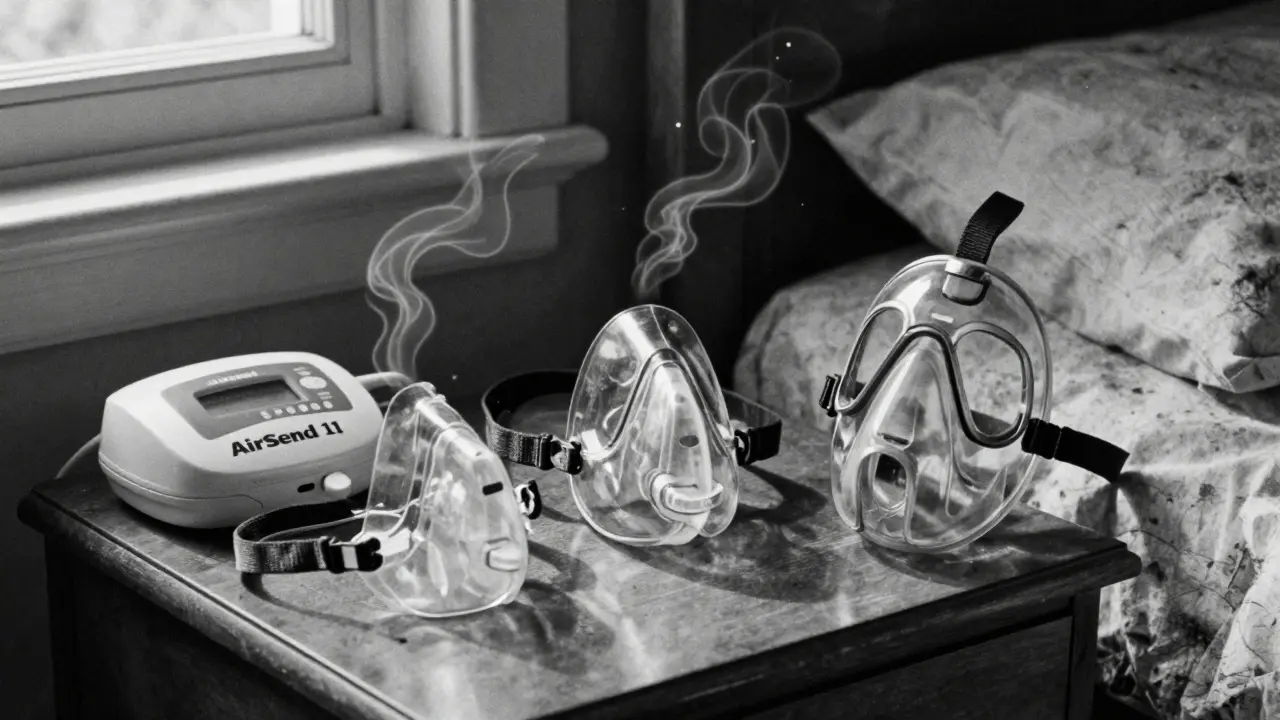
APAP (Auto-Adjusting CPAP) is smarter. It monitors your breathing every few seconds and adjusts pressure on the fly. If you snore, shift positions, or get congested, it responds. Most people don’t need the same pressure all night. APAP machines like the ResMed AirSense 11 AutoSet cost $1,700-$3,000, but studies show they improve adherence by 15% compared to standard CPAP because they feel more natural. Dr. Raj Dasgupta from USC says APAP is becoming the first-line choice for new patients-not because it’s better for everyone, but because it adapts to real-life sleep.
BiPAP gives you two pressures: higher when you inhale, lower when you exhale. This makes breathing feel easier, especially if you need high pressure (over 15 cm H2O) or have other lung conditions like COPD. It’s not for everyone, but for those who struggle with CPAP, BiPAP can be a game-changer. Prices range from $600 to $1,600. The Philips Respironics BiPAP Auto is one of the most common. But it requires extra testing to set up properly, adding $300-$500 to the initial cost.
EPAP devices are tiny, disposable valves you stick in your nostrils. They cost $50-$150 per month and only work for mild sleep apnea (AHI under 15). They’re great for travel or people who can’t tolerate masks, but they won’t fix moderate or severe OSA. A 2020 study in Chest Journal found they’re only 45% effective for serious cases, compared to 85% for CPAP.
Travel CPAPs like the ResMed AirMini ($650) are pocket-sized. They weigh less than a pound and fold into a purse. But they sacrifice features: no built-in humidifier, louder operation (52 dBA vs. 30 dBA on standard models), and fewer data tracking options. If you travel often and can carry a separate humidifier ($80 extra), it’s worth it.
Mask Fit: The #1 Reason People Quit
Most people think the machine is the problem. But 70% of therapy failures come from the mask-not the pressure.
There are four main mask types, and each suits different sleep habits:
- Nasal pillows: Tiny silicone cushions that sit at the nostrils. Best for side sleepers, people who wear glasses, or those who feel claustrophobic. Only 32% of users choose this, but they report the lowest leak rates and highest comfort scores.
- Nasal masks: Cover the nose only. Used by 45% of people. Good balance of seal and comfort. If you breathe through your nose and don’t move around much, this is the sweet spot.
- Full-face masks: Cover nose and mouth. Used by 18%-mostly mouth breathers or people with nasal congestion. But they’re bulkier, prone to leaks, and cause 35% more facial irritation than nasal pillows.
- Hybrid/oral masks: Rare. Used by 5% of users with severe nasal blockage. Often paired with a chin strap.
Getting the right fit isn’t about size-it’s about shape. Measure your nasal bridge width, cheekbone structure, and how your face contours when lying down. A poor seal causes 60% of leaks. ResMed says acceptable leak rates are under 24 L/min. Anything higher and you’re losing pressure.
Real users swear by specific fixes:
- u/NasalPillowFan on Reddit switched from a nasal mask to the AirFit P10 and cut their leak rate from 15 to 3 L/min.
- u/MaskMaster69 says using a CPAP pillow with cutouts for the mask reduces leaks by 40%.
- Try on masks at night, not in the morning. Your face changes when you lie down.
Don’t settle after one try. The Mayo Clinic says it takes 2-4 weeks to find the right fit-and 30% of people need 3+ fittings. Many providers offer 60-night trial periods. Use them.
How to Actually Stick With CPAP Therapy
Using CPAP for 4+ hours a night, 70% of nights, is the gold standard. Only 46% of users hit that mark. But it’s not impossible. Here’s how people who succeed do it.
Start slow. Don’t try to wear it all night on night one. Begin with 2 hours during the day while watching TV. Get used to the feel. Then move to bedtime. This builds tolerance faster.
Use the ramp feature. Almost all machines let you start at low pressure and slowly increase over 5-45 minutes. 75% of users who use this feature report better sleep onset. Set it to 20 minutes if you’re struggling to fall asleep.
Heat and humidity matter. Dry air is the #1 complaint. Heated humidifiers reduce dryness complaints by 50%. If your machine doesn’t have one, get one. Heated tubing keeps moisture from condensing and dripping into your mask. Users with heated tubing have 78% adherence vs. 52% without.
Track your data. Modern machines show you your AHI (breathing events), leak rate, and usage hours. Seeing progress-like your AHI dropping from 12 to 3-is motivating. ResMed’s myAir app gives personalized coaching and boosts adherence by 27%.
Fix leaks fast. If you wake up with mask marks or feel air blowing in your eyes, adjust it. A little tightening helps-but don’t over-tighten. That causes pressure sores. Use soft mask liners or silicone pads if your skin gets irritated.
Get support. Join online communities like r/CPAP. Read reviews on CPAP.com. Talk to your sleep tech. Most people who stick with CPAP had someone who didn’t let them quit.
What’s New in CPAP Technology (2025)
The field is moving fast. New models are smarter, quieter, and more comfortable.
ResMed’s AirSense 11 AutoSet (2023) uses AI to predict breathing disruptions before they happen-cutting AHI by 22% compared to older models. Philips’ DreamStation 3 runs at 25 dBA-quieter than a whisper. Transcend’s Micro 3 uses transnasal pressure, so there’s almost no facial contact. Fisher & Paykel’s SleepStyle has an “exhale relief” algorithm that drops pressure by up to 50% when you breathe out, making it feel like you’re breathing naturally.
Insurance and regulations are changing too. Starting in 2024, the FDA requires all new CPAP machines to include usage tracking. Medicare and Medicaid now only pay if you use the device at least 4 hours a night, 70% of nights. If you fall short, you lose coverage. That’s why data tracking isn’t just helpful-it’s essential.
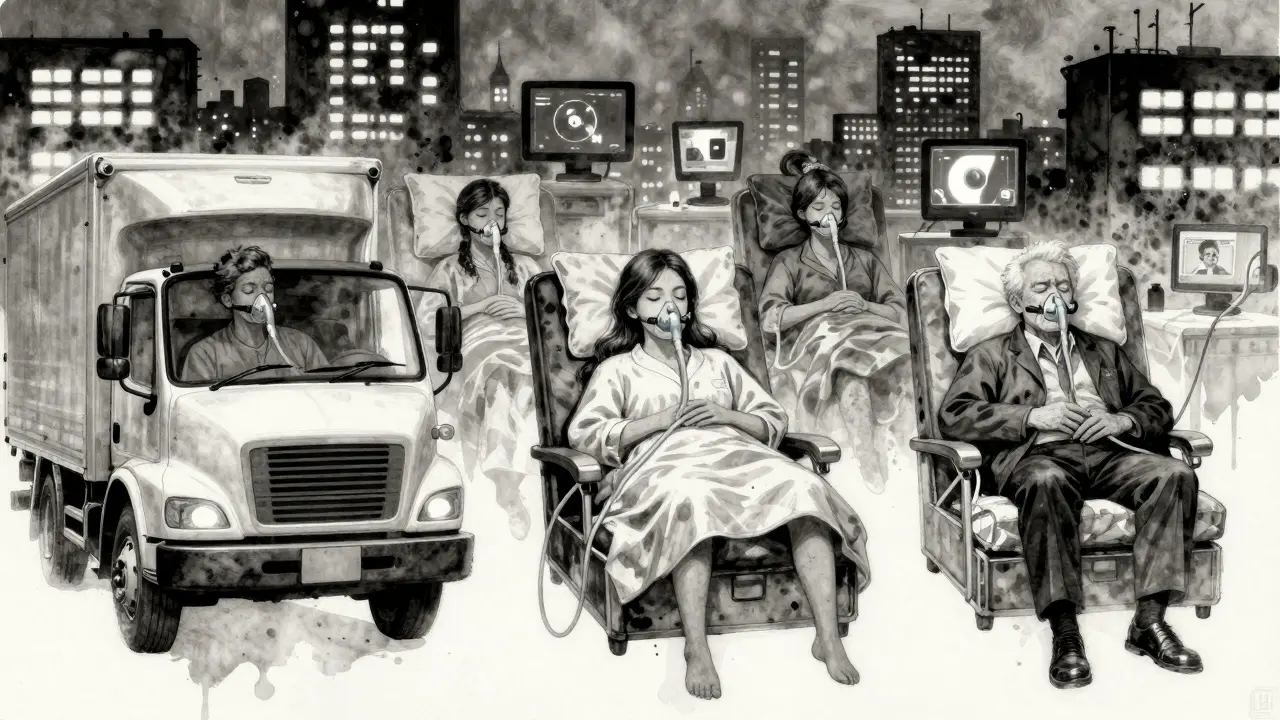
And the market is shifting. Younger users (18-45) are up 40% since 2020. Trucking companies now require CPAP for drivers with AHI over 20-and have seen 32% fewer accidents. Telemedicine lets you do remote titration, cutting follow-up costs by $200. The global CPAP market is expected to hit $10.8 billion by 2030.
When CPAP Isn’t Enough
Some people try CPAP for weeks, then give up. That’s okay. But don’t stop there.
If you’ve tried everything-different masks, pressures, humidifiers-and still can’t tolerate it, talk to your sleep specialist. You might have treatment-emergent central sleep apnea (TECSA), which affects 5-15% of CPAP users. That’s when your brain stops sending signals to breathe. The solution? ASV machines like the ResMed AirCurve 10 ($2,800), which respond to both obstructive and central events.
Other options include oral appliances (for mild cases), positional therapy (sleeping on your side), or weight loss. Surgery is rare and usually last-resort.
But here’s the truth: CPAP still works better than anything else for moderate to severe OSA. The problem isn’t the machine. It’s the setup. And with the right fit, the right settings, and the right support, most people can make it work.
Can I buy a CPAP machine without a prescription?
No. In the United States, all CPAP machines require a prescription. Even if you find one for sale online without one, it’s illegal and unsafe. Your doctor needs to confirm you have sleep apnea and determine the right pressure. Insurance won’t cover it without a prescription either.
How do I know if my CPAP mask fits right?
A good fit means no leaks, no red marks, and no discomfort. Check your machine’s leak rate-it should stay below 24 L/min. If you wake up with air in your eyes, a dry mouth, or facial sores, the mask isn’t sealing properly. Try adjusting the straps gently, switching mask types, or using a mask liner. Most providers offer free fittings-use them.
Why does my CPAP machine feel so loud?
Older models ran at 45-52 dBA, which is like a quiet conversation. Newer machines like the Philips DreamStation 3 are down to 25 dBA-quieter than a whisper. If yours is loud, check for a clogged filter, a cracked hose, or a poorly sealed mask. Clean the air filter weekly, replace hoses every 6 months, and make sure the mask seals snugly. Travel CPAPs tend to be louder because they’re smaller and less insulated.
Is APAP better than CPAP for beginners?
For many beginners, yes. APAP adjusts pressure automatically, so you don’t need a titration sleep study to find the perfect setting. It’s more forgiving if you snore, shift positions, or get congested. Studies show 15% higher adherence with APAP than CPAP. But if your doctor has already set a stable pressure and you sleep consistently, CPAP works just fine-and costs less.
What if I can’t afford a CPAP machine?
Most insurance plans cover 80% of CPAP costs after your deductible. If you’re uninsured, look for medical equipment suppliers that offer payment plans. Some nonprofits and sleep clinics provide rental programs or discounted devices. The CPAP Shop and others offer 60-night trials, so you can test before buying. Don’t give up-there are options. Your health is worth it.
How long does it take to get used to CPAP?
Most people need 2-4 weeks to adjust. Some take longer. The key is consistency. Start with short daytime sessions, use the ramp feature, and keep the humidifier on. Don’t quit after a few bad nights. Track your data. You’ll likely see improvement in your AHI and energy levels within a month.
Vikas Verma
March 6, 2026 AT 01:43CPAP adherence hinges on three pillars: mask interface, pressure dynamics, and behavioral conditioning. APAP outperforms CPAP in real-world settings due to its adaptive pressure algorithm, which mitigates positional obstructions and upper airway collapse variability. Humidification with heated tubing is non-negotiable-dry air induces mucosal irritation and non-compliance. Data-driven feedback loops via myAir or DreamMapper increase adherence by 27% through operant conditioning. Don’t optimize the machine-optimize the ritual. Consistency trumps perfection.
Sean Callahan
March 6, 2026 AT 17:37so i got my cpap like 3 months ago and i swear its the worst thing ever my face is all red and i keep waking up with air in my eyes and my wife says i sound like a dying seal lmao i just wanna sleep
Ferdinand Aton
March 8, 2026 AT 15:40lol you guys act like CPAP is the holy grail. Ever heard of oral appliances? They’re cheaper, silent, and you can still kiss your partner. I’ve had mild apnea for 8 years and never used a mask. My AHI is 6.5. The machine isn’t the solution-it’s the marketing.
Jeff Mirisola
March 9, 2026 AT 06:40Sean, I feel you. First week was brutal. But here’s what changed everything: switched to AirFit P10 nasal pillows, turned ramp to 25 mins, and got a CPAP pillow with cutouts. Leaks dropped from 28 L/min to 2. I’m now at 92% usage for 6 months. It’s not about the machine-it’s about the fit. You’re not broken. You just haven’t found your combo yet.
Ian Kiplagat
March 9, 2026 AT 11:56Mask fit > machine type. Full face = 35% more irritation. Nasal pillows = 89% comfort score. Try before you buy. Also-humidifier on. Always. 🌬️💧
Bridget Verwey
March 10, 2026 AT 21:51Oh sweet summer child, you think the machine is the enemy? Nah. The enemy is the $2000 bill and the 3-hour fitting appointment that took 4 tries. I had to beg my insurance for 3 different masks before one didn’t feel like a medieval torture device. Now I sleep like a baby. Also-yes, the ramp feature is magic. Use it. 🙃
Andrew Poulin
March 12, 2026 AT 11:57APAP is overhyped. If your pressure is stable, CPAP is cheaper and just as effective. Stop chasing gadgets. Get the right mask. Use the ramp. Breathe. That’s it. Stop overcomplicating it.
Patrick Jackson
March 13, 2026 AT 00:46Think about it: we’ve turned sleep-a natural, instinctive act-into a data-driven, machine-mediated ritual. We strap ourselves to plastic, monitor our breath like astronauts, and track our compliance like prisoners. Is this healing… or just another way we’ve outsourced our biology to corporate tech? The machine doesn’t cure apnea. It masks it. And maybe that’s okay. But we should ask: why did we get here? What broke our bodies before we needed this?
Adebayo Muhammad
March 14, 2026 AT 16:24Pranay Roy
March 15, 2026 AT 16:26Bro… you think this is about sleep? Nah. They gave you CPAP because you’re overweight. They don’t care if you sleep better. They care that you stop eating carbs. The machine is just a distraction. Lose 30 lbs. Sleep apnea vanishes. No mask. No cost. No drama. Why are you letting them sell you a $2000 bandaid for a diet problem?