

Millions of people take Ginkgo Biloba every year for memory, focus, or circulation. It’s one of the most popular herbal supplements in the world. But if you’re on a blood thinner - whether it’s warfarin, aspirin, clopidogrel, or a DOAC like apixaban - you need to pause and think before you keep taking it. The truth? The science isn’t clear. Some studies say it’s safe. Others warn of serious bleeding. And in real life, people have ended up in the ER because of this mix.
What Exactly Is Ginkgo Biloba?
Ginkgo biloba comes from the leaves of a tree that’s been around for over 270 million years - yes, it outlived the dinosaurs. The extract used in supplements is standardized as EGb 761, which means it contains a fixed amount of active compounds: 24% flavonol glycosides and 6% terpene lactones. This specific formula makes up about 70% of all Ginkgo supplements sold globally. It’s not some random herbal tea. It’s a concentrated extract, and it’s powerful.
People take it for brain health, leg pain from poor circulation, and even tinnitus. But here’s the catch: Ginkgo doesn’t just affect your brain. It also affects how your blood clots. And that’s where things get risky if you’re already on a blood thinner.
How Blood Thinners Work - And Why Ginkgo Might Interfere
Blood thinners aren’t one thing. They fall into two main groups:
- Antiplatelets - like aspirin and clopidogrel (Plavix). These stop platelets from sticking together to form clots.
- Anticoagulants - like warfarin, rivaroxaban (Xarelto), and apixaban (Eliquis). These slow down the chemical cascade that makes blood clot.
Ginkgo biloba has two possible effects that could make things dangerous:
- It may reduce platelet aggregation - meaning it makes platelets less sticky, just like aspirin does.
- It might interfere with CYP2C9, a liver enzyme that breaks down warfarin. If this enzyme slows down, warfarin builds up in your system, increasing bleeding risk.
That’s not just theory. A 2020 study in PLOS ONE found that Ginkgo was involved in 2.6% of clopidogrel prescriptions and 18% of DOAC prescriptions where the combination wasn’t clearly justified. In real-world use, people are mixing these without knowing the risk.
The Evidence Is Confusing - Here’s Why
Some studies say Ginkgo is fine. Others say it’s dangerous. What gives?
The difference? Quality of the product and study design.
Controlled trials that used the standardized EGb 761 extract - the kind sold by reputable brands - found no significant increase in bleeding when taken with aspirin or warfarin. A 2008 review in PubMed concluded there was little evidence to support bleeding risk from well-made Ginkgo.
But then you look at case reports. Between 2008 and 2020, the FDA recorded 18 reports of bleeding events linked to Ginkgo. Not all were confirmed, but some involved intracranial hemorrhages - brain bleeds - in people taking Ginkgo with warfarin or aspirin. These weren’t lab studies. These were real people. And most of them weren’t taking EGb 761. They were using cheap, unregulated supplements with unknown potency.
So here’s the problem: If you buy Ginkgo from a gas station, a grocery store, or a random online seller, you have no idea how strong it is. It might be too weak to do anything. Or it might be strong enough to push your blood-thinning meds into dangerous territory.
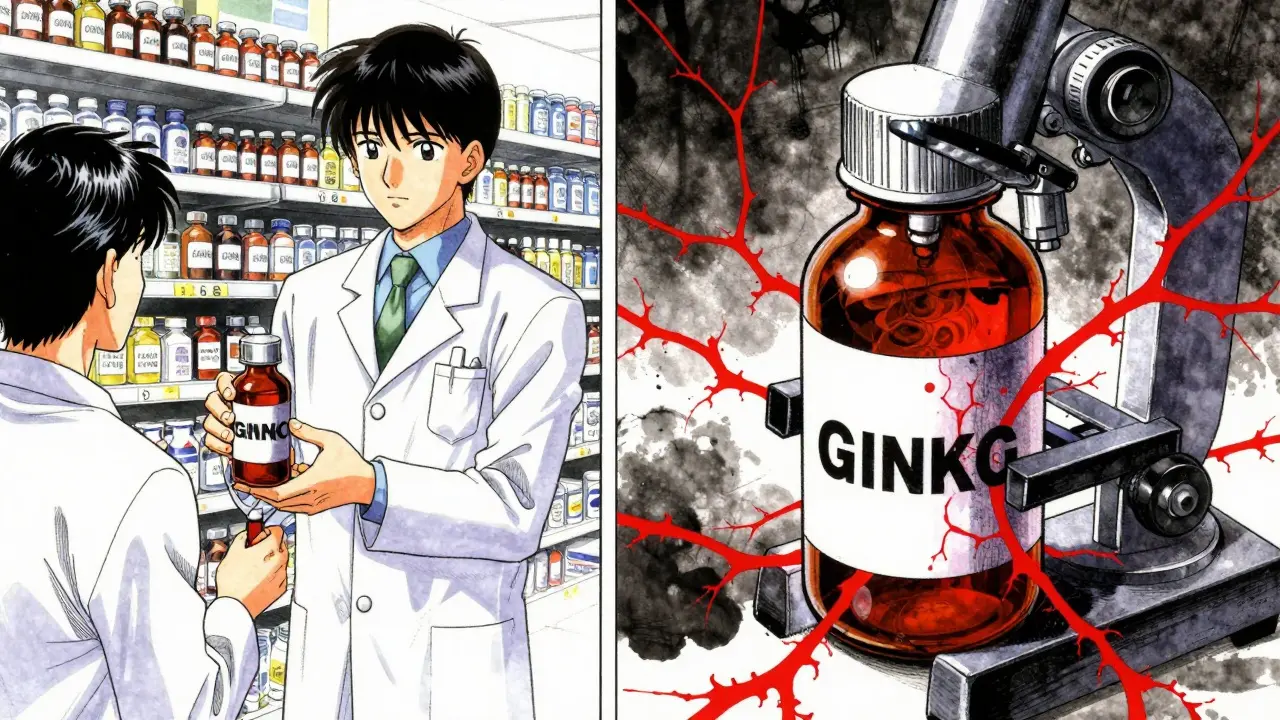
What the Experts Actually Say
There’s no consensus. And that’s the problem for patients.
- Mayo Clinic says: "Ginkgo biloba may raise your risk of bleeding if you take aspirin, clopidogrel, or warfarin."
- GoodRx calls warfarin a "high-risk" interaction and says to avoid Ginkgo entirely with it. For aspirin and clopidogrel, they say "moderate risk" - talk to your doctor.
- Cleveland Clinic lists blood thinners as a direct contraindication - meaning don’t take it.
- American Society of Health-System Pharmacists says the risk is "theoretical" based on mechanism, not proven in trials.
- Dr. Michael Murray (author of The Encyclopedia of Natural Medicine) recommends stopping Ginkgo 36 hours before surgery.
- Dr. Tieraona Low Dog and the American Society of Anesthesiologists say stop it two weeks before surgery.
So if you ask five experts, you’ll get five answers. But here’s what they all agree on: Don’t assume it’s safe.
What Should You Do? Practical Advice
Here’s the real-world advice you can use right now:
- If you’re on a blood thinner - don’t start Ginkgo without talking to your doctor. Even if you’ve been taking it for years, bring it up. Your medication list needs updating.
- Stop Ginkgo at least two weeks before any surgery or dental procedure. That’s the safest window. Bleeding during surgery can be life-threatening.
- Don’t trust random supplements. If the label doesn’t say "EGb 761" or "standardized extract," avoid it. Look for third-party testing seals (USP, NSF, ConsumerLab).
- Watch for signs of bleeding. Unusual bruising, nosebleeds that won’t stop, blood in urine or stool, or sudden headaches could be warning signs.
- Other herbs can do the same thing. Garlic, ginger, danshen, fish oil, and evening primrose also increase bleeding risk. If you’re on a blood thinner, treat them all like potential hazards.
Here’s the thing: You don’t have to quit Ginkgo forever. But you need to treat it like a medicine - not a harmless vitamin. It’s not natural = safe. It’s natural = unregulated.

What About the Market and Labels?
The industry is catching on. In 2018, only 28% of Ginkgo supplement labels warned about blood thinners. By 2023, that jumped to 42%. That’s progress. But it’s still less than half. And many labels still say "consult your doctor" - which is vague. They should say "do not use with anticoagulants."
Electronic health records now alert doctors when a patient takes Ginkgo with warfarin. Epic’s system triggers on warfarin only. Cerner’s triggers on all anticoagulants. That means your doctor might already be seeing this in your chart - even if you never told them.
Bottom Line: Play It Safe
You might feel fine. You might have been taking Ginkgo for years with no issues. But that doesn’t mean it’s safe. Blood thinners are precision tools. They have a narrow window between helping and harming. Ginkgo biloba? It’s a wildcard.
If you’re on a blood thinner:
- Don’t start Ginkgo.
- If you’re already taking it, don’t quit cold turkey - talk to your doctor first.
- Stop it completely at least two weeks before any procedure.
- Always tell your pharmacist and doctor about every supplement you take.
The goal isn’t to scare you. It’s to make you aware. Herbal supplements aren’t harmless. They’re powerful. And when they mix with prescription drugs, the consequences can be serious - even deadly. Your health isn’t worth gambling on.
Laura Gabel
March 19, 2026 AT 09:03jerome Reverdy
March 20, 2026 AT 05:56MALYN RICABLANCA
March 21, 2026 AT 16:09Sanjana Rajan
March 22, 2026 AT 16:50Kyle Young
March 23, 2026 AT 07:04Aileen Nasywa Shabira
March 24, 2026 AT 19:53Kendrick Heyward
March 25, 2026 AT 16:47lawanna major
March 25, 2026 AT 21:43Laura Gabel
March 26, 2026 AT 10:29Linda Olsson
March 28, 2026 AT 04:11