
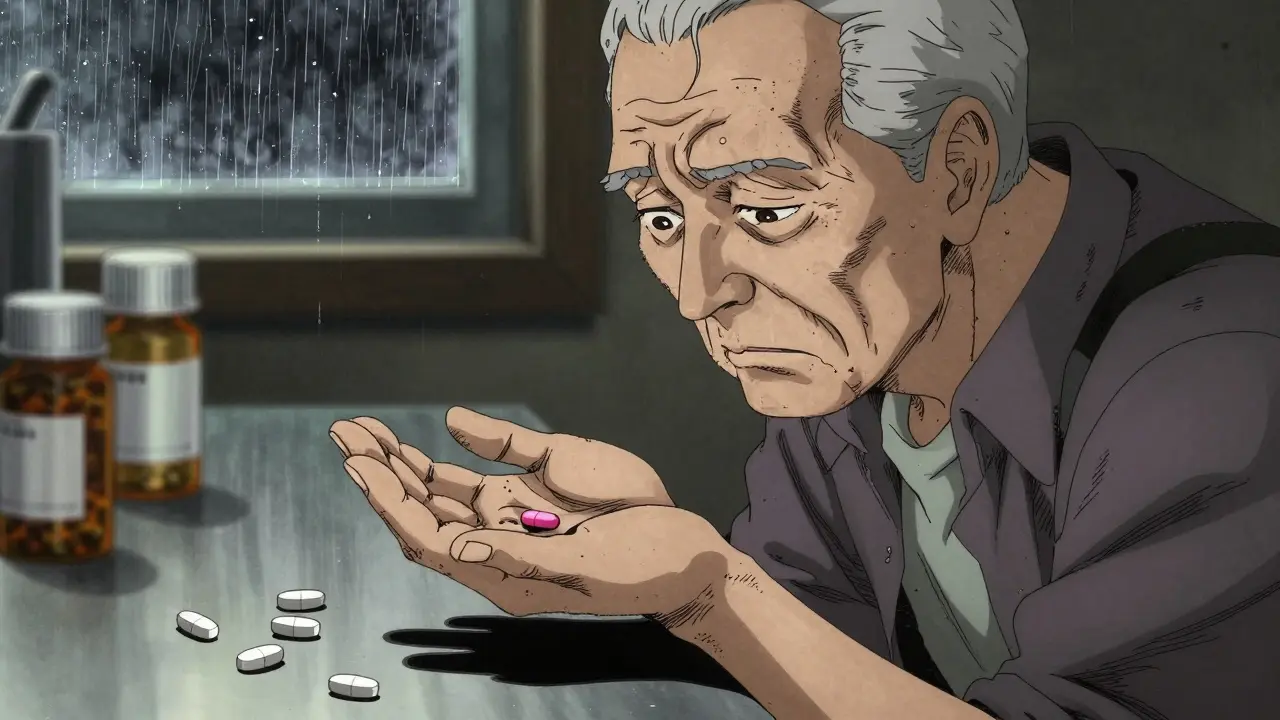
Imagine taking a pill every day for your blood pressure. One day, you pick up your refill and it looks totally different-smaller, pink instead of white, round instead of oval. You stare at it. Did they give you the wrong medicine? Is this safe? You set it aside. Days pass. You skip doses. Your blood pressure spikes. You end up in the emergency room. This isn’t rare. It happens more often than you think.
Why Generic Medications Confuse People
Generic drugs are just as effective as brand-name drugs. They contain the same active ingredients, work the same way, and are held to the same safety standards. But they don’t look the same. And that’s the problem.When you’re used to a certain shape, color, or size of pill, your brain starts to recognize it as your medicine. When that changes-even if it’s still the exact same drug-you don’t trust it. A 2016 study found that 42% of patients didn’t realize generics are therapeutically identical to brand-name drugs. That’s nearly half of all people taking these medications.
For older adults managing five or six pills a day, this visual shift is overwhelming. A JAMA Internal Medicine study showed a 23% increase in people skipping doses when their generic pill changed appearance. One patient in Adelaide told a pharmacist, "I didn’t take it because it didn’t look like my heart medicine." He was on metoprolol. The new version was blue and oval. The old one was white and round. Same drug. Different look. Same risk.
The Hidden Cost of Confusion
This isn’t just about inconvenience. It’s about safety.Between 2015 and 2020, over 1,200 medication errors were reported in the U.S. because patients confused different versions of the same generic drug. Some thought the new pill was a different strength. Others thought it was a new medication entirely. One man with diabetes stopped taking his metformin for three days after his pills changed shape. He ended up in the ER with dangerously high blood sugar.
Patients with low health literacy are 2.5 times more likely to misread labels or take the wrong dose. And it’s not just about reading. It’s about understanding what the pill means. Is this still my medicine? Why did it change? Is it weaker? Is it fake?
That fear isn’t irrational. It’s built from experience. People see ads for brand-name drugs with polished logos and clear promises. Generics? Often labeled with plain text, tiny print, and no branding. No wonder patients think they’re second-rate.
What Patients Need to Know
There are six key things every patient should understand about their medications-especially generics:- Name of medicine - What’s the brand name? What’s the generic name? Are they the same thing?
- What it’s for - Why are you taking this? High blood pressure? Cholesterol? Depression?
- How to take it - Once a day? With food? At night?
- How to store it - Room temperature? Refrigerated? Keep away from kids?
- Side effects - What’s normal? What’s dangerous?
- When to call your doctor - What symptoms mean you need help right away?
These aren’t just questions. They’re lifesavers. A program called "Ask Me 3," used in over 1,200 clinics across the U.S. and Australia, trains doctors and pharmacists to ask these exact questions. Clinics using this method saw a 31% drop in medication errors linked to generic switches.
Why Pharmacists Are Your Best Ally
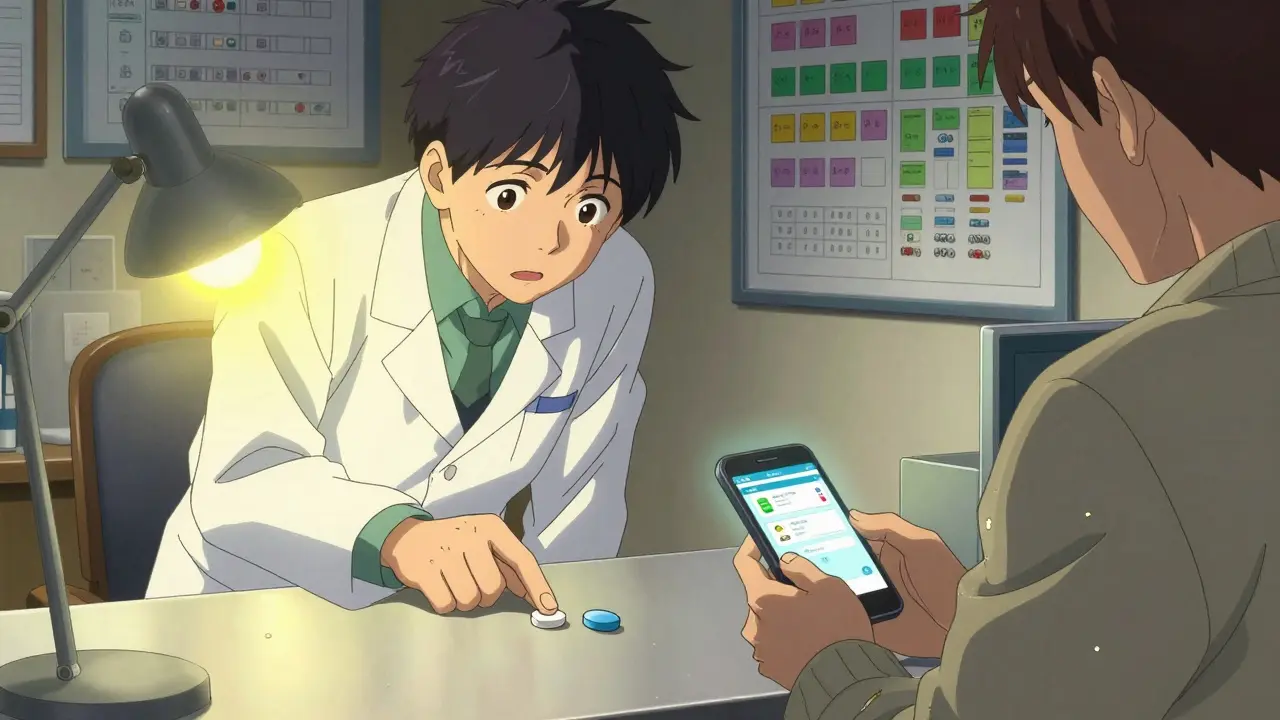
Your pharmacist isn’t just the person who hands you the bottle. They’re trained to spot confusion before it becomes a crisis.When you pick up a new generic, ask: "Is this the same medicine I was taking before?" Most pharmacists will explain the difference right then and there. But too often, they assume you already know. That’s where organizational health literacy fails.
Organizational health literacy means the system-the pharmacy, the hospital, the drug company-has a responsibility to make information easy to understand. That includes clear labels, simple language, and visual cues. Yet, a 2022 FDA review found only 37% of generic drug manufacturers use plain language in their patient leaflets.
That’s changing. In Australia, the Therapeutic Goods Administration now encourages color-coding for therapeutic classes. Blood pressure meds? Blue. Diabetes meds? Green. This simple change reduced medication errors by 33% in pilot programs.
Tools That Actually Help
Technology is stepping in where words fall short.The Medisafe app, used by over 4 million people, lets you take a photo of your pill. It matches the image to a database and tells you: "This is metformin 500mg, generic version. Same as your old pill, just different shape." In a 2022 trial, users with low health literacy improved their understanding by 37% after using the app for just four weeks.
Another tool is the "Brown Bag Medication Review." You bring all your pills-bottles, blister packs, even the ones you haven’t taken-to your doctor or pharmacist. They lay them out. They check names, doses, colors. They spot duplicates. They explain changes. Johns Hopkins found this method cut medication errors by 44% in older adults.
And now, AI is helping too. A June 2023 study in the New England Journal of Medicine tested an AI tool that recognized pills by photo and gave voice explanations in plain language. For patients with low literacy, understanding improved by 63%.
What’s Being Done-and What’s Not
The World Health Organization, the FDA, and even the European Medicines Agency have all called for standardized pill appearance. The EU’s Falsified Medicines Directive introduced uniform shapes and colors for generics. In Germany and France, medication errors dropped by 19%.In the U.S., the FDA’s 2023 draft guidance proposes a similar system: color-code pills by therapeutic class. It’s a smart move. But implementation is slow. Only 38 states have passed laws requiring pharmacists to explain generic substitutions. And most patients still get no verbal explanation at all.
Meanwhile, the cost of inaction is high. A 2022 IQVIA report found that patients who understood their generics had 18% higher adherence rates-and saved $1,247 per year in avoidable hospital visits and ER trips.
What You Can Do Today
You don’t have to wait for policy changes to protect yourself.- Always ask - "Is this a generic? Is it the same as my last pill?"
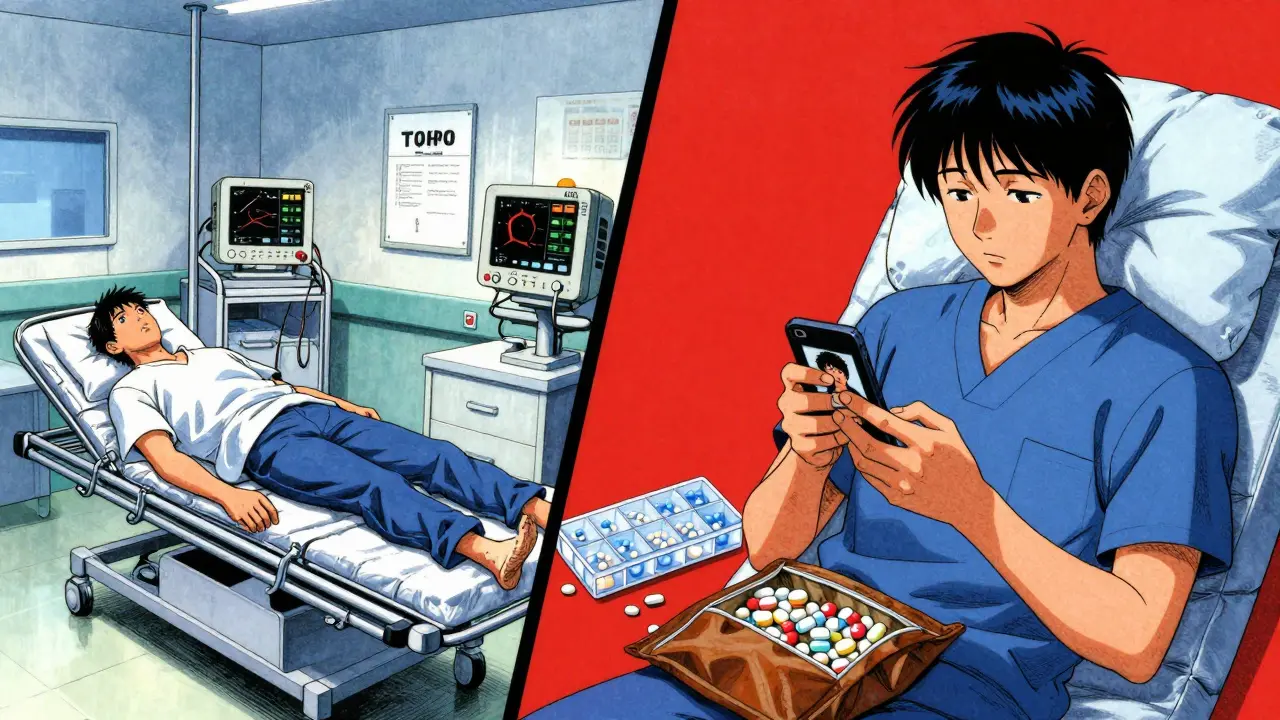
- Take a photo - Keep a picture of your pills on your phone. Compare new refills.
- Use an app - Medisafe, MyTherapy, or even Google Lens can identify pills.
- Bring your pills - To every appointment. Don’t rely on memory.
- Don’t skip doses - If it looks different, call your pharmacist before stopping.
Medicines aren’t just chemicals. They’re part of your daily routine. Your trust in them matters. And if the system doesn’t make it easy to trust, then you have to make it easy for yourself.
It’s Not About Intelligence-It’s About Design
Low health literacy isn’t about being "uneducated." It’s about bad design. A pill that changes color every time it’s refilled isn’t a patient’s fault. It’s a system failure.Imagine if your car’s brake pedal changed shape every time you got it serviced. You’d be scared to drive. That’s what happens with generics. We expect consistency. We deserve it.
The good news? We know what works. Clear labels. Visual consistency. Pharmacist conversations. Digital tools. Patient education. We’ve tested them. They reduce errors. They save lives. The question isn’t whether we can fix this. It’s whether we will.
Are generic medications really the same as brand-name ones?
Yes. Generic medications contain the same active ingredient, in the same strength, and work the same way as brand-name drugs. They’re approved by the FDA and other global regulators to meet the same safety and effectiveness standards. The only differences are in color, shape, size, and inactive ingredients-none of which affect how the drug works in your body.
Why do generic pills look different each time I refill?
Different manufacturers make the same generic drug. Each one chooses its own color, shape, and markings to distinguish their product. There’s no national standard requiring them to look the same. That’s why your metformin might be white and oval one month, then pink and round the next-even though it’s the exact same medicine.
What should I do if my generic pill looks different?
Don’t stop taking it. Don’t assume it’s wrong. Call your pharmacist and ask: "Is this still the same medication?" They can confirm it’s the same active ingredient and explain the change. If you’re unsure, take a photo of the pill and compare it to your old one or use a pill identifier app.
Can switching generics cause side effects?
The active ingredient doesn’t change, so the core effects stay the same. But sometimes, the inactive ingredients (like fillers or dyes) can cause rare reactions-like an allergic response to a dye. If you notice new side effects after a switch, talk to your doctor. But in most cases, the change is purely visual and has no medical impact.
How can I avoid confusion with my medications?
Use a pill organizer with clear labels. Take a photo of each pill when you first get it. Use a medication app like Medisafe to track and identify your pills. Bring all your medications to every appointment for a "brown bag" review. And always ask your pharmacist: "Is this the same as before?"
Are there any tools or apps that help with generic medication confusion?
Yes. Apps like Medisafe, MyTherapy, and even Google Lens can scan your pill and tell you its name, dosage, and manufacturer. Some apps also alert you if your pill looks different from your last refill. In clinical trials, these tools improved understanding by up to 63% for people with low health literacy.
What’s being done to fix this problem?
The FDA is working on standardized color-coding for generic drugs by therapeutic class-like blue for blood pressure, green for diabetes. Australia already uses this system and saw a 33% drop in errors. The WHO and European Medicines Agency have also pushed for uniform packaging. In the U.S., 38 states now require pharmacists to explain generic switches. But progress is slow-most patients still get no explanation at all.
Next Steps: What to Do Right Now
If you or someone you care about takes generic medications:- Check your pillbox today. Are any pills unfamiliar?
- Take a photo of each one with your phone.
- Next time you refill, compare the new pill to the photo.
- If it looks different, call your pharmacist before taking it.
- Ask your doctor to include a "brown bag" review in your next visit.
Understanding your medicine isn’t a luxury. It’s a right. And it doesn’t require a degree. It just requires clear information-and the courage to ask for it.
Phil Hillson
January 19, 2026 AT 22:48Lydia H.
January 21, 2026 AT 16:04Tracy Howard
January 23, 2026 AT 07:29Malikah Rajap
January 25, 2026 AT 01:10Josh Kenna
January 26, 2026 AT 11:15Erwin Kodiat
January 27, 2026 AT 23:36Jacob Hill
January 28, 2026 AT 11:38Jake Rudin
January 29, 2026 AT 01:58Jackson Doughart
January 29, 2026 AT 15:47Christi Steinbeck
January 30, 2026 AT 00:41Valerie DeLoach
January 30, 2026 AT 18:01sujit paul
February 1, 2026 AT 08:22Aman Kumar
February 1, 2026 AT 20:34Astha Jain
February 2, 2026 AT 09:44Lewis Yeaple
February 4, 2026 AT 02:15