
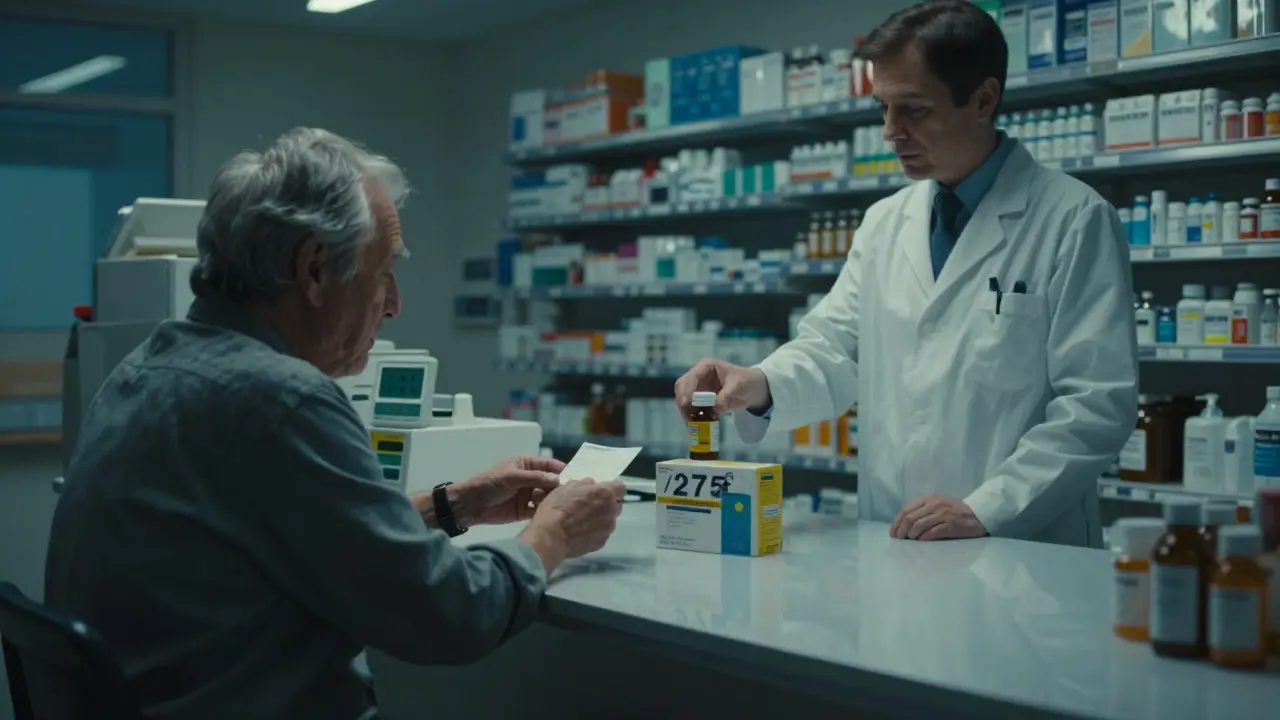
Every year, Americans spend over $700 billion on prescription drugs. But here’s the twist: 90% of all prescriptions filled are for generic medications - and they only cost 12% of that total. That’s not a typo. Generics are saving the U.S. healthcare system nearly $500 billion every year. In 2024 alone, generic drugs cut $482 billion off the nation’s drug bill, according to the Association for Accessible Medicines and IQVIA. That’s more than the entire GDP of Norway.
Why Generics Cost So Little
Generic drugs aren’t cheaper because they’re low quality. They’re cheaper because they don’t need to repeat the billion-dollar clinical trials that brand-name drugs do. Once a patent expires, other manufacturers can produce the same active ingredient. The FDA requires generics to be identical in dosage, strength, safety, and effectiveness. No shortcuts. No compromises.Take albuterol, the inhaler used for asthma. The brand version, ProAir, costs around $60 per inhaler. The generic? About $15. One patient on Reddit said switching saved them $300 a month. That’s not unusual. Across the country, people are choosing generics not because they’re desperate - but because they’re smart.
The Brand-Name Problem
While generics make up 9 out of 10 prescriptions, they account for just 12% of total drug spending. Brand-name drugs? Just 10% of prescriptions - but 88% of the cost. That’s the core imbalance.Some brand-name drugs cost three times more in the U.S. than in other developed countries. Take Humira, a biologic used for rheumatoid arthritis. For years, it was priced at over $70,000 a year. Even after biosimilars entered the market, it took aggressive health plan strategies - like private-label programs - to push adoption from 3% to 28% in 2024. That shift saved billions.
But here’s the dirty secret: brand-name companies don’t always let generics in easily. They pay generic makers to delay their entry. These “pay for delay” deals cost an average of $1.2 billion per year in settlements. That’s not competition. That’s market manipulation.
Biosimilars: The Next Big Savings Engine
Biosimilars are the next wave. They’re not exact copies like generics - they’re highly similar versions of complex biologic drugs made from living cells. Think insulin, cancer treatments, or autoimmune drugs.Since 2015, biosimilars have enabled over 460 million extra days of patient therapy that wouldn’t have happened without lower prices. In 2024, seven biosimilars for Stelara - a $6 billion drug - hit the market at over 80% less than the original. Once fully adopted, they could save $4.8 billion a year.
But there’s a looming crisis. Ninety percent of biologics losing patent protection in the next ten years have zero biosimilars in development. That’s a $234 billion missed opportunity. Why? Because developing biosimilars is expensive, complex, and risky. And without policy pressure, manufacturers won’t bother.
How Medicare and Policy Are Changing the Game
The Inflation Reduction Act changed everything. Starting in 2025, Medicare caps insulin at $35 per vial. That’s down from $275. Eli Lilly didn’t volunteer - they were pressured. Now, the same model is being extended to commercial insurers by 2027.Medicare is also negotiating prices on 30 drugs per year starting in 2026. The Congressional Budget Office estimates this could save $500-550 billion over ten years. If those negotiated prices expand to Medicaid and private insurance, total savings could hit $1 trillion.
Meanwhile, the White House struck deals with Eli Lilly and Novo Nordisk to cut Ozempic and Wegovy prices from over $1,000 to $350 per month. These aren’t generics - but they’re proof that pricing pressure works.
What’s Holding Back More Savings?
It’s not technology. It’s not science. It’s bureaucracy.Health plans and pharmacy benefit managers (PBMs) still make it hard for patients to get biosimilars. Prior authorization forms are a nightmare. Pharmacists are sometimes blocked from substituting generics without doctor approval. And insurers often pay more for brand-name drugs because they get kickbacks from manufacturers.
Even when generics are available, patients don’t always get them. A CMS report found that less than 1% of Medicare beneficiaries reaching catastrophic coverage use only generics. Why? Because they’re prescribed brand-name drugs by default - and they don’t know they have a cheaper option.

Who Benefits the Most?
The biggest winners? Patients with chronic conditions.Diabetes. Asthma. High blood pressure. Arthritis. These are lifelong diseases. A $200 monthly drug bill adds up to $2,400 a year. Switch to a generic? That drops to $40. That’s $2,000 back in the patient’s pocket. For millions, that’s food, rent, or gas.
GoodRx found that 1 in 12 Americans has medical debt from prescriptions. Generics are the main reason that number isn’t higher. And for seniors on fixed incomes, generics aren’t a luxury - they’re survival.
The Bigger Picture
The U.S. spends 10.3% of all healthcare dollars on prescription drugs - more than any other country. Without generics, that number would be double. The generic industry supports 350,000 jobs across 46 states. It’s not just a cost saver - it’s an economic engine.But we’re at a crossroads. If we don’t fix the biosimilar void, if we don’t end pay-for-delay deals, if we don’t empower pharmacists to substitute without red tape - we’re throwing away hundreds of billions in potential savings.
The data is clear: generics work. They’re safe. They’re effective. And they’re the most powerful tool we have to control runaway drug costs. The question isn’t whether we can afford generics. It’s whether we can afford not to use them.
Aboobakar Muhammedali
December 20, 2025 AT 23:48Man i just switched my asthma inhaler to generic last month and holy crap it saved me like 200 a month i was crying at the pharmacy counter
my mom has diabetes and she’s been on generics for years she says it’s the only reason she can afford to live
we need more people to know this stuff
Dominic Suyo
December 22, 2025 AT 16:15Let’s be real-the entire pharma industry is a rigged casino where patients are the suckers and PBMs are the dealers with loaded dice
they don’t care about your health they care about your co-pay and your insurance deductible
and don’t even get me started on how they patent minor tweaks to drugs just to reset the clock
it’s not capitalism it’s legalized theft with a white coat
Nicole Rutherford
December 23, 2025 AT 00:34Of course you’re gonna say generics are great-until your doctor prescribes you one and you get a weird reaction
they’re not identical they’re just close enough to pass FDA paperwork
and who’s to say the fillers and binders aren’t triggering your migraines or your anxiety
you think it’s saving money but you’re just trading one problem for another
Chris Clark
December 24, 2025 AT 21:00Actually in India where i’m from generics are the norm and we have like 20 different brands of metformin all at like 50 cents a pill
the FDA’s bioequivalence standards are actually way stricter than most other countries
so when americans say generics are sketchy they’re just repeating pharma propaganda
also the word ‘biosimilar’ is misused like 90% of the time-those aren’t generics they’re complex biologics with different manufacturing processes
and yeah the development cost is insane but that’s why we need public funding not just market pressure
Hussien SLeiman
December 26, 2025 AT 08:16Look i get the narrative-generics save money, yadda yadda
but let’s not pretend this is some noble public health victory
it’s just corporate cost-shifting wrapped in virtue signaling
you think patients are ‘smart’ for choosing generics? no they’re just desperate
and the real tragedy isn’t the high cost of brand drugs-it’s that the system forces people to choose between insulin and rent
and now we’re supposed to cheer because the government capped insulin at $35? that’s not progress that’s damage control after decades of neglect
and don’t even get me started on how the same companies that make the brand drugs also own the generic subsidiaries-so they’re still getting rich either way
it’s not a solution it’s a rearranging of deck chairs on the Titanic
Nina Stacey
December 28, 2025 AT 04:32My grandma took a generic blood pressure med for 12 years and never had an issue
she’s 82 and still walks two miles a day
so if you’re scared of generics maybe you’re the problem not the pill
Dorine Anthony
December 28, 2025 AT 21:48Just saw a pharmacist today who said 80% of the people who come in asking for brand-name drugs don’t even know they’re paying 5x more
she said she’s stopped even mentioning generics unless they ask
because the doctors won’t let her substitute and the patients don’t know to ask
it’s not about trust-it’s about ignorance
and we’re all just stuck in this loop
Guillaume VanderEst
December 30, 2025 AT 12:35My cousin works at a biosimilar plant in Montreal
he says the equipment costs more than a small country’s GDP
and the regulatory paperwork takes longer than building a bridge
so yeah it’s not that no one wants to make them-it’s that it’s like trying to clone a unicorn with a toaster
anthony funes gomez
December 31, 2025 AT 15:41The structural inefficiency of the U.S. pharmaceutical supply chain is not merely a fiscal anomaly-it is a systemic failure of incentive alignment between patent law, regulatory oversight, and market dynamics
the current paradigm incentivizes rent-seeking behavior over innovation
and while generics represent a form of cost-containment, they do not address the root pathology: the absence of price elasticity in a monopolistic, patent-protected ecosystem
until we decouple drug pricing from R&D cost recovery-and instead implement value-based pricing-we’re just rearranging the same broken system with different labels
James Stearns
January 1, 2026 AT 08:46It is an undeniable fact that the utilization of generic pharmaceuticals constitutes a prudent and economically responsible course of action for the American public.
One must, however, acknowledge the necessity of stringent regulatory compliance and the preservation of clinical integrity.
Therefore, the assertion that generics are universally equivalent to brand-name counterparts is, in certain clinical contexts, empirically dubious.
One must exercise caution, and one must consult one’s physician.
One must not, under any circumstances, assume equivalence without professional oversight.
It is not merely a matter of cost-it is a matter of medical ethics.
And I, for one, refuse to endorse any policy that prioritizes fiscal expediency over patient safety.
Thank you for your time.
Sincerely,
Dr. James Stearns, M.D., Ph.D., F.A.C.P.