
Why Proper Disposal Matters
Expired EpiPens, inhalers, and medicated patches aren’t just old plastic and metal-they contain powerful drugs that can hurt people, pets, and the environment if thrown in the trash. An EpiPen filled with epinephrine can cause a dangerous reaction if a child finds it and presses it accidentally. An inhaler can explode if crushed or tossed into a dumpster fire. A fentanyl patch still sticky with medicine can kill someone who puts it on their skin. The FDA says 12% of accidental poisonings in kids come from improperly thrown-away meds. That’s not a small risk. It’s a preventable one.
How to Dispose of Expired EpiPens
EpiPens are not regular trash. They’re classified as medical sharps because they have a hidden needle that can puncture skin. Even if you’ve used one, or it’s expired, the needle is still there. You can’t just toss it in a grocery bag. The safest way is to take it back to your doctor’s office or pharmacy when you pick up your new prescription. Most allergists and clinics have sharps bins just for this.
If your provider doesn’t take them, look for a DEA-authorized drug take-back location. You can find one near you using the DEA’s National Take Back Initiative website. These sites are often at police stations, hospitals, or pharmacies that participate in the program. They’ll take your expired EpiPen without asking questions.
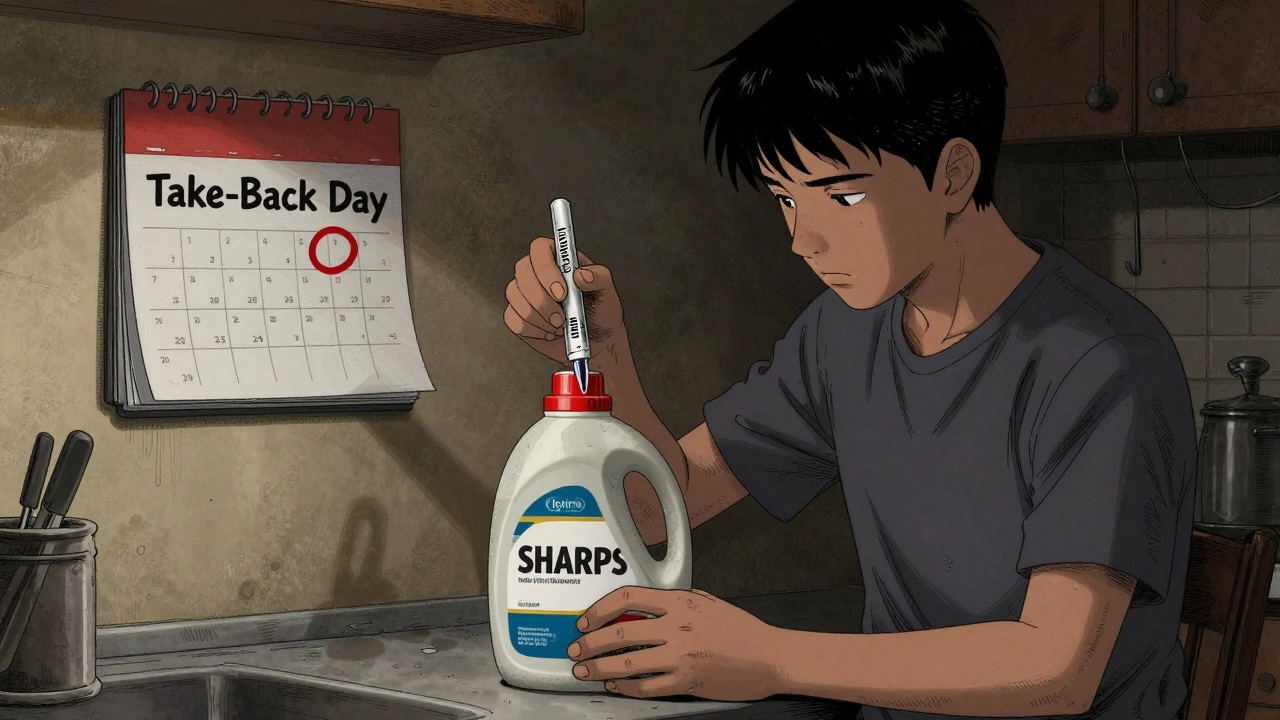
At home, before you can get it to a drop-off point, store it safely. Put the EpiPen in a hard plastic container-like an empty laundry detergent bottle-with a tight lid. Label it clearly: "SHARPS," "BIOHAZARD," and "DO NOT RECYCLE." Don’t use glass jars or thin plastic containers. They can break or get punctured. California requires you to use a mail-back program or drop it off at a certified sharps center. In Texas, you can throw it in the trash if it’s in a sealed, labeled container. But even there, take-back is still the best option.
What to Do with Expired Inhalers
Inhalers are pressurized cans. That means they’re under pressure, even when empty. If you throw one in the recycling bin or trash, it can explode in a compactor truck or incinerator. Some older inhalers still use greenhouse gas propellants that harm the ozone layer. The EPA estimates over 300 million inhalers are tossed each year in the U.S. Most end up in landfills or incinerators, adding to pollution.
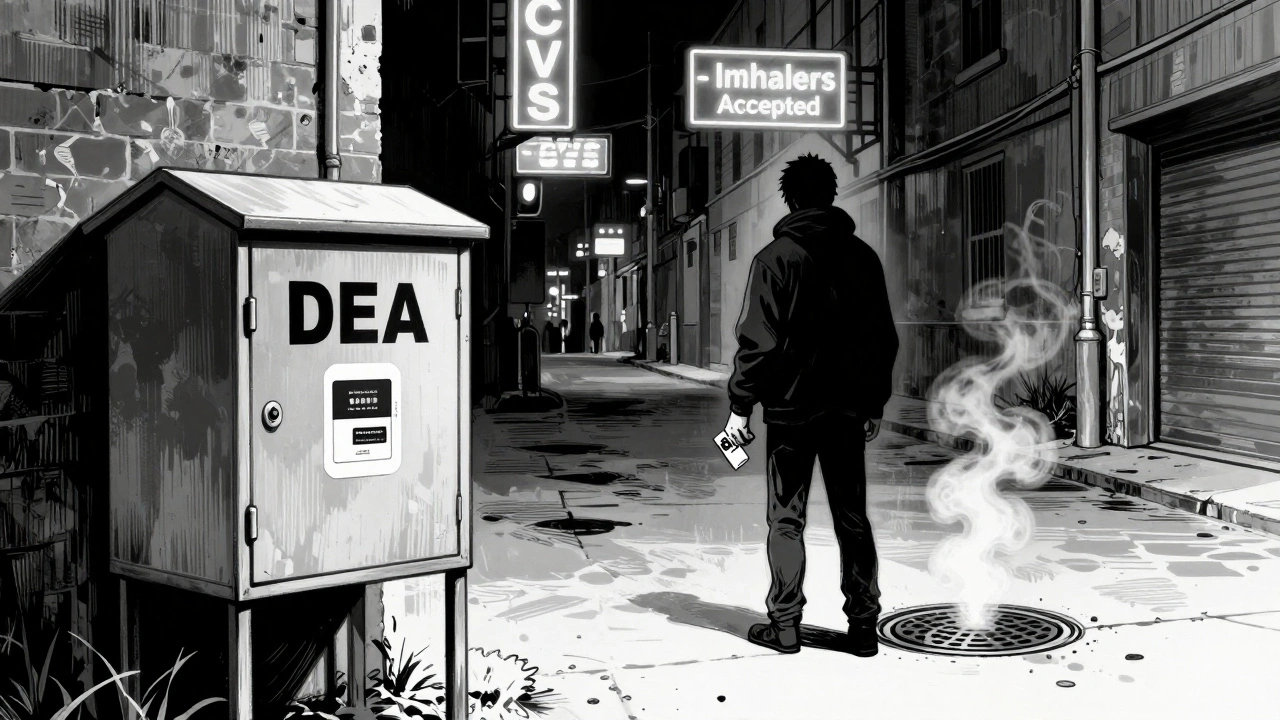
First, check the label. Some inhalers say "Do not puncture or incinerate." That’s your clue. Next, call your local waste management department. Some cities, like New York City, have special drop-off sites for aerosols. Walgreens and CVS accept inhalers at select locations, but only about half of their stores do. Don’t assume your local pharmacy takes them-call ahead.
If no drop-off is available, remove the metal canister from the plastic mouthpiece. The plastic part can go in the recycling if your local program accepts #5 plastic. The metal canister? Poke a hole in it with a screwdriver to release the pressure, then throw it in the trash. Never burn it. Never crush it. And never put it in recycling without removing the canister first.
Disposing of Medicated Patches
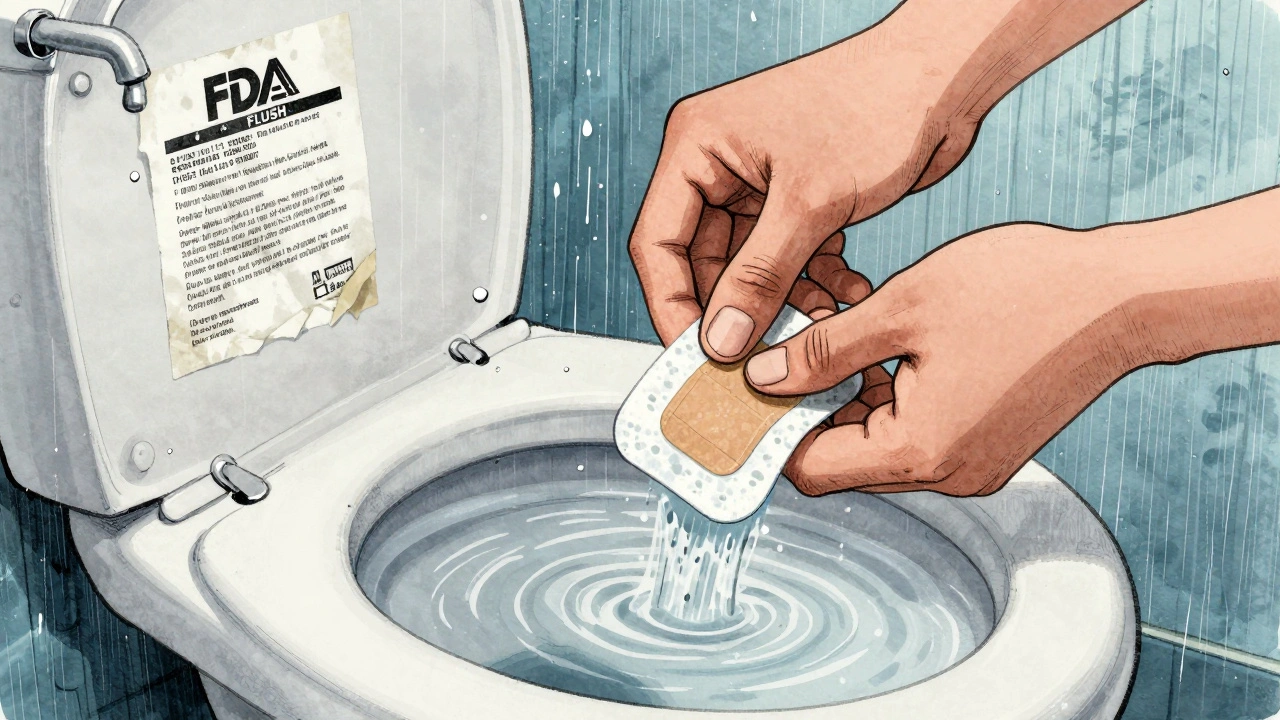
Patches are tricky because they stick to your skin-and sometimes, they still stick to medicine. Fentanyl, nicotine, and pain patches can contain enough drug to be deadly if someone else finds them. The FDA has a special "flush list" of medications that should be flushed down the toilet immediately if you don’t have a take-back option. Fentanyl patches are on that list. So are certain opioids.
If your patch is on the flush list, fold it in half so the sticky sides stick together, then flush it. That’s the safest way to prevent accidental exposure. For patches not on the flush list, like nicotine or hormone patches, fold them in half with the sticky sides together. Then put them in a sealed container with something unappetizing-coffee grounds, cat litter, or used paper towels. Tape the container shut and throw it in the trash. Never leave a patch lying around, even if it’s "used."
There’s also DisposeRx®-a powder you mix with water in a small packet that turns meds into a gel. It’s sold at CVS and other pharmacies. But it doesn’t work well for patches because the adhesive doesn’t dissolve. Stick to folding and flushing for patches.
Use Take-Back Programs When You Can
The best solution for all three? Take-back programs. Twice a year, the DEA runs National Prescription Drug Take Back Days. In October 2022, they collected nearly a million pounds of unused meds across 5,800 locations. That’s not just pills-it includes EpiPens, inhalers, and patches. Law enforcement agencies, hospitals, and pharmacies host these events. You don’t need to be a patient there. You don’t need ID. Just bring your expired meds.
Even outside those days, many pharmacies, hospitals, and police stations have permanent drop boxes. The DEA’s website lists over 14,000 permanent collectors nationwide. But here’s the problem: only 37% of rural counties have them. Urban areas are better served. If you live in a small town, your best bet is to call your local pharmacy or doctor’s office and ask if they’ll hold onto your expired devices until you can get to a take-back site.
What Not to Do
Don’t flush patches unless they’re on the FDA’s flush list. Flushing other meds can pollute waterways. The USGS found pharmaceuticals in 80% of tested streams. Don’t put EpiPens in the recycling. They’re not plastic bottles-they’re medical devices with needles. Don’t try to dismantle them. Some people think they can remove the battery or needle. That’s dangerous. You could get stuck. The AAAAI says: never try to take apart an auto-injector.
Don’t assume your trash company will handle it. Most don’t. Don’t throw inhalers in the curbside bin. Don’t bury patches in your yard. Don’t give them to someone else. Even if they’re expired, the medicine can still be active. And never flush pills unless they’re on the flush list. For everything else, mix with coffee grounds and seal in a container.
Plan Ahead to Avoid Waste
The easiest way to avoid having expired meds is to check your supplies every month. Put a reminder on your phone: "Check EpiPen, inhaler, patch expiration dates." Most EpiPens last 12 to 18 months. Inhalers often expire after one year. Patches last 1 to 3 years. Keep a small box or drawer with your emergency meds. When one expires, replace it right away. Don’t wait until you’re out.
Some states are changing the rules. California passed a law in 2024 that requires drug makers to pay for disposal programs. That means in the future, you might get a free mail-back envelope with your new EpiPen. Until then, it’s up to you to find the right drop-off spot. Talk to your pharmacist. Ask your doctor. If they don’t know, ask again. More people asking means more places will start offering services.
What to Do If You Can’t Find a Drop-Off
If you’re stuck with no take-back options nearby, follow these steps:
- EpiPen: Put it in a hard plastic container, label it "SHARPS," seal it, and store it safely until you can get to a hospital or pharmacy that accepts sharps.
- Inhaler: Remove the metal canister, puncture it to release pressure, recycle the plastic, and trash the metal.
- Patch: Fold sticky sides together. If it’s fentanyl-flush it. If not-seal in a container with coffee grounds or cat litter and throw it away.
Keep a log of what you dispose of and where. That way, if someone asks you later-like a family member or a health inspector-you can show you did it right.
Can I throw expired EpiPens in the regular trash?
Only if you live in a state that allows it-like Texas-and only if you put it in a puncture-proof, clearly labeled container. But even then, it’s not recommended. The safest way is to return it to a healthcare provider or take-back site. EpiPens contain needles and potent medicine. Regular trash puts sanitation workers and children at risk.
Do pharmacies take back inhalers?
Some do, but not all. Walgreens and CVS accept inhalers at only about half their locations. Always call ahead. Some states have stricter rules. New York and California have more drop-off options than rural states. If your pharmacy doesn’t take them, check with your local waste management department for aerosol collection sites.
Why can’t I just flush all my expired patches?
Flushing is only safe for certain high-risk medications like fentanyl patches, which are on the FDA’s flush list. Flushing other patches can contaminate water supplies. The EPA has found drugs in 80% of U.S. waterways. For non-flushable patches, fold them sticky-side together and mix them with coffee grounds or cat litter before tossing them in the trash.
What if I find an expired EpiPen or patch on the ground?
Don’t touch it. If it’s a patch, it may still have active medicine. If it’s an EpiPen, the needle could be exposed. Call your local poison control center or non-emergency police line. They’ll send someone to collect it safely. Never pick it up with bare hands. Use gloves or plastic bags if you must move it.
Are there any free disposal services for these items?
Yes. DEA Take Back Days are free and open to everyone. Many hospitals and clinics offer free sharps disposal for patients. Some pharmacies give out free sharps containers if you’re a regular customer. California and other states are starting programs where drug makers pay for disposal-so more free options are coming. Check your state’s health department website for updates.
Kumar Shubhranshu
December 6, 2025 AT 17:06brenda olvera
December 7, 2025 AT 01:23So many people just toss stuff without thinking
Thanks for laying it out so clearly
Andrew Frazier
December 7, 2025 AT 13:47Why dont u just let people handle their own damn meds
Its not 1984 yet
Myles White
December 7, 2025 AT 14:32Im the guy who threw out 3 expired inhalers in the recycling bin because i thought they were just plastic
And i used to just leave patches on the bathroom counter like they were lip balm
Now im terrified my kid touched one
Im going to call my pharmacy tomorrow and ask if they take sharps
Also i just realized my fentanyl patch from last year is still in my drawer
Im going to flush it right now
Mayur Panchamia
December 9, 2025 AT 07:49Nava Jothy
December 9, 2025 AT 21:43My grandma died because someone found her old fentanyl patch in the trash and stuck it on their wrist...
It broke my heart...
Please please please... don't be lazy. Fold it. Flush it. Save a life. 💔
olive ashley
December 10, 2025 AT 10:08But they're the same people who said smoking was safe and lead paint was fine?
Who says they're not just using this to track your meds?
What if they're putting microchips in the water now?
And why do they always say 'if you can't find a drop-off' like we're all just supposed to drive 50 miles for this?
They don't care about us. They care about control.
Priya Ranjan
December 10, 2025 AT 10:36People don't need to be told how to throw away their medicine.
They need to be told to stop being irresponsible.
If you can't handle your own EpiPen, maybe you shouldn't have one.
Stop coddling adults with pamphlets and take-back bins.
Gwyneth Agnes
December 10, 2025 AT 20:31Kay Jolie
December 11, 2025 AT 09:06Urban dwellers have access to DEA take-back sites while rural communities are left with duct tape and hope
And the pharmaceutical industry? They're off the hook-no extended producer responsibility, no mandatory mailers, no accountability
Just a 'please, if you can, maybe consider' approach
It's not just disposal-it's environmental justice, and we're failing
Clare Fox
December 13, 2025 AT 06:34We treat expired meds like trash
But we treat death with such ritual and reverence
Maybe if we saw these devices not as waste but as relics of survival
We'd treat them with more care
They saved someone's life once
They deserve more than a landfill
Akash Takyar
December 13, 2025 AT 10:37Ibrahim Yakubu
December 14, 2025 AT 18:50In Nigeria we just burn it. Simple. Clean. No bureaucracy.
Why do you need a DEA form? Why do you need a container?
Fire kills everything. Even your fear.
Arjun Deva
December 15, 2025 AT 04:55Why would they make it so complicated?
It's all a scam to make you buy new ones faster.
And why are there so many rules?
They just want you to panic and keep buying.
I threw mine in the trash last week.
Nothing happened.
So I'm not doing it again.
Chris Park
December 15, 2025 AT 12:49Why are these devices even allowed to be sold with active ingredients after expiration?
If epinephrine degrades, why is it still legally sold?
If the patch loses potency, why isn't it recalled?
They're not protecting you-they're protecting profits.
And you're falling for it by following their disposal rules like a good little citizen.