

Stopping a medication suddenly can be dangerous-even if you feel fine. Many people think if they’re not having side effects, they can just quit. But for drugs like antidepressants, benzodiazepines, or opioids, that’s when the real problems start. Withdrawal isn’t just discomfort. It can mean severe anxiety, insomnia, dizziness, seizures, or even suicidal thoughts. The key isn’t just medication tapering-it’s how you talk about it with your provider.
Why Tapering Isn’t Just About Lowering the Dose
Tapering means slowly reducing your dose over time, not stopping cold turkey. But it’s not one-size-fits-all. A person on fluoxetine (Prozac) might safely stop in two weeks because the drug lingers in the body. Someone on paroxetine (Paxil) might need eight weeks. Opioid tapering varies too: VA guidelines suggest 20-50% weekly drops for some, while Mayo Clinic recommends 10% every 5-7 days. Benzodiazepines? ASAM’s 2022 guideline says even short-term users need at least four weeks to taper. The science is clear: speed kills. A 2022 analysis of 1,200 patients found tapers faster than 10% per week led to 40-60% more moderate-to-severe withdrawal symptoms.
And it’s not just about the drug. Your body adapts. After months or years of taking a medication, your brain rewires itself to function with it. Suddenly removing it throws your nervous system into chaos. That’s why a slow, planned reduction gives your body time to readjust.
The Communication Gap That Makes Tapering Fail
Most people don’t quit because they want to. They’re told to. And that’s the problem. A 2023 study of patient reviews found 68% of negative tapering experiences came from one thing: poor communication. One Reddit user, PainFree2022, wrote: “My doctor never explained withdrawal would last 3 weeks-I felt betrayed and went back to higher doses.”
Providers often assume patients understand the risks. They don’t. A Mind charity survey of 1,200 people stopping antidepressants found 74% wanted more details on how long withdrawal might last. Over half said anxiety was worse than physical symptoms. That’s not just a medical issue-it’s a trust issue.
Successful tapers share one thing: collaboration. Patients who helped design their own taper schedule were 63% more likely to stick with it, according to Dr. Wilson Compton of the National Institute on Drug Abuse. That means asking: “What are your goals?” “What worries you most?” “How do you want to feel in the next month?”
How to Start the Conversation
You don’t need to be an expert. But you do need to be prepared. Here’s how to begin:
- Know why you want to stop. Is it side effects? Cost? Fear of long-term use? Write it down. Clarity helps your provider help you.
- Don’t assume your medication is safe to quit. Not all drugs need tapering. Antibiotics? Fine to stop. But antidepressants, beta-blockers, steroids, and most sleep aids? Not so much.
- Ask directly: “Is it safe to stop this, and if so, how?” Many providers haven’t been trained in tapering. If they say, “Just stop,” ask for a second opinion.
- Request a written plan. A schedule with dates, doses, and check-in points reduces anxiety. Studies show 87% of successful tapers include a documented agreement.
Bring a list of all your medications-even supplements. Polypharmacy (taking five or more drugs) increases taper complexity. One in five patients on opioids also take benzodiazepines, and combining those tapers can be risky.

What a Good Taper Plan Looks Like
There’s no universal formula, but the best plans follow five steps, according to ASAM’s 2022 Provider Pocket Guide:
- Assess readiness. Use a scale: 1 to 10, how ready are you to taper? If you’re at a 4, you need more time to prepare.
- Explain the why. Your provider should say: “You’ve been on 20mg of sertraline for 18 months. Your anxiety has improved, but your sleep is worse. Stopping might help, but we need to do it slowly to avoid dizziness or mood swings.”
- Co-create the schedule. Not “I’ll cut you 10% every week.” But “Let’s try reducing 5% every 10 days. If you feel shaky, we’ll pause.”
- Set up monitoring. A symptom tracker app, journal, or simple checklist helps. Note: sleep quality, mood, headaches, heart palpitations.
- Plan follow-ups. Weekly for the first month. Then biweekly. Don’t disappear after the first reduction.
Mayo Clinic reports an 85% success rate with their 10% weekly taper method-but only when patients were involved in setting the pace. Rigid plans fail. Flexible ones work.
Red Flags to Watch For
Some providers push tapers for the wrong reasons. Watch out for:
- “We’re cutting doses because of policy.” That’s not clinical-it’s financial. Medicare and CMS now require individualized taper plans for high-dose opioids, but that doesn’t mean everyone should be tapered.
- “You’ve been on this too long.” Duration alone doesn’t justify tapering. Function does. Are you sleeping? Working? Socializing? If yes, tapering might not be needed.
- “Just stop and call if you have problems.” That’s not a plan. That’s negligence.
A 2021 study in Pain Medicine found that forcing rapid tapers on stable chronic pain patients increased suicide attempts by 60%. That’s not a side effect-it’s a failure of care.
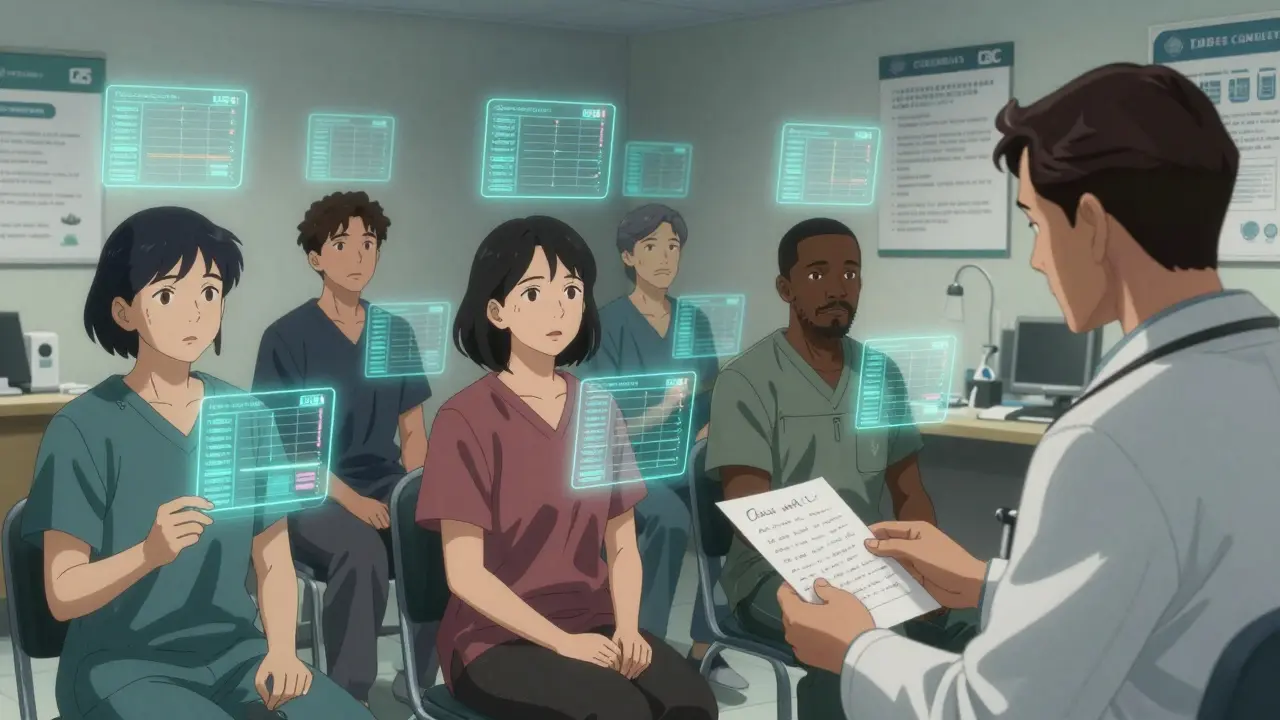
What to Do If You’re Already in Withdrawal
If you’ve already stopped and feel awful, don’t panic. Don’t restart without talking to someone. But don’t wait either. Withdrawal symptoms often peak within days and fade over weeks. Still, if you’re having:
- Severe dizziness or vertigo
- Heart palpitations or chest pain
- Seizures or hallucinations
- Thoughts of self-harm
Seek help immediately. Emergency rooms can stabilize you. But the real fix is getting back on a proper taper schedule. Many patients who quit cold turkey end up worse off-stuck in a cycle of stopping, restarting, and feeling worse each time.
The Future of Tapering
The system is changing. In 2023, the FDA required all long-acting opioid labels to include tapering instructions. ASAM launched a digital toolkit in 2024 that uses AI to generate personalized taper schedules based on age, weight, drug half-life, and past reactions. The CDC’s new guidelines (expected spring 2024) show that letting patients adjust their own pace within safe limits reduces withdrawal severity by 31% compared to fixed schedules.
Long-term, pharmacogenomic testing may guide tapering. Some people metabolize drugs faster due to CYP450 gene variants. Knowing that could mean a 4-week taper for one person and a 12-week taper for another-same drug, same dose, different biology.
By 2027, experts predict all potentially dependence-forming medications will come with a standard tapering protocol. But until then, you have to be your own advocate.
Can I stop my medication if I feel fine?
Feeling fine doesn’t mean it’s safe. Many medications, like antidepressants, benzodiazepines, and opioids, cause physical dependence. Stopping suddenly can trigger withdrawal symptoms-even if you’ve been on the drug for months without issues. Always talk to your provider before stopping.
How long should a taper take?
It depends on the drug and how long you’ve taken it. For benzodiazepines, ASAM recommends 4-26 weeks. Opioid tapers can be 2-8 weeks, depending on dose and risk. Antidepressants vary: fluoxetine may take 1-2 weeks, while paroxetine needs 4-8 weeks. Slower is almost always safer. A 10% reduction every 5-7 days is a common starting point.
What if my doctor refuses to taper my medication?
You have the right to a second opinion. Ask for a referral to a pain specialist, psychiatrist, or addiction medicine provider. Some primary care doctors aren’t trained in tapering. The CDC and ASAM guidelines support patient-centered tapering-your provider should be able to explain their reasoning. If they dismiss your concerns, find someone who listens.
Are there tools to help track tapering symptoms?
Yes. Many patients use simple journals or apps like MyTherapy or Medisafe to log daily symptoms: mood, sleep, headaches, dizziness. Some clinics provide printed checklists. Tracking helps you and your provider spot patterns early-like whether dizziness spikes after a dose cut. This turns guesswork into data-driven decisions.
Can I taper more than one medication at once?
It’s usually not recommended. Tapering one drug at a time makes it easier to identify which medication is causing symptoms. If you’re on multiple drugs-say, an opioid and a benzodiazepine-your provider should prioritize the riskiest one first. Mixing tapers increases confusion and risk. Always discuss this with your doctor before starting.
Nishan Basnet
March 22, 2026 AT 10:49As someone who’s been on antidepressants for over a decade, I can say this: tapering isn’t just medical-it’s emotional labor. My doctor gave me a 6-week plan, but I felt like I was being handed a roadmap to hell. I kept a journal, tracked my sleep, and noticed that dizziness spiked every Tuesday. Turns out, it wasn’t the dose-it was my stress from work. We adjusted the taper around my schedule, not the other way around. You have to be your own scientist here. No one else is going to care as much as you do. And yeah, it’s scary. But I made it. Now I’m off the meds and actually sleeping through the night. Don’t let fear silence you. Ask for the plan. Demand the details. You deserve that much.
Timothy Olcott
March 23, 2026 AT 13:37Bro this is why America’s f***ed. 🤬 They want us to taper like we’re baking a cake. ‘Ohhh let’s do 10% every 5 days’ like we’re some kind of lab rat. I’m not some NPC in a pharma ad. My body knows what it needs. I stopped cold turkey and felt better in 3 days. 🤷♂️ #Freedom #NoMoreZombiePills
Nicole James
March 25, 2026 AT 01:32Wait… so you’re telling me the FDA, ASAM, CDC, and Mayo Clinic are all in cahoots with Big Pharma to control our minds? 🤔 And now they’re using ‘tapering’ as a euphemism for chemical castration? I’ve read the studies-this is just another way to make us dependent on ‘specialists’ who charge $300/hour to tell us to ‘track our mood.’ What about the 2018 leaked memo from the AMA about ‘reducing opioid liability’? They don’t care if you suffer-they care about insurance claims. And now they’re pushing AI-generated taper plans? That’s not science-that’s surveillance. I’m not tapering. I’m resisting.
Casey Tenney
March 25, 2026 AT 18:05If your doctor tells you to just stop, they’re a hazard. 🚫
Period.
End of story.
Get a new one.
Now.
Bryan Woody
March 27, 2026 AT 17:45Oh wow, another 3,000-word manifesto on how to talk to your doctor like you’re writing a TED Talk. 🙄 Let me guess-you also believe in ‘intentional breathing’ and ‘energy alignment’? Here’s the truth: most docs don’t give a damn. They’re overworked, underpaid, and told to cut opioids because some bureaucrat in D.C. got a grant. So yeah, you’re right-be your own advocate. But don’t waste time with ‘co-creating schedules’ and ‘symptom trackers.’ Just say: ‘I’m not doing this unless you give me a written plan with dates, a backup number, and a follow-up in 7 days.’ If they hesitate? Walk out. Find someone who treats you like a human, not a data point. And if you’re still on opioids? Congrats-you’re probably one of the 80% of people who don’t need to taper. Stop listening to fear porn. You’re not broken. The system is.
Shaun Wakashige
March 29, 2026 AT 11:09lol why are we even talking about this? just stop. 🤷♂️
Johny Prayogi
March 31, 2026 AT 02:39THIS. SO. MUCH. 🙌 I was on 10mg of sertraline for 5 years. My doc said ‘just quit’-I had panic attacks for 3 weeks. Then I found a psychiatrist who said, ‘Let’s go 2.5% every 10 days.’ I used MyTherapy. Wrote down every headache, every tear. We adjusted. We paused. We celebrated tiny wins. Now I’m off-and I actually like my life again. You’re not weak for needing help. You’re smart for asking for it. And if your provider won’t work with you? Find one who will. Your mental health isn’t a checklist. It’s your life.
Natali Shevchenko
April 1, 2026 AT 11:06I’ve been thinking about this a lot lately-not just as a patient, but as someone who’s watched two family members go through this. There’s this quiet tragedy in how we treat dependency. We treat it like a moral failing or a medical glitch, but it’s neither. It’s biology meeting bureaucracy. The body adapts. The system doesn’t. We’ve built a machine that rewards speed, efficiency, and cost-cutting-and then acts shocked when people spiral after being abruptly cut off. The real innovation isn’t in the taper schedules. It’s in the humility to say: ‘I don’t know what this feels like for you. Let’s figure it out together.’ That’s the medicine we’re missing. Not the pills. Not the percentages. The humanity.