
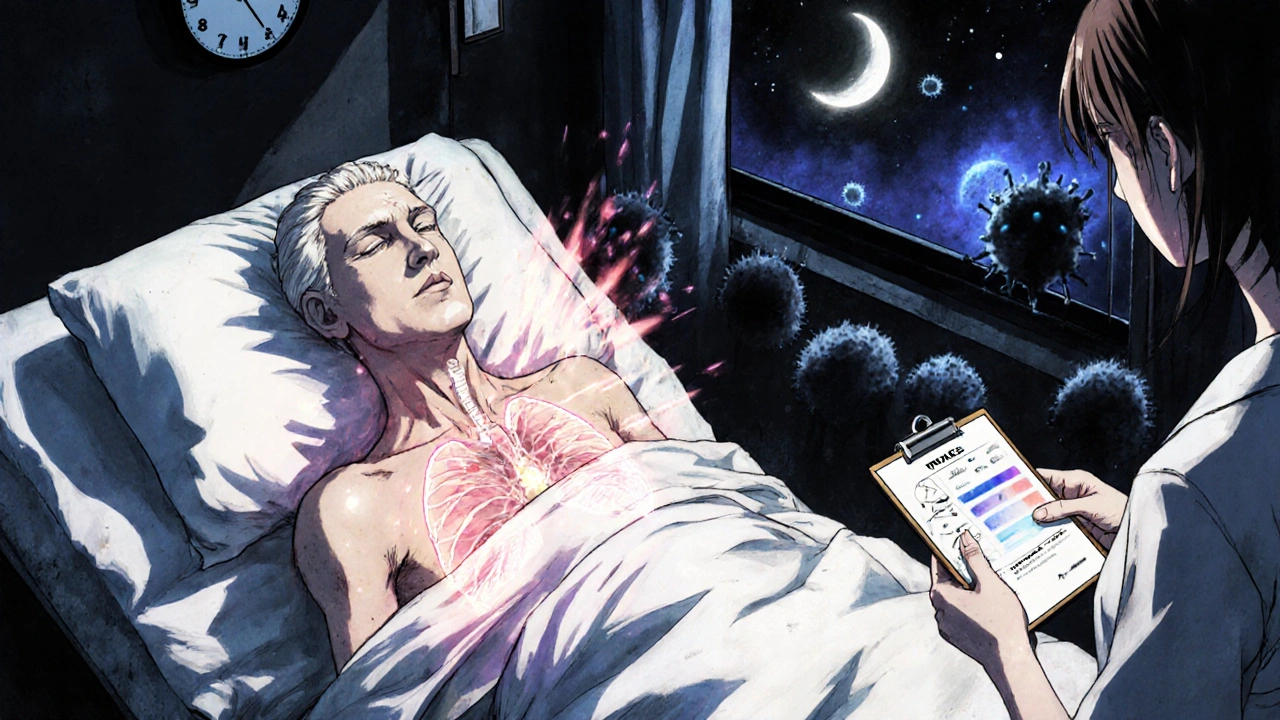
When someone starts treatment with immune checkpoint inhibitors (ICIs) for cancer, the goal is clear: get the immune system to attack the tumor. But sometimes, the immune system doesn’t stop at cancer. It turns on healthy tissue. That’s when immune-related adverse events - or irAEs - show up. These aren’t just mild rashes or upset stomachs. They can be serious, even life-threatening. And they don’t always appear right away. Some show up weeks after treatment ends. If you’re on an ICI or caring for someone who is, knowing what to watch for - and what to do - can make all the difference.
What Exactly Are irAEs?
irAEs are side effects caused by immune checkpoint inhibitors like pembrolizumab, nivolumab, ipilimumab, and atezolizumab. These drugs block proteins that normally keep the immune system in check. By removing those brakes, they help T-cells find and kill cancer cells. But they also remove the brakes on autoimmunity. The result? Inflammation in organs that have nothing to do with cancer.
It’s not rare. About 83% of people on CTLA-4 inhibitors, 72% on PD-1 inhibitors, and 60% on PD-L1 inhibitors develop at least one irAE. They can hit any organ: skin, gut, lungs, liver, thyroid, even the heart or brain. The most common? Diarrhea and colitis, rash, thyroid problems, and hepatitis. But the rare ones - like myocarditis or neurological damage - are the most dangerous.
When Do irAEs Show Up?
Most irAEs appear within the first three months of starting treatment. But that’s not the whole story. About 1 in 5 patients develop symptoms after stopping therapy - sometimes months later. That’s why you can’t just stop monitoring after the last infusion. A patient who feels fine six months after treatment might still get a sudden, severe case of pneumonitis or adrenal failure.
Timing matters because early action saves lives. If diarrhea starts on day 10, it’s more likely to be an irAE than if it shows up on day 200. But symptoms alone aren’t enough. Doctors have to rule out infections, other drugs, or cancer progression first. A stool test for C. difficile, a chest CT for pneumonia, liver enzymes for hepatitis - all need checking before calling it an irAE.
How Are irAEs Graded?
Not all irAEs are the same. They’re graded from 1 to 4 using the Common Terminology Criteria for Adverse Events (CTCAE):
- Grade 1: Mild symptoms. No treatment needed. Just watch.
- Grade 2: Moderate. Disrupts daily life. Requires treatment interruption and steroids.
- Grade 3: Severe. Hospitalization needed. High-dose steroids.
- Grade 4: Life-threatening. Emergency care required.
Grading isn’t just paperwork. It tells you what to do next. A Grade 1 rash? Keep going. A Grade 3 diarrhea? Stop the drug, start IV steroids, call a gastroenterologist - now.
First-Line Treatment: Steroids
Corticosteroids are the backbone of irAE treatment. For Grade 2 or higher, you don’t wait. You start prednisone or methylprednisolone immediately - after ruling out infection.
For Grade 2: Oral prednisone at 1 mg per kg per day. For Grade 3 or 4: IV methylprednisolone at 1-2 mg/kg/day (up to 1 gram daily) for three days, then switch to oral prednisone at the same dose.
But here’s the catch: steroids aren’t a cure. They’re a fire extinguisher. The real challenge is tapering. If you pull the dose too fast, the inflammation comes back. If you go too slow, you get steroid side effects: weight gain, insomnia, mood swings, high blood sugar, bone loss.
Guidelines say taper over 4 to 6 weeks. But in real life, some patients need months. One patient told me she was on 40 mg of prednisone for 10 weeks. Her mood was gone. She couldn’t sleep. She gained 25 pounds. She felt like a different person. And she still had to keep seeing her oncologist every week.
What If Steroids Don’t Work?
Not everyone responds. About 10-15% of cases are steroid-refractory. That means after 48 hours of high-dose steroids, symptoms don’t improve. That’s when you switch to second-line drugs.
Infliximab (a TNF-alpha blocker) is the go-to for colitis, hepatitis, and some cases of pneumonitis. Mycophenolate mofetil is used for kidney or lung involvement. IVIG helps with neurological irAEs. Cyclophosphamide is reserved for the toughest cases.
And new options are coming. Vedolizumab, a drug originally for Crohn’s disease, is now showing promise for steroid-refractory colitis. In a 2024 trial, it worked in 68% of cases - better than infliximab. Clinical trials are now comparing these drugs head-to-head.
Organ-Specific irAEs Need Special Care
Not all irAEs are treated the same. Some need more than steroids.
- Thyroid problems: Usually hypothyroidism. No steroids needed. Just thyroid hormone replacement - lifelong.
- Hypophysitis: Pituitary inflammation. Needs high-dose steroids short-term, then hormone replacement (cortisol, thyroid, sex hormones).
- Colitis: Rule out infection first. Steroids first. Infliximab or vedolizumab if no response.
- Pneumonitis: CT scan needed. Steroids immediately. Avoid infliximab - it can make lung damage worse.
- Myocarditis: Rare, but deadly. Mortality rate hits 2.7%. Requires ICU-level care: high-dose steroids, IVIG, sometimes rituximab or abatacept.
- Neurological irAEs: Myasthenia gravis, encephalitis, neuropathy. These need neurology input fast. IVIG or plasmapheresis often needed.
Dr. Jacob Brahmer at Johns Hopkins says: “If a patient on immunotherapy develops new weakness or confusion, don’t assume it’s fatigue. Call neurology. Now.”
Why Multidisciplinary Care Matters
Managing irAEs isn’t just an oncologist’s job. It takes a team.
Endocrinology for thyroid and pituitary issues. Gastroenterology for colitis. Pulmonology for lung problems. Neurology for brain and nerve damage. Dermatology for rashes. Cardiology for heart inflammation.
Leading cancer centers like MD Anderson have dedicated immune toxicity teams. They’re on call 24/7. They review every Grade 2+ case. They write protocols. They train nurses. Their hospitalization rates for severe irAEs dropped from 28% to 17.6% in 18 months.
Community clinics? Not so much. Only 62% have formal irAE protocols. That’s why patients in smaller towns are more likely to get delayed care - or misdiagnosed.
Patients Don’t Know What to Watch For
Here’s the scary part: many patients don’t realize their symptoms could be serious.
A 2023 survey found that 79% of oncology nurses say patients delay reporting symptoms because they think it’s “just a cold” or “side effects of chemo.” But irAEs aren’t like nausea or fatigue. They’re new, different, and often worsening.
Patients need clear instructions: “If you get diarrhea more than 4 times a day, call your team immediately.” “If you feel short of breath when walking up stairs, don’t wait - get checked.” “If your vision blurs or you feel weak in your arms, go to the ER.”
The European Society for Medical Oncology is now creating patient education materials in 15 languages. Because if you don’t understand the warning signs, you won’t act fast enough.
Does Treating irAEs Hurt Cancer Outcomes?
For years, doctors worried: if we suppress the immune system to treat an irAE, will the cancer come back?
The answer, based on multiple studies since 2020, is no. Treating irAEs with steroids or infliximab doesn’t reduce the chance of tumor control. In fact, patients who get timely treatment often live longer - because they can stay on therapy longer.
One 2022 review in Cancer Therapy Advisor looked at over 2,000 patients. Those who had irAEs and were treated properly had similar or better survival rates than those who didn’t have side effects.
What’s Next?
The future of irAE management is moving fast.
Biomarkers are on the horizon. A 2023 study in Nature Medicine found that patients with baseline IL-17 levels above 5.2 pg/mL had nearly five times the risk of severe irAEs. That could mean testing before treatment starts - and adjusting therapy before the first dose.
Electronic health records are catching up. Epic Systems now has built-in alerts that pop up when a patient reports diarrhea, rash, or fatigue. It automatically flags the case for review and suggests specialist referrals.
And the numbers are growing. In 2019, about 40% of cancer patients were eligible for ICIs. By 2023, that jumped to 48%. More drugs. More combinations. More irAEs.
By 2028, specialized irAE clinics are expected to grow by 22% per year. Because we can’t afford to ignore this anymore.
Bottom Line
irAEs are the price we pay for powerful cancer treatments. But they’re not unavoidable. They’re manageable - if you know the signs, act fast, and have the right team behind you.
For patients: Don’t ignore new symptoms. Don’t wait. Call your oncology team the moment something feels off.
For providers: Don’t assume it’s something else. Rule out infection. Grade it. Treat it. Call the right specialist. Document it.
irAEs aren’t a failure of treatment. They’re a sign the immune system is working - just too well. And with the right response, we can keep that immune system fighting cancer - without destroying the body.
Gus Fosarolli
November 28, 2025 AT 06:37So let me get this straight - we’re basically unleashing a rogue immune system on a person’s body and calling it ‘targeted therapy’? 🤔
Like, cool, you got the tumor… but now your liver’s staging a coup and your thyroid’s on strike. Thanks, science.
At least we’re not just throwing chemo at everything anymore. Progress? Sure. But also… terrifying.
I’ve seen patients on these drugs turn into walking steroid zombies. Weight gain, insomnia, mood swings like a toddler on sugar.
And don’t even get me started on the ‘oh it’s probably just a cold’ crowd. Nah, Karen, your diarrhea isn’t from Taco Tuesday. It’s your immune system declaring war on your colon.
Still, I’d take a 40mg prednisone hangover over a tumor growing in my lungs any day.
Just wish more docs had the patience to explain this stuff before signing the consent form.
Also, why is infliximab the go-to for colitis but banned for lungs? Like, what’s the logic? ‘Sorry, your lungs are on fire - here’s the flamethrower.’
Anyway. Thanks for writing this. Someone needed to say it without sounding like a textbook with a caffeine addiction.
Evelyn Shaller-Auslander
November 30, 2025 AT 00:44my sister was on nivolumab and got pneumonitis 5 months after stopping… we thought she just had a cold.
turned out she needed steroids and a chest ct.
scary how easy it is to miss.
pls tell patients: if u feel different, say somethin.
not ‘just tired’ - ‘i cant breathe walking up stairs’.
Ron Prince
December 2, 2025 AT 00:00Why are we letting Europeans and Canadians dictate cancer care? We’ve got the best meds, the best labs, the best doctors - yet we’re still playing catch-up because some guy in Toronto wrote a blog post?
And now we’re giving out IVIG like it’s free coffee? This is why America’s healthcare system is collapsing - too many ‘specialist referrals’ and not enough ‘just fix it.’
Also, ‘vedolizumab’? Sounds like a new Marvel villain. Who approved this? Some grad student with a thesaurus?
Real solution? Stop treating irAEs. Just stop the drug. Let the body heal. Or don’t. Either way, stop overcomplicating it.
Sarah McCabe
December 2, 2025 AT 03:48OMG this is so real 😭
my cousin had myocarditis after 2 rounds… ICU for 12 days 💔
thank u for mentioning neuro irAEs - no one talks about that
but seriously, why do docs act like it’s a surprise when the immune system goes rogue?
it’s literally designed to attack stuff 🤷♀️
also… can we get a meme template? ‘When your immune system thinks your heart is a tumor’ 😂
King Splinter
December 4, 2025 AT 01:10Look, I read this whole thing. Honestly? It’s just a long way of saying ‘the drugs work too well.’
And now we’ve got a whole industry built around treating the side effects of a treatment that was supposed to be ‘precision medicine.’
It’s like buying a Ferrari and then spending $20k a year fixing the brakes because you drove it too fast.
Why not just… not use it? I mean, if 83% of people get some kind of autoimmune meltdown, isn’t that a red flag?
And don’t even get me started on the steroid taper. That’s just a slow-motion horror movie. Weight gain, insomnia, mood swings - oh, and your bones are turning to dust.
And the ‘multidisciplinary teams’? Please. That’s just code for ‘we have no idea what we’re doing, so let’s get 7 specialists to argue about it.’
Also, why is this even a thing? Why can’t we just make drugs that kill cancer and leave the rest of the body alone?
Because we can’t. And that’s the real tragedy here.
Not the side effects. The fact that we’re still winging it with immune system nukes.
Kristy Sanchez
December 4, 2025 AT 18:03It’s not the drugs that are broken. It’s the system.
They give you a miracle drug and then hand you a pamphlet like it’s a coupon for a free latte.
‘Oh, your immune system is now a vigilante with a vendetta against your pancreas? Cool, here’s a number. Call if you start crying uncontrollably or your vision melts.’
And then they wonder why people don’t report symptoms.
Because nobody wants to be the one who says ‘I think my body is betraying me’ and get a 10-minute consult with a nurse who’s already on her 17th call.
Also - ‘steroids aren’t a cure’? No shit, Sherlock. They’re a Band-Aid on a gunshot wound.
And the fact that we’re only now realizing patients need education in 15 languages? That’s not progress. That’s shame.
We treat cancer like a puzzle. But we treat the person like a bug we accidentally stepped on.
And don’t even get me started on the ‘survival rates don’t drop’ argument.
That’s not a win. That’s just damage control with a PowerPoint.
Michael Friend
December 6, 2025 AT 15:03Let’s be real - this whole irAE thing is just oncology’s version of a midlife crisis.
They got these amazing drugs, they thought they’d cured cancer, and now they’re panicking because the immune system is literally winning.
They’re throwing infliximab, IVIG, cyclophosphamide - like it’s a magic potion from a fantasy novel.
And the ‘multidisciplinary teams’? More like ‘multidisciplinary bureaucracy.’
Meanwhile, patients are Googling ‘is this a side effect or am I dying?’ at 2 a.m.
And you know what? The real problem isn’t the irAEs.
It’s that we treat patients like data points until they break - then suddenly we care.
Wake up. This isn’t medicine. It’s triage theater.
Jerrod Davis
December 7, 2025 AT 20:24It is imperative to underscore the clinical necessity of adhering to the Common Terminology Criteria for Adverse Events (CTCAE) grading system, as delineated in the aforementioned text. Failure to do so may result in inappropriate therapeutic intervention, potentially exacerbating patient morbidity. Furthermore, the administration of corticosteroids must be meticulously calibrated, with dosage adjustments based on body weight and organ involvement, as outlined in current National Comprehensive Cancer Network (NCCN) guidelines. The utilization of second-line agents such as infliximab, while efficacious in select cases, is contraindicated in the context of pneumonitis due to the potential for iatrogenic pulmonary exacerbation. It is further recommended that all institutions implement standardized protocols for irAE recognition, with mandatory continuing medical education for oncology nurses and primary care providers. The absence of such infrastructure in community-based settings remains a critical public health disparity.
Dominic Fuchs
December 9, 2025 AT 18:36irAEs are the immune system screaming ‘I’m not a weapon, I’m a home’
we gave it a gun and now we’re mad it shot the couch
the real tragedy? we never asked if it wanted to be a soldier
steroids? they’re not fixing anything
they’re just silencing the scream
and the taper? that’s just the echo
we’re not treating disease
we’re managing the aftermath of playing god
and yeah - the survival stats look good
but what’s the cost of living after you’ve been rebuilt by fire?
we need to ask that before we give out the next dose