
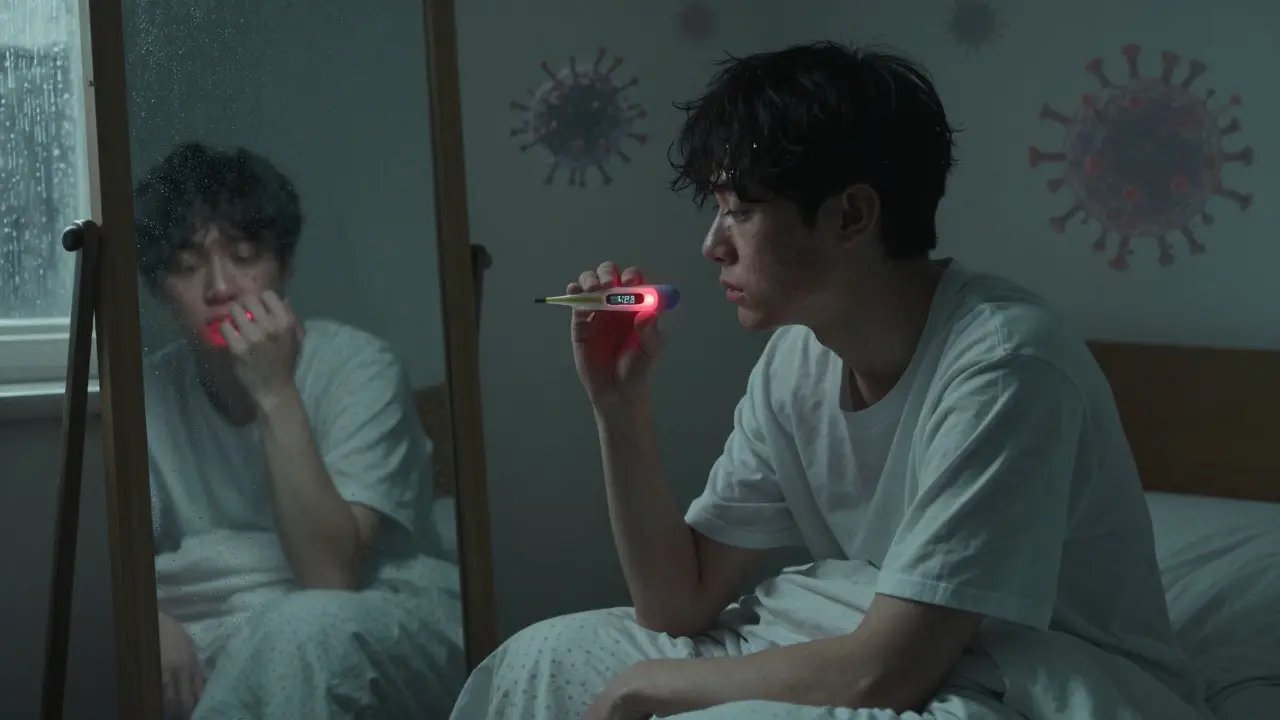
Immunosuppressant Risk Calculator
This tool helps estimate your personalized infection risk based on immunosuppressant medications and treatment factors. Results are for informational purposes only and should not replace professional medical advice.
When your immune system is weakened-whether by disease, transplant, or the very drugs meant to treat you-taking medication becomes a high-stakes balancing act. For immunocompromised patients, a simple cold can turn dangerous. A minor skin infection might spread. Even a routine flu shot might not work the way it should. This isn’t just about side effects. It’s about how your body reacts to medicine when it can’t fight back the way it used to.
What Does It Mean to Be Immunocompromised?
Being immunocompromised means your immune system isn’t working the way it should. You might not get sick more often than others, but when you do, it’s harder to shake off. Your body doesn’t mount the usual fever, swelling, or fatigue response. That’s not a good thing. It means infections can sneak up on you-quietly, dangerously. This isn’t rare. About 7.6% of Americans-roughly 24 million people-have an autoimmune disease like rheumatoid arthritis, lupus, or Crohn’s disease. Many of them take drugs that intentionally suppress their immune system. Others are immunocompromised after organ transplants, cancer treatments, or due to conditions like HIV or untreated diabetes. The key point? You can’t judge how sick you are by how you feel. A fever might not come. Redness might be subtle. Pain might be dull. That’s why monitoring and awareness matter more than ever.How Immunosuppressants Work-and Why They’re Risky
Immunosuppressants aren’t one thing. They’re a whole family of drugs, each with its own way of quieting the immune system-and each with its own set of risks. Corticosteroids like prednisone are the most common. They stop your body from making inflammatory chemicals and reduce white blood cell production. At doses above 20mg a day, or if taken for more than two weeks, they significantly raise your risk of infection. One study of over 4,000 patients found that steroid users had a 60% higher chance of getting a serious infection than those on a placebo. Methotrexate, a conventional DMARD, is often used for arthritis and other autoimmune conditions. It works by slowing down overactive immune cells. But it also hits your bone marrow. About half of patients stop taking it within a year because of side effects: nausea, fatigue, mouth sores, and liver stress. Monthly blood tests are required to catch drops in blood counts before they become dangerous. Azathioprine cuts down on T and B cells, the immune system’s frontline fighters. It can cause low white blood cell counts (leukopenia), which opens the door to bacterial infections. It’s also linked to reactivation of viruses like hepatitis B, cytomegalovirus (CMV), and even a rare brain infection called PML caused by the JC virus. Biologics-drugs like Humira, Enbrel, and Remicade-are the most powerful. They target specific parts of the immune system, like TNF-alpha, to stop inflammation. But because they’re so targeted, they leave big gaps in your defenses. Studies show they carry a higher infection risk than older drugs like methotrexate. Herpes zoster (shingles) is especially common in patients on these drugs. Calcineurin inhibitors like cyclosporine and tacrolimus are used after transplants. They prevent organ rejection but also make you vulnerable to viruses like Epstein-Barr and polyomavirus. These drugs require constant blood level monitoring because even small changes can lead to toxicity or infection.The Hidden Danger: Atypical Infections
Here’s the part most people don’t talk about: infections in immunocompromised patients don’t look like infections in healthy people. You might not have a fever. You might not feel achy. You might just feel tired. Or slightly off. A cough might not come with phlegm. A skin rash might not be red or warm to the touch. That’s because corticosteroids and other drugs blunt your body’s normal warning signs. This is why delayed diagnosis is so dangerous. A simple urinary tract infection can turn into sepsis. A small cut on your finger can lead to a deep tissue infection. Pneumonia might show up as confusion or dizziness instead of coughing. Doctors call this "masked infection." It’s why patients on immunosuppressants are told to report even the smallest changes-like a low-grade temperature, new headache, or unusual fatigue. Don’t wait for the textbook symptoms. By then, it might be too late.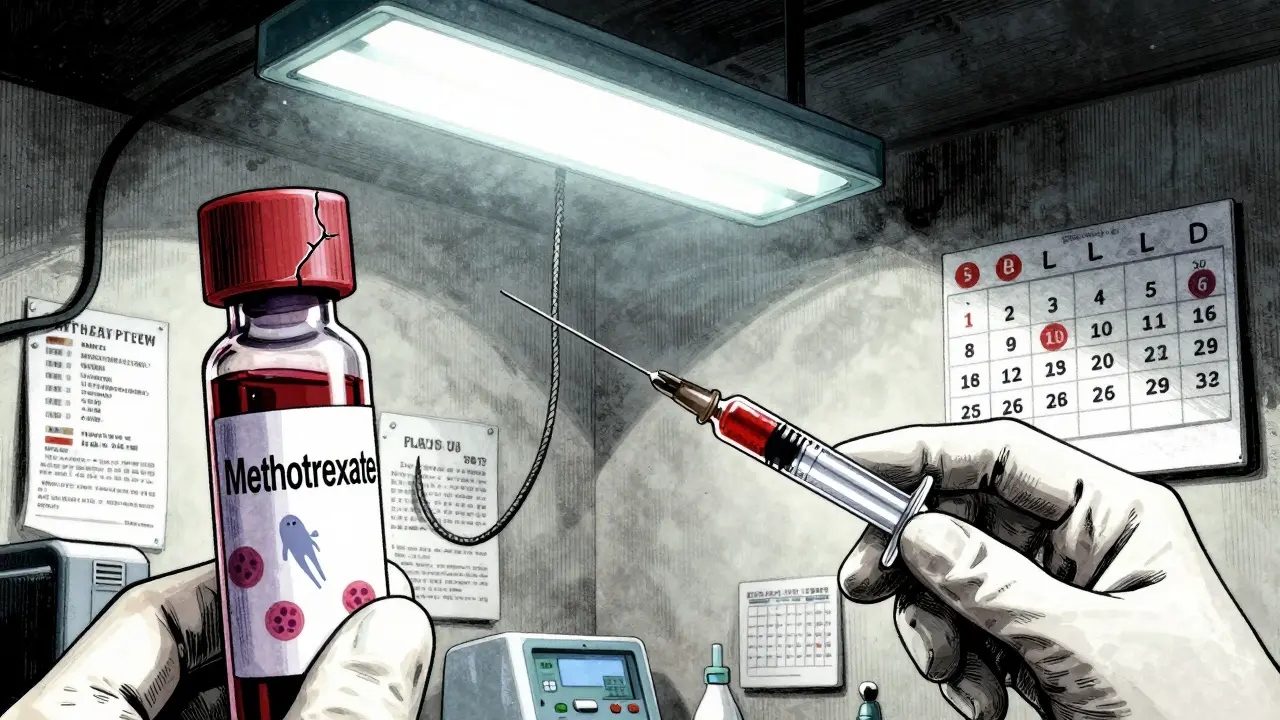
Combining Drugs Multiplies the Risk
Many patients take more than one immunosuppressant. A transplant patient might be on tacrolimus, prednisone, and mycophenolate. A rheumatology patient might take methotrexate and a biologic together. That’s not just adding risks. It’s multiplying them. Studies show that combining drugs like steroids with other immunosuppressants increases the chance of serious or opportunistic infections beyond what you’d expect from either drug alone. For example, a patient on both prednisone and methotrexate has a much higher risk of developing Pneumocystis jirovecii pneumonia (PCP)-a lung infection that rarely affects healthy people. Even over-the-counter supplements can interfere. St. John’s Wort can lower tacrolimus levels. Garlic and ginseng can thin the blood and interact with immune drugs. Always tell your doctor what you’re taking-even if you think it’s "just a vitamin."What You Can Do: Prevention Is Everything
You can’t eliminate the risks, but you can control them. Get vaccinated-but at the right time. Live vaccines (like MMR, varicella, or nasal flu spray) are off-limits once you’re on immunosuppressants. But inactivated vaccines (flu shot, pneumonia, COVID-19, tetanus) are still critical. Ideally, get them before starting treatment. Even if you’re already on medication, get the shots. They might not work as well, but they still help. Wash your hands like your life depends on it. Not just once a day. Every time you come home, before you eat, after using the bathroom. Use soap and water for at least 20 seconds-long enough to sing "Happy Birthday" twice. Alcohol-based sanitizer works when soap isn’t available. Wear a mask in crowded places. Hospitals, airports, public transit, grocery stores during flu season-these are high-risk zones. A simple surgical mask cuts your exposure to airborne viruses dramatically. Check your skin daily. Look for new sores, red patches, or unusual bumps. Even a tiny blister could be herpes zoster. A red spot that doesn’t heal could be a sign of skin cancer, which is more common in people on long-term immunosuppressants. Protect yourself from bugs. The CDC warns immunocompromised people are at higher risk for mosquito- and tick-borne diseases like West Nile, Lyme, and Zika. Use repellent. Wear long sleeves. Check for ticks after being outside.
When to Call Your Doctor-Immediately
Don’t wait. Don’t try to tough it out. If you’re immunocompromised and you notice any of these, call your doctor right away:- Fever of 100.4°F (38°C) or higher-even if you don’t feel sick
- New cough, shortness of breath, or chest tightness
- Unexplained fatigue that lasts more than a day or two
- Red, warm, swollen skin or a wound that won’t heal
- Severe headache, confusion, or vision changes
- Diarrhea lasting more than 24 hours
- Any new rash, blister, or lesion
The Unexpected Twist: COVID-19 and Immunosuppression
Early in the pandemic, everyone assumed immunocompromised patients would be hit hardest by COVID-19. The logic made sense: weaker immune system = worse outcome. But research from Johns Hopkins in 2021 showed something surprising. Patients on immunosuppressants had outcomes similar to those without them. Why? It’s still being studied. One theory: suppressing the immune system might have prevented the dangerous overreaction-called a cytokine storm-that kills some otherwise healthy people. That doesn’t mean immunosuppressants are safe. It just means biology is complicated. What works for one infection doesn’t work for another. That’s why personalized care matters more than ever.Living With the Risk
It’s a hard truth: many of these drugs save lives. A kidney transplant recipient might live 15 more years because of tacrolimus. Someone with severe rheumatoid arthritis might walk again because of a biologic. But living with these drugs means accepting a new normal. You might need to skip family gatherings during flu season. You might have to get blood tests every month. You might feel guilty for saying no to a hug because you’re worried about germs. That’s okay. You’re not being dramatic. You’re being smart. The goal isn’t to live in fear. It’s to live with awareness. To know your body’s new signals. To speak up when something feels off. To partner with your doctor-not just as a patient, but as an active participant in your care. You’re not alone. Millions are managing this same balance. And with the right knowledge, the right habits, and the right support, you can live well-even with a weakened immune system.Can immunosuppressants cause cancer?
Yes, long-term use of some immunosuppressants increases cancer risk, especially skin cancer and lymphoma. This is why regular skin checks and cancer screenings are part of routine care. The FDA requires black box warnings for many of these drugs because of this risk. The benefit of controlling a life-threatening autoimmune disease often outweighs the cancer risk, but monitoring is essential.
Do I need to stop my medication before getting a vaccine?
Usually not. Most vaccines are safe to take while on immunosuppressants. But live vaccines (like MMR or chickenpox) are dangerous and should be avoided. For inactivated vaccines (flu, COVID-19, pneumonia), timing matters. Ideally, get them before starting treatment. If you’re already on medication, get the shot anyway-it still offers some protection, even if it’s weaker. Talk to your doctor about the best timing for your specific drugs.
Why do I need monthly blood tests if I feel fine?
Because you might not feel symptoms until it’s too late. Drugs like methotrexate can slowly lower your white blood cells or damage your liver without causing obvious signs. Monthly blood tests catch these changes early. A drop in platelets or elevated liver enzymes might mean your dose needs adjusting-or you need to switch medications before you get seriously ill.
Are there safer alternatives to immunosuppressants?
For some conditions, yes. Physical therapy, diet changes, and stress management can help with mild autoimmune symptoms. But for serious diseases like lupus, Crohn’s, or transplant rejection, there are no proven alternatives that work as well. Newer drugs like JAK inhibitors aim to be more targeted, with fewer broad immune effects. But they still carry infection risks. The choice isn’t between safe and risky-it’s about choosing the least risky option for your situation.
Can I travel if I’m immunocompromised?
You can, but you need to plan carefully. Avoid areas with poor sanitation or high rates of infectious diseases. Get travel-specific vaccines before departure (if allowed). Carry hand sanitizer and masks. Know where the nearest clinic is at your destination. Some countries require proof of vaccination or have restrictions for immunocompromised travelers. Talk to your doctor at least 6 weeks before you go.
Daz Leonheart
February 3, 2026 AT 07:17Been on methotrexate for six years now. The monthly blood tests suck, but I’d rather know my counts are dropping than wake up with pneumonia and no fever. This post nailed it-no dramatic symptoms doesn’t mean nothing’s wrong. I’ve learned to trust the numbers more than my gut.
Also, hand sanitizer is my best friend. I keep three in my car, one at my desk, and one in my jacket. No shame.
Mandy Vodak-Marotta
February 5, 2026 AT 06:52I’m a transplant recipient and honestly? The scariest part isn’t the meds-it’s the silence. No fever, no redness, no swelling… just this weird, persistent tiredness that you think is just stress or bad sleep. Then you go in for a checkup and find out your liver enzymes are through the roof or your white count is below 2k. I used to wait until I felt ‘bad enough’ to call my doctor. Now I call at the first whisper of ‘off.’
Also, I wear a mask in the grocery store like it’s my job. People stare. I don’t care. I’ve seen what happens when you wait too long. My sister didn’t make it because she thought ‘it was just a cold.’ Don’t be her.
And yes, I still hug my grandkids. But I wash my hands first. And I don’t let them kiss me on the mouth. Small boundaries save lives.
Also-St. John’s Wort is a trap. I took it for ‘mood support’ and my tacrolimus levels crashed. My nephrologist looked at me like I’d just set fire to my own kidney. Lesson learned.
Don’t assume ‘natural’ means safe. It just means your doctor didn’t test it.
And yes, I’ve had to cancel family dinners. And yes, I cry about it sometimes. But I’m still here. That’s the win.
Alec Stewart Stewart
February 6, 2026 AT 04:18My dad’s on prednisone after his kidney transplant. He didn’t tell anyone for months because he didn’t want to be ‘that guy.’ Then he got a UTI and ended up in the ICU. No fever. Just confused and tired. We almost lost him.
Now he carries a card in his wallet that says ‘Immunocompromised-Call Doctor for Any Fever or New Symptom.’
Everyone should have one.
Jesse Naidoo
February 6, 2026 AT 22:25Why do people act like immunosuppressants are some kind of death sentence? I’ve been on Humira for 8 years. I’ve traveled to 12 countries. I’ve hugged my nieces. I’ve gone to concerts. I’ve had colds. I’ve had flu shots. I’m not dead. Stop acting like we’re all going to die in a hospital bed.
It’s not about fear. It’s about smart choices. And you’re not special if you’re scared. We all are. We just learned to live with it.
Also, I hate when people say ‘just boost your immune system’ with turmeric and yoga. I’ve tried it. It didn’t stop my Crohn’s from eating my colon. Medication did.
Lorena Druetta
February 7, 2026 AT 11:15It is imperative that individuals under immunosuppressive therapy adhere rigorously to prophylactic protocols, as noncompliance may result in catastrophic outcomes. The data supporting vaccination efficacy, even if attenuated, remains statistically significant. Furthermore, hand hygiene, when performed with appropriate technique and duration, constitutes a non-pharmacological intervention of paramount importance. I urge all patients to consult their primary care physician prior to initiating any dietary supplement, as interactions with calcineurin inhibitors are well-documented in peer-reviewed literature. Vigilance is not optional-it is a moral imperative.
Zachary French
February 8, 2026 AT 18:59Let me break this down for you like you’re five, because apparently no one else has the guts to say it: immunosuppressants are basically giving your immune system a sedative while a bunch of invisible monsters are knocking on your door. You’re not ‘just tired’-you’re one sneeze away from a fungal infection in your lungs. And yes, that one guy who said ‘just take garlic’? He’s probably the same guy who thinks ‘vitamin C cures cancer.’
And don’t get me started on ‘natural remedies.’ I once had a guy tell me to ‘meditate my rheumatoid arthritis away.’ I laughed. Then I cried. Then I went to the ER because my fingers turned purple.
These drugs are not magic. They’re not evil. They’re just weapons-and you’re the soldier. And soldiers don’t argue with their gear. They maintain it. They know its limits. And they never, ever skip the maintenance check.
Also, if you think you’re ‘too healthy’ to need a mask in CVS during flu season, you’re not brave-you’re reckless. And your doctor is probably drafting a letter to your family right now.
Nathan King
February 10, 2026 AT 01:24While the article presents a comprehensive overview of immunosuppressive pharmacology and associated clinical risks, it lacks a critical discussion regarding socioeconomic disparities in access to monitoring and prophylactic care. The recommendation for monthly blood tests assumes consistent healthcare access, insurance coverage, and transportation-a luxury not universally available. Furthermore, the emphasis on personal responsibility for infection prevention neglects structural determinants of health. A truly equitable approach must integrate policy-level interventions alongside patient education.
Harriot Rockey
February 10, 2026 AT 02:43Thank you for writing this. I’ve been on biologics for lupus since 2020 and I swear, I didn’t realize how much I’d lost until I read this. I stopped hugging people. I stopped going to parties. I started checking my skin every morning like it’s a ritual. And yeah, sometimes I feel like a ghost. But I’m alive. And that’s the win.
I started a little Instagram page for people on immunosuppressants-just photos of my meds, my blood test results (blurred), my mask on the bus, my hand sanitizer on the counter. No filters. No poses. Just real life.
And guess what? Thousands of people are following it. We’re not alone. We’re a quiet army. And we’re still here.
Also, I got my flu shot last week. I cried afterward. Not because I was scared. Because I was proud.
❤️
rahulkumar maurya
February 11, 2026 AT 15:44As an Indian physician with over 15 years in rheumatology, I must say this article is overly simplistic. In our context, most patients cannot afford monthly blood tests. Many cannot even afford the drugs. The notion that ‘vaccines are critical’ is irrelevant when 80% of patients stop treatment due to cost. Also, the emphasis on masks ignores cultural norms-many patients wear masks only when forced. The real issue is systemic neglect, not patient ignorance.
And for the record: St. John’s Wort is not the problem. The problem is the lack of physician follow-up. You don’t need a PhD to know that. You need a functioning healthcare system.
Roshan Gudhe
February 13, 2026 AT 01:44There’s a deeper truth here that no one says out loud: these drugs don’t just suppress the immune system-they suppress your sense of self. You stop being ‘me’ and become ‘the patient.’ You learn to measure your life in lab results and pill schedules. You stop dreaming about the future because you’re too busy surviving the present.
But here’s what I’ve learned: the bravest thing you can do isn’t taking the pill. It’s waking up every morning and choosing to live anyway. Even if you’re tired. Even if you’re scared. Even if you have to say no to the hug.
We’re not broken. We’re adapted. And adaptation is the oldest form of survival.
So to everyone reading this: you’re not a burden. You’re not a risk. You’re not a statistic.
You’re a person who’s still here. And that’s enough.
Daz Leonheart
February 14, 2026 AT 19:06My mom just got her first flu shot since her transplant. She said, ‘I didn’t think it would work.’ I told her, ‘It doesn’t have to work perfectly. It just has to be one more layer.’ She cried. So did I.
Thanks for this.