
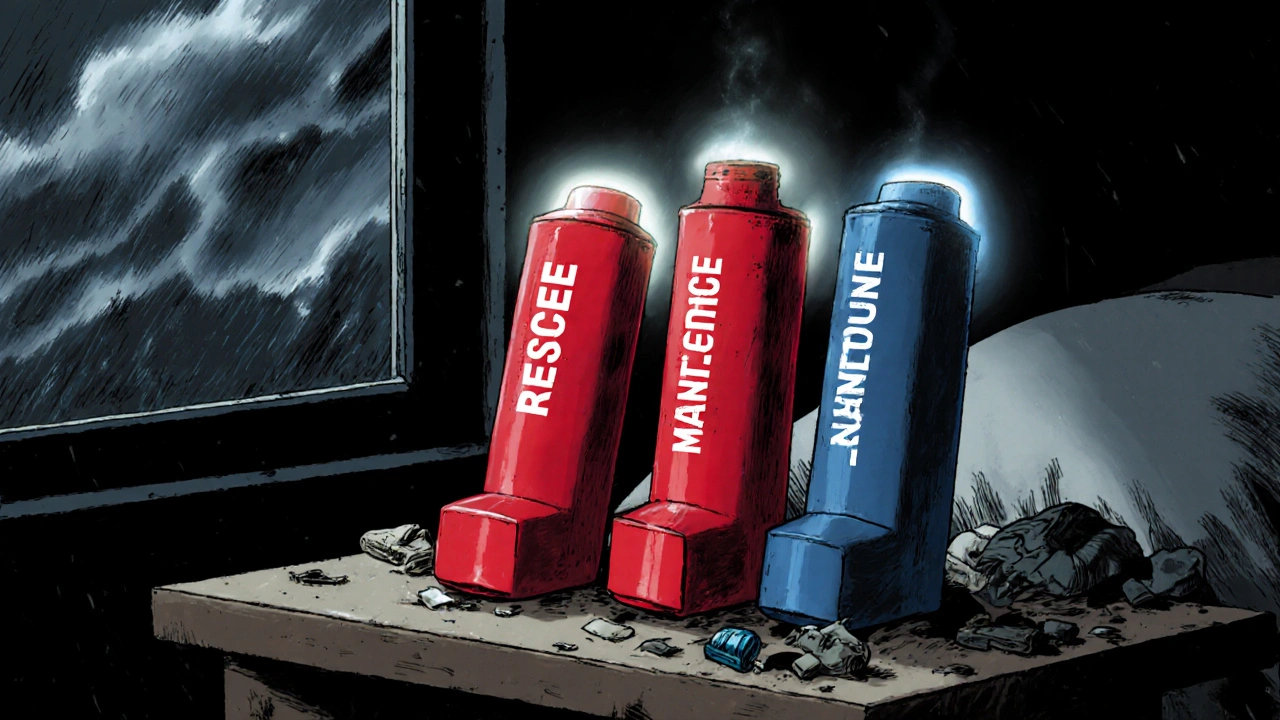
Two inhalers sit side by side on the nightstand. Both are small, plastic, and red. One saves your life when you can’t breathe. The other keeps you from needing it in the first place. If you can’t tell the difference, you’re not alone-and you’re at risk.
What Rescue Inhalers Actually Do
Rescue inhalers are your emergency tool. They kick in within 1 to 5 minutes when your airways suddenly tighten during an asthma attack or flare-up. The active ingredient is almost always a short-acting beta agonist, like albuterol (found in Ventolin, ProAir, Proventil) or levalbuterol (Xopenex). These drugs work by relaxing the muscles around your bronchial tubes, instantly opening your airways so you can breathe again.
They don’t fix the inflammation causing the attack. They don’t reduce swelling. They don’t prevent future episodes. They just give you a quick, powerful burst of relief. That’s why they’re called rescue inhalers-not preventive ones.
When used correctly, albuterol can improve your peak expiratory flow by up to 85% within 10 minutes. But if you’re using it more than twice a week (outside of exercise), your asthma isn’t under control. That’s not normal. That’s a warning sign.
What Maintenance Inhalers Actually Do
Maintenance inhalers are the quiet backbone of asthma management. They don’t give you instant relief. In fact, you won’t feel anything when you use them. That doesn’t mean they’re not working. They’re working deep inside your lungs, fighting inflammation before it turns into a full-blown attack.
These contain inhaled corticosteroids like fluticasone or budesonide. Some combine them with long-acting beta agonists (LABAs) like formoterol or salmeterol. These are not quick fixes. They take 24 to 48 hours to start working and 1 to 3 weeks to reach full effect. You have to use them every day-even when you feel fine.
Studies show consistent use cuts asthma exacerbations by 40 to 60%. In one 2022 review of over 15,000 patients, those using maintenance inhalers regularly had far fewer ER visits and hospital stays. But skip just 20% of your doses-say, 3 days a week-and effectiveness drops by 45%. It’s not about willpower. It’s about biology.
The Danger of Mixing Them Up
Here’s the scary part: people mix them up all the time.
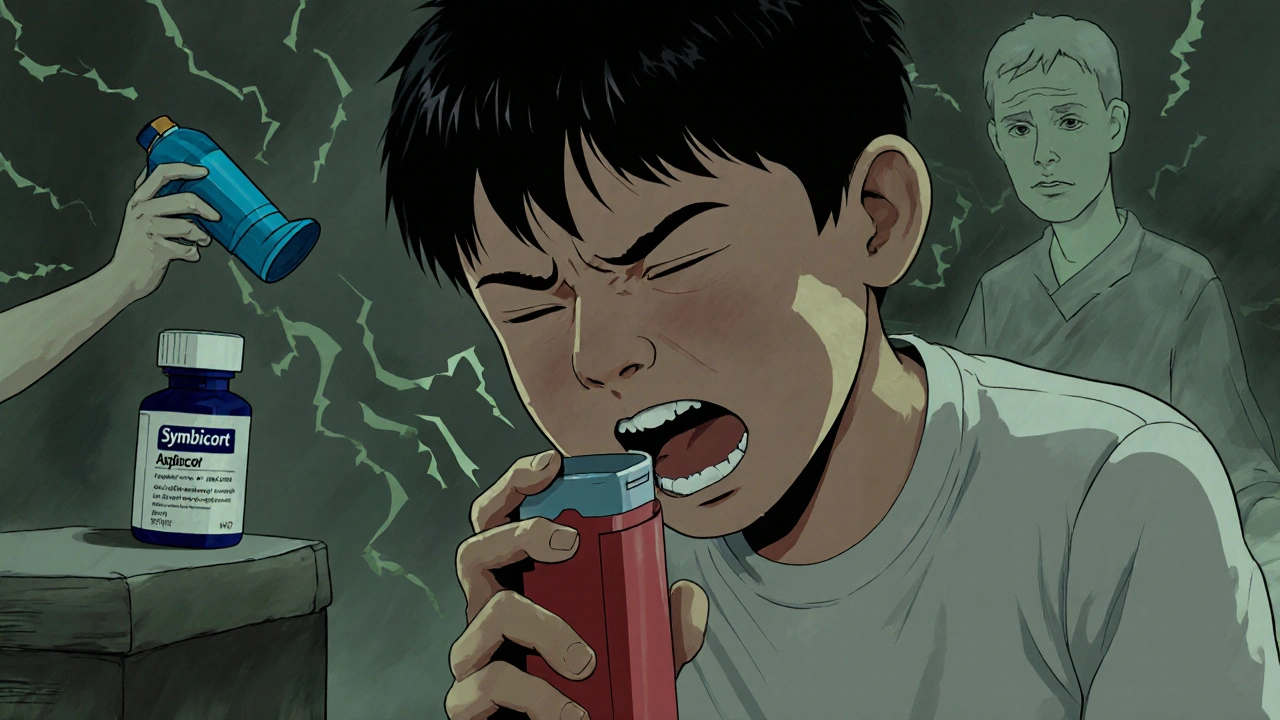
In June 2023, a 9-year-old boy at summer camp had an asthma attack. He grabbed the red inhaler next to his water bottle-the one he used every morning. It was Symbicort, a maintenance inhaler with budesonide and formoterol. He didn’t know it wasn’t his rescue inhaler. He waited 12 minutes for relief. His breathing got worse. He ended up in the ER.
That’s not rare. The Institute for Safe Medication Practices logged 1,247 reported mix-up incidents in 2022 alone. Many of these involved inhalers that looked identical: same color, same size, same shape. One Reddit user, ‘WheezingWalter,’ admitted he used his Symbicort like an albuterol inhaler for three months before his doctor told him his asthma was dangerously uncontrolled.
Using a maintenance inhaler during an attack delays treatment. And delay kills. The American College of Allergy, Asthma & Immunology found that 38% of near-fatal asthma cases involved people relying on rescue inhalers alone, skipping maintenance therapy entirely.
How to Tell Them Apart
Don’t guess. Don’t rely on memory. Use these clear, simple rules:
- Color coding: Red usually means rescue. Blue or white usually means maintenance. Asthma UK and the FDA now require this standardization on new inhalers.
- Label reading: Look for the active ingredient. Albuterol or levalbuterol? That’s rescue. Fluticasone, budesonide, mometasone? That’s maintenance. Formoterol or salmeterol? Could be maintenance-or a combo inhaler.
- Usage frequency: Rescue = only when you need it. Maintenance = every day, morning and night, rain or shine.
- Expiration: Rescue inhalers last about 12 months after opening. Maintenance inhalers vary-check the package. Once expired, they may not deliver the right dose.
Write the name and purpose on the inhaler with a permanent marker. Keep them in different places. One by your bed, one in your bag. Make it impossible to grab the wrong one in a panic.
New Guidelines: One Inhaler for Both Jobs?
Things are changing. The 2023 Global Initiative for Asthma (GINA) guidelines now recommend single-inhaler therapy for many patients.
Drugs like Symbicort (budesonide + formoterol) and Advair (fluticasone + salmeterol) can be used both daily as maintenance and as-needed for quick relief. This is called SMART therapy-Single Inhaler Maintenance and Reliever Therapy.
It works because formoterol, the LABA in Symbicort, kicks in fast-within 1 to 3 minutes-like a rescue inhaler-while still delivering the anti-inflammatory power of budesonide. This eliminates the confusion of two devices. It’s now the first-line treatment for moderate to severe asthma.
But it’s not for everyone. If you have mild, intermittent asthma, you may still only need a rescue inhaler on an as-needed basis. Overprescribing daily steroids to people who rarely have symptoms is a real problem. One study found 27% of patients were getting unnecessary daily medication.
What Happens When You Don’t Use Them Right
Using only rescue inhalers? You’re treating symptoms, not the disease. Your lungs keep getting more inflamed. Your attacks get worse. You end up in the hospital. The CDC reports 3,600 asthma deaths annually in the U.S.-most of them preventable.
Using maintenance inhalers only when you feel bad? You’re wasting them. They don’t work that way. Inflammation doesn’t care if you feel okay today. It’s still there, quietly damaging your airways.
And overusing rescue inhalers? That’s dangerous too. Albuterol isn’t harmless. Too much can cause rapid heartbeat, shaking, and even worsen asthma over time by making your body less responsive to it.
The fix? Track your usage. The American Lung Association’s Asthma Action Plan says: if you’re using your rescue inhaler more than two times a week, your asthma isn’t controlled. Call your doctor. Adjust your meds. Don’t wait for an emergency.
Cost, Access, and Real Barriers
Let’s be real: cost matters.
A generic albuterol rescue inhaler costs $35-$50 without insurance. But a maintenance inhaler like Symbicort? $300-$350 a month. That’s why 42% of patients skip doses because they can’t afford them, according to a 2024 Kaiser Family Foundation survey.
Some pharmacies offer discount programs. Generic versions of fluticasone (like Flonase Sensimist) are cheaper. Ask your doctor about alternatives. Insurance often covers maintenance inhalers better than rescue ones-but not always.
And if you’re paying out of pocket, don’t buy the cheapest one you can find. Expired or improperly stored inhalers lose potency. Keep them below 86°F. Don’t leave them in your car in summer.
How to Use Them Right
Using the inhaler wrong means you’re getting almost nothing. Here’s how to do it:
- Shake well.
- Breathe out fully-away from the inhaler.
- Place mouthpiece in your mouth, seal lips tightly.
- Press the canister and breathe in slowly for 5 to 7 seconds.
- Hold your breath for 10 seconds.
- Wait 30 seconds before a second puff, if prescribed.
With correct technique, you get 30-40% of the dose into your lungs. With bad technique? As low as 10-15%. That’s the difference between control and crisis.
Use a spacer if you’re a child, elderly, or have trouble coordinating. It makes everything easier and more effective.
What’s Next?
The future of asthma care is simpler. By 2027, experts predict 60% of new patients will start on a single combination inhaler-reducing confusion-related errors by nearly half. Clinical trials are even testing ultra-fast corticosteroid rescue inhalers that work in under 90 seconds.
But right now, the most powerful tool you have is knowledge. Know which inhaler does what. Know how to use it. Know when to call your doctor. And never, ever assume the red one is safe to use every day.
Your lungs don’t lie. If you’re using your rescue inhaler too often, your body is screaming for help. Listen.
Can I use my maintenance inhaler during an asthma attack?
No. Maintenance inhalers take hours to days to work and won’t relieve sudden breathing trouble. Using them during an attack delays proper treatment and can be dangerous. Only use your rescue inhaler (like albuterol) for acute symptoms. If you’re on a combination inhaler like Symbicort that’s approved for both uses, follow your doctor’s specific instructions.
How do I know if my asthma is well-controlled?
If you’re using your rescue inhaler more than twice a week (not counting exercise), your asthma isn’t controlled. Other signs: waking up at night with symptoms, limiting activities due to breathing trouble, or needing oral steroids more than once a year. Talk to your doctor if any of these happen.
Are rescue inhalers safe to use often?
Not if you’re using them too often. Albuterol is safe for occasional use, but frequent use (more than 8-10 puffs per week) can signal worsening asthma and may lead to tolerance or side effects like rapid heartbeat. It’s a sign your maintenance therapy needs adjustment-not that you need more rescue doses.
Why do some inhalers look so similar?
Many older inhalers were designed without color-coding standards. That’s changing. Since 2023, the FDA requires new inhalers to use distinct colors: red for rescue, blue or white for maintenance. If you have an older inhaler, label it clearly or keep them in separate places to avoid confusion.
Can I stop using my maintenance inhaler if I feel fine?
No. Asthma inflammation continues even when you feel fine. Stopping maintenance inhalers-even for a few days-can cause symptoms to return quickly and increase your risk of a serious attack. Always follow your doctor’s prescribed schedule unless they tell you otherwise.
Travis Freeman
November 30, 2025 AT 04:05Love this breakdown! I used to mix up my inhalers until my grandma slapped me with a permanent marker and wrote 'EMERGENCY' on mine. Now I keep them in different pockets. Simple fixes save lives.
Sean Slevin
November 30, 2025 AT 22:36Wow… this is… like… mind-blowing, honestly? I had no idea that maintenance inhalers take DAYS to kick in… I thought they were just… slow-acting albuterol?? I’ve been using mine like a snack… every time I felt a tickle… oh my gosh… I’m so sorry to my lungs…
Chris Taylor
December 1, 2025 AT 16:36My cousin’s kid had a near-miss last year because they grabbed the wrong one. I showed my whole family how to label theirs with tape and a Sharpie. It’s stupid simple but it works. No one should almost die because of a color.
Melissa Michaels
December 3, 2025 AT 14:55It’s critical to emphasize that combination inhalers like Symbicort used under SMART therapy are not interchangeable with traditional dual-inhaler regimens without medical supervision. Patients must be properly educated on their specific regimen, as misuse can lead to under-treatment of inflammation or overuse of beta-agonists.
Nathan Brown
December 4, 2025 AT 04:36Think about it… we’ve got these tiny plastic tubes that can keep you alive… but we treat them like car keys… toss ‘em in a drawer… hope they work…
It’s wild… we’ll spend hours researching coffee makers… but ignore the device that keeps us breathing…
And now they’re making them into one… but only if you’re rich enough…
What does that say about us?
Also… formoterol in 90 seconds?? That’s like… magic… or capitalism… maybe both.
Olivia Currie
December 5, 2025 AT 10:09OMG I JUST REALIZED I’VE BEEN USING MY Symbicort AS MY RESCUE FOR 6 MONTHS 😭😭😭 I’M SO SCARED RIGHT NOW I’M CRYING AND SCREAMING INTO MY PILLOW BUT ALSO GOING TO THE PHARMACY TOMORROW TO GET A RED ONE AND LABEL EVERYTHING AND I’M TELLING EVERYONE I KNOW
Curtis Ryan
December 6, 2025 AT 13:45Man I used to use my rescue like candy… every time I sneezed… then I got asthma camp… my doc was like ‘you’re not a dragon… you’re not breathing fire…’ and I was like ‘but it feels like it!’… now I only use it when I’m actually gasping… and I feel like a superhero…
Rajiv Vyas
December 6, 2025 AT 21:08They say red means rescue but what if the FDA is just lying to sell more drugs? What if the real reason they changed colors is so you can’t tell which one your insurance paid for? I’ve been using my blue one as rescue since 2021 and I’m still alive… maybe they’re all the same… maybe it’s all a scam…
Astro Service
December 8, 2025 AT 08:25Why do we even need these? In my day we just sucked it up. My grandpa had asthma and he never used no inhalers. He just smoked and drank coffee and lived to 92. You people are too soft. Stop buying into the pharma scam.
DENIS GOLD
December 10, 2025 AT 00:51Oh wow… another article telling us how to breathe better. Next they’ll tell us to drink water and sleep. Thanks for the 101, Doc. I’m sure the 300-dollar inhaler is totally worth it when the real problem is that your doctor doesn’t have time to actually listen.
Ifeoma Ezeokoli
December 11, 2025 AT 14:28I’m from Nigeria and we don’t even have access to these inhalers half the time. But I showed my sister how to make a spacer out of a plastic bottle and now she’s using her rescue better. Knowledge is power… even if the medicine isn’t.
Sachin Agnihotri
December 13, 2025 AT 02:35Wait… so if I use my maintenance inhaler during an attack, it’s not just useless… it’s actually dangerous?? I’ve been doing that for years… I’m gonna cry… I’m gonna cry and I’m gonna buy a marker and I’m gonna write on all my stuff now…
Andrea Jones
December 14, 2025 AT 15:36So… you’re telling me the red one is the ‘oh crap’ button… and the other one is the ‘don’t let it get to oh crap’ button…
And I’ve been pressing the ‘oh crap’ button every morning like it’s a coffee machine…
Wow.
Okay. New plan. I’m labeling mine. I’m using a spacer. I’m calling my doctor. And I’m buying a new nightstand… one with two drawers.