
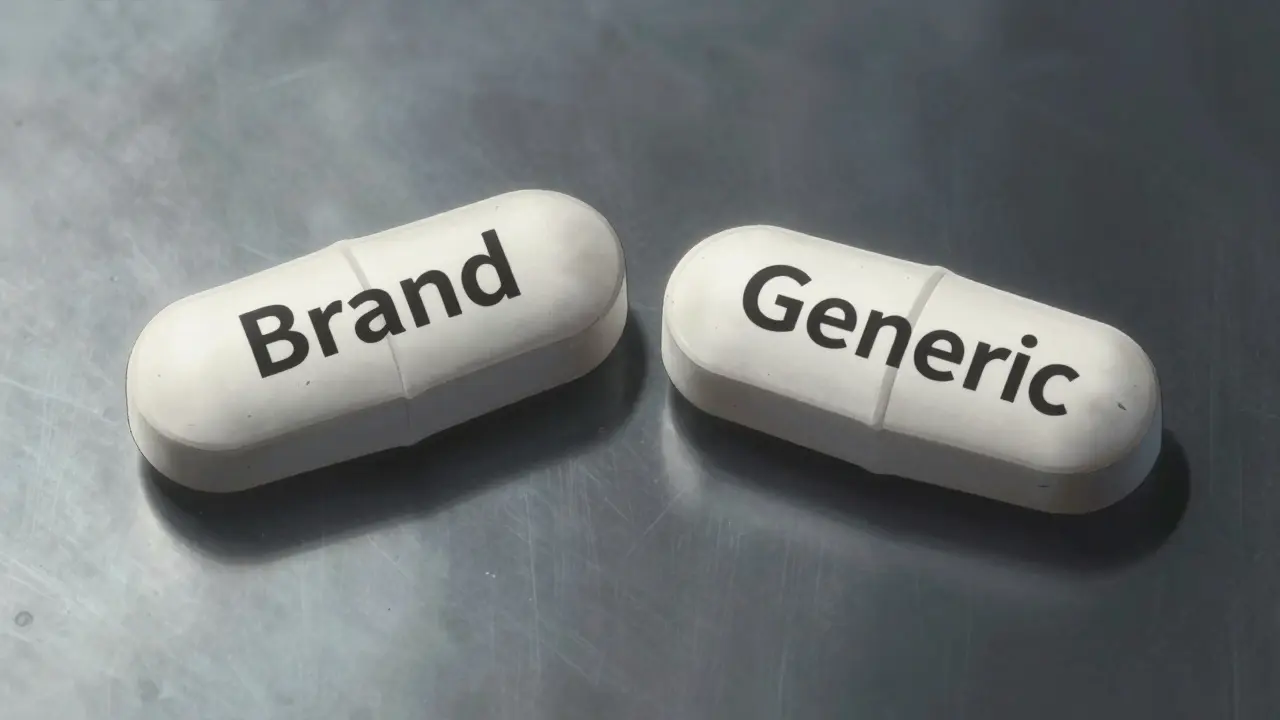
Ever wonder why some medications cost a fortune while others, with the exact same ingredients, are affordable at your local pharmacy? That difference usually comes down to the work of the Office of Generic Drugs (OGD). This isn't just a small department; it's the regulatory powerhouse that ensures the generic version of a pill is just as safe and effective as the brand-name original. Without the OGD, the US healthcare system would struggle to keep medicine costs manageable for millions of people.
Key Takeaways: What the OGD Does
- Oversees the review and approval of Abbreviated New Drug Applications (ANDAs).
- Ensures generic drugs are bioequivalent to brand-name versions.
- Manages the legal complexities of patents and exclusivity via the Hatch-Waxman Act.
- Operates under the GDUFA funding model to speed up approval timelines.
- Coordinates global standards for generic drug safety and quality.
What exactly is the Office of Generic Drugs?
The Office of Generic Drugs is a specialized division within the Center for Drug Evaluation and Research (CDER). Back in December 2013, the FDA realized the old way of doing things wasn't keeping up with the demand for affordable medicine. They elevated the OGD to a "super office," meaning it reports directly to the CDER director. This move gave the office more muscle to handle administrative support and project management, making the whole approval process leaner and faster.
At its core, the OGD has one main job: making sure that high-quality, affordable generics hit the market without compromising patient safety. To do this, they don't just look at the chemical formula; they verify that the generic drug has the same active ingredient, strength, dosage form, and route of administration as the brand-name drug. If the brand drug is a 10mg tablet taken once daily, the generic must be exactly that, performing the same way in the human body.
The Machinery: How the OGD is Structured
The OGD isn't a monolith; it's broken down into an Immediate Office and five specialized sub-offices. Each one handles a different piece of the puzzle to ensure nothing slips through the cracks.
The Immediate Office (IO) acts as the brain of the operation. It provides the leadership and strategic direction for everything else. Two critical teams live here: the Global Generic Drug Affairs Team, which deals with international regulators, and the Division of Legal and Regulatory Support (DLRS). The DLRS is essentially the legal frontline, acting as the agency's experts on the complex rules governing patents and drug exclusivity.
Then you have the five operational pillars:
- Office of Bioequivalence (OB): This is where the science happens. They check if the generic drug releases the active ingredient into the bloodstream at the same rate and extent as the brand name.
- Office of Generic Drug Policy: This team handles the "rulebook," focusing on policy development and the legal intricacies of how generics enter the market.
- Office of Regulatory Operations (ORO): Think of this as the engine room. It houses the Regulatory Project Managers (RPMs) who keep the review process moving and ensure the FDA hits its deadlines.
- Office of Research and Standards (ORS): This office looks toward the future, focusing on quantitative methods, modeling, and therapeutic performance to improve how drugs are tested.
- Office of Safety and Clinical Evaluation: These experts monitor the drugs after they hit the shelf, investigating adverse event reports and keeping patients safe through surveillance.
Core Responsibilities and the ANDA Process
The most critical task the OGD performs is reviewing the Abbreviated New Drug Application (ANDA). Unlike a full new drug application, an ANDA doesn't require the generic manufacturer to repeat the massive clinical trials that the original brand company did. Instead, the manufacturer just has to prove that their version is "bioequivalent."
But proving bioequivalence is only half the battle. The OGD also manages the timing of when these drugs can be released. This involves a delicate dance with the Hatch-Waxman Act. Since brand-name companies hold patents, the OGD must determine if a generic is infringing on those patents or if the patent has expired. This ensures fair competition while respecting intellectual property laws.
Beyond the paperwork, the OGD is tasked with solving public health crises. When there is a drug shortage or a desperate need for a "first generic" (the very first generic version of a drug to hit the market), the OGD can expedite the review process to get those medicines to patients faster. They also work on Risk Evaluation and Mitigation Strategy (REMS) to ensure that if a drug has a high risk of side effects, the safety warnings are applied consistently across both brand and generic versions.
| Sub-Office | Primary Focus | Key Deliverable |
|---|---|---|
| Bioequivalence (OB) | Scientific testing of drug absorption | Bioequivalence certification |
| Regulatory Operations (ORO) | Project management and labeling | ANDA goal date compliance |
| Generic Drug Policy | Legal and regulatory frameworks | Patent/Exclusivity decisions |
| Research and Standards (ORS) | Quantitative modeling and science | New testing standards |
| Safety and Clinical Evaluation | Post-market safety and surveillance | Adverse event monitoring |
Funding the Mission: The Role of GDUFA
Reviewing drugs takes a massive amount of manpower and money. To keep the process moving, the FDA uses the Generic Drug User Fee Amendments (GDUFA). Essentially, generic drug manufacturers pay a fee when they submit an application. These fees aren't just a tax; they are a contract. In exchange for the money, the FDA commits to specific performance goals-like reviewing a certain percentage of applications within a set timeframe.
This funding allows the OGD to hire more reviewers and invest in "regulatory science." For example, the OGD uses GDUFA funds to research new ways to test drugs without needing thousands of human volunteers, which can lower the cost for manufacturers and eventually lower the price for you at the pharmacy counter.
Global Influence and Future Outlook
The OGD doesn't just operate within US borders. Through the Global Generic Drug Affairs Team, they collaborate with health authorities in other countries. Since many generic drugs are manufactured globally, aligning standards prevents a "wild west" scenario where different countries have wildly different quality requirements. By leading the science of generic regulation, the OGD helps stabilize the global supply chain.
Looking ahead, the office is focusing more on "lifecycle management." This means they aren't just approving a drug and forgetting about it; they are constantly updating policies to address how drugs evolve over time and how new manufacturing technologies might change the way generics are made. Whether it's dealing with a sudden shortage of a critical antibiotic or clearing the path for a new cholesterol medication, the OGD remains the gatekeeper of the US generic drug market.
What is the difference between a brand-name drug and a generic approved by the OGD?
Chemically, there is no difference in the active ingredient. The OGD ensures the generic has the same strength, dosage form, and route of administration. While "inactive ingredients" (like binders or fillers) may differ, the drug must be bioequivalent, meaning it works in the body the same way as the brand-name version.
What is the Hatch-Waxman Act and why does it matter to the OGD?
The Hatch-Waxman Act is the law that created the ANDA process. It balances two things: giving brand-name companies a period of exclusivity to recover their research costs (via patents) and providing a streamlined path for generics to enter the market once those patents expire. The OGD’s Division of Legal and Regulatory Support manages these complex patent certifications.
How does GDUFA affect the speed of drug approvals?
GDUFA provides the FDA with predictable funding from industry fees. This allows the OGD to hire more specialized staff and implement better project management. In return, the FDA agrees to strict "goal dates," which forces the agency to process applications more efficiently and predictably.
What happens if a generic drug is found to be unsafe after approval?
The OGD’s Office of Safety and Clinical Evaluation monitors adverse event reports. If a pattern of safety issues emerges, the FDA can require labeling changes, issue safety alerts, or in extreme cases, recall the drug from the market.
What is a "first generic" and why is it a priority?
A first generic is the first non-brand version of a drug to be approved. These are high-priority because they break the brand-name monopoly, typically leading to a significant drop in price for consumers. The OGD often expedites these reviews to encourage competition.
Next Steps for Industry Stakeholders
If you are a manufacturer looking to navigate the OGD, your first point of contact is usually a Regulatory Project Manager (RPM) within the Office of Regulatory Operations. Start by ensuring your bioequivalence data is airtight, as the Office of Bioequivalence is the most rigorous hurdle in the ANDA process. For those dealing with patent disputes, closely monitor the guidance issued by the Division of Legal and Regulatory Support to avoid costly litigation under Hatch-Waxman provisions.