

When a company buys a portfolio of thousands of unpaid debts across multiple countries, it doesn’t file a lawsuit for each one. That would cost millions and take years. Instead, it uses something called a Global Substitution Order - or GSO - to legally step into the shoes of the original creditor in one smooth move. This isn’t science fiction. It’s happening right now in courts from London to Singapore, and it’s changing how global debt recovery works.
What Exactly Is a Global Substitution Order?
A Global Substitution Order (GSO) is a single court order that lets one legal entity replace another across hundreds, even thousands, of ongoing legal cases. Think of it like a master key that unlocks access to every claim tied to a debt portfolio. It was first created in 2010 by the High Court of England and Wales after Northern Rock’s collapse during the 2008 financial crisis. The bank’s asset division needed to take over thousands of loan claims, but filing each one separately would’ve cost over £10 million. The court invented the GSO to fix that.
Today, GSOs are used by private equity firms, hedge funds, and debt buyers who purchase large portfolios of defaulted loans. In 2023, Oaktree Capital used a GSO to take over 2,457 debt collection cases after buying a portfolio from Deutsche Bank. The entire process? One application. One hearing. One order. No need to refile in each court.
How Does It Work in Practice?
The process is simple in theory but strict in execution. To get a GSO in England and Wales, you need three things:
- Proof the debt portfolio was legally transferred - like a signed assignment agreement
- A complete schedule of every case number, court, and debtor name involved
- A plan to notify all affected debtors after the order is granted
You file this once with a High Court judge. No need to notify defendants ahead of time. That’s allowed under Part 23.7 of the Civil Procedure Rules. The judge reviews the paperwork. If it’s clean, they approve it. The approval rate in 2024 was 92%. Processing time? About 22 days on average.
Compare that to the U.S., where Federal Rule 25(c) lets you substitute parties - but only one case at a time. If you buy 5,000 debts, you file 5,000 motions. Each costs $500-$1,000. Total? $2.5 million. In the UK? Around £10,000.
Why the UK Leads - And Why It’s Not Perfect
The UK’s GSO system is the most efficient in the world. It’s why 68% of multinational debt buyers now choose to file initial claims in England and Wales, even if the debtors live in Germany or Japan. The cost savings are undeniable. One firm reduced costs on a $450 million portfolio from $285,000 to just $11,500. That’s a 96% drop.
But there are serious flaws. First, GSOs only work in England and Wales. If a debtor lives in Spain or Canada, the order means nothing. You still need to go through local courts. In 2024, Deutsche Leasing AG spent €38,000 just to restart the process in Spain after a UK GSO was ignored.
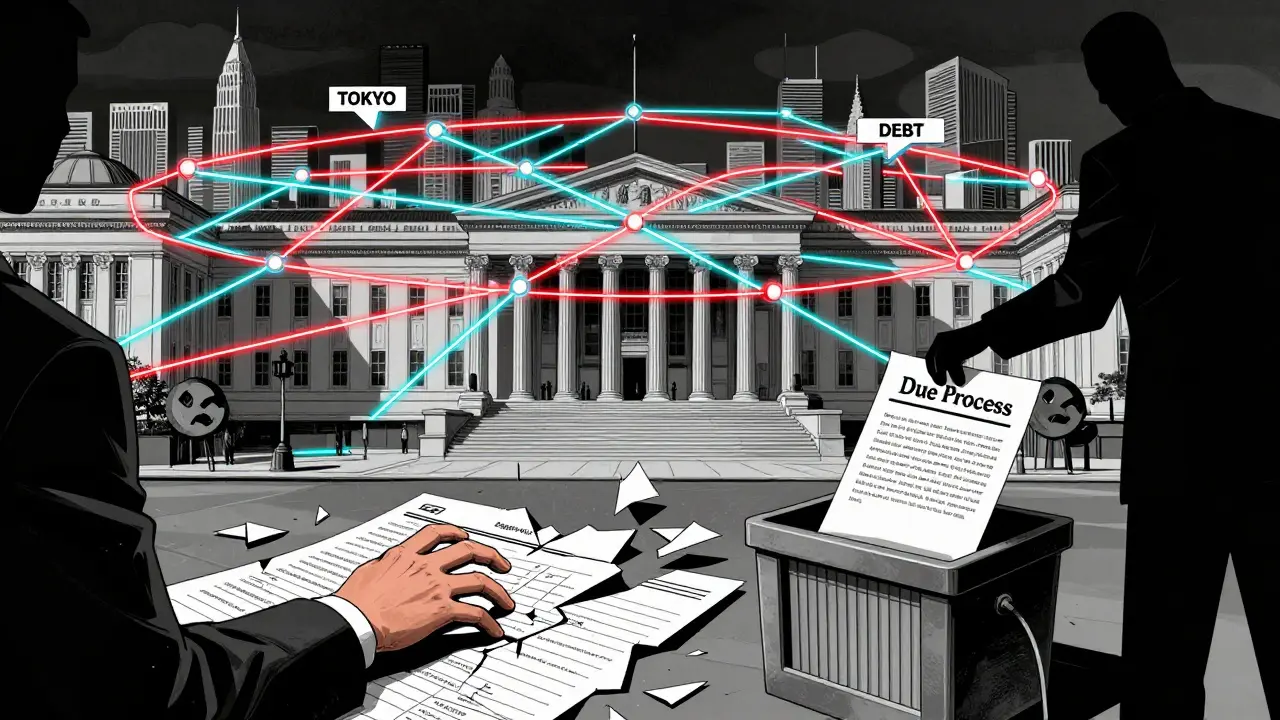
Second, notice requirements are inconsistently enforced. In 2022, a GSO led to 187 wrongful default judgments because debtors weren’t properly informed. The court didn’t check. The law says notice must follow, but no one audits it. The International Bar Association found 12% of 2023 GSO applications had no proof of post-order notification.
Third, judges vary. One High Court judge might demand 17 documents. Another might accept 8. 43% of legal practitioners report major differences in what’s required from judge to judge. That’s not efficiency - that’s chaos.
How Other Countries Compare
The EU tried to fix this with Directive 2023/852. It says all member states must process bulk substitution requests within 30 business days. Before, it took 78 days on average. Now? Down to 30. But the cost? €18,000 for up to 500 claims. That’s cheaper than the U.S., but still 70% more than the UK.
Germany uses §56 of the Zivilprozessordnung (ZPO). It’s similar to the UK, but slower - 45 days average - and more expensive. For 100 claims? €22,000-€35,000. Japan? No bulk system at all. Each claim must be filed separately. No shortcuts.
The result? The UK is the go-to hub for global debt buyers - not because it’s the fairest, but because it’s the fastest and cheapest. Even after Brexit, the system still works better than anywhere else.
The New Tech Frontier: Digital Substitution Orders
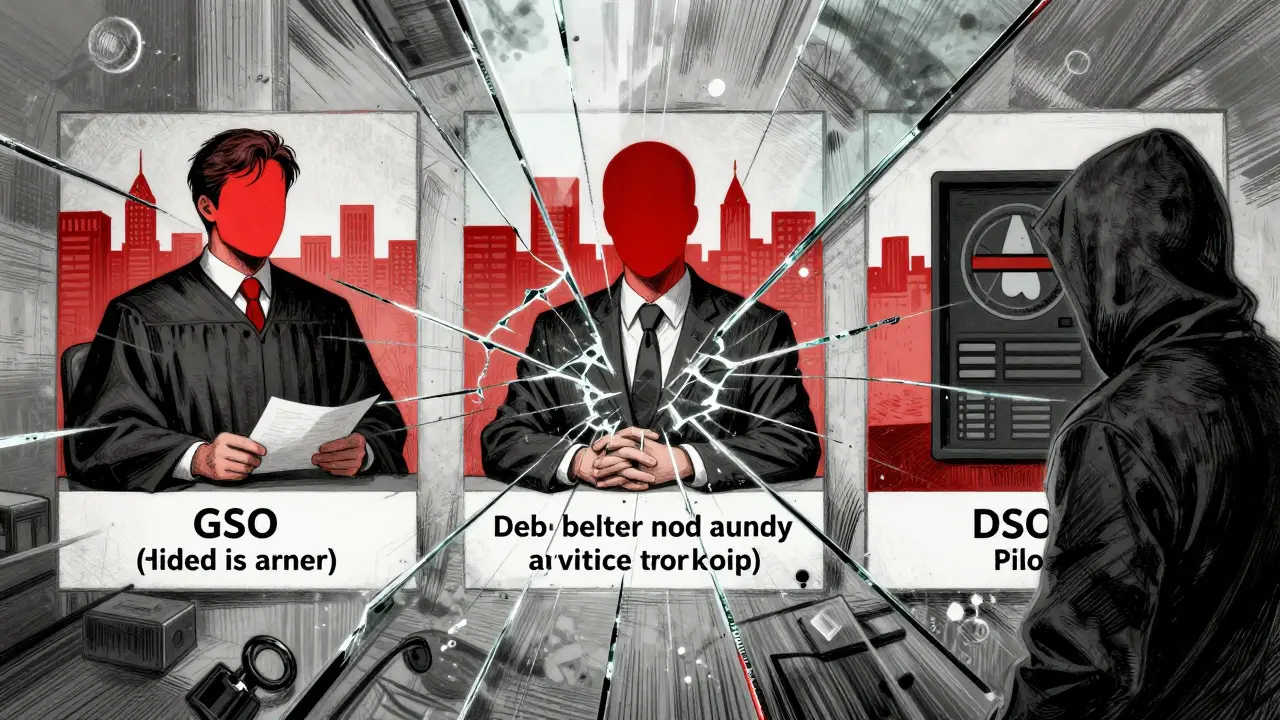
In July 2025, the UK launched a pilot program called the Digital Substitution Order (DSO). It uses blockchain to automatically update court records across jurisdictions. Once a GSO is approved, the system updates every linked case file in real time. No more manual uploads. No more errors.
Early results? A 40% drop in processing time. That’s huge. But it’s not perfect. In March 2025, a major litigation finance firm suffered a data breach. Over 12,800 debtor records were exposed. The system was hacked because it stored personal data in an unencrypted format.
Deloitte predicts that by 2027, 75% of major debt portfolio acquisitions will use automated substitution tools. But cybersecurity is the next big battleground. If you can’t protect debtor data, even the fastest system will collapse under legal and public pressure.
What’s Next? Global Standards and AI
The Hague Conference on Private International Law is drafting a 2025 Convention on Cross-Border Recognition of Substitution Orders. If adopted, it could make GSOs enforceable in over 80 countries. That’s the holy grail.
Meanwhile, the International Organization of Securities Commissions (IOSCO) is pushing for global standards in securities-related substitutions. And AI is stepping in. Law firms are now using tools that auto-generate GSO schedules from Excel files, flag missing documents, and even predict judge preferences based on past rulings.
But here’s the truth: technology won’t fix bad law. If notice rules aren’t enforced, if courts ignore due process, no algorithm will save you. The real challenge isn’t speed - it’s fairness.
Who Uses This? And Why It Matters
The global distressed debt market hit $317 billion in 2024. Nearly 9 out of 10 deals cross borders. That means substitution laws aren’t just legal tech - they’re economic engines. A single GSO can unlock billions in recoveries. It keeps debt markets liquid. It lets investors buy risk, not paperwork.
But it also means millions of ordinary people - people who missed a payment, lost a job, or fell behind on medical bills - are now caught in a system designed for institutions. Their names are on spreadsheets. Their cases are batched. Their right to be heard is often an afterthought.
The real question isn’t whether GSOs work. They do. The question is: at what cost?
What is a Global Substitution Order (GSO)?
A Global Substitution Order (GSO) is a single court order that allows one legal entity to replace another across hundreds or thousands of ongoing legal cases. It’s used primarily by debt buyers and financial institutions after acquiring a portfolio of claims, allowing them to legally take over all related litigation without filing individual motions. First established in England and Wales in 2010, it’s now the most efficient system for bulk substitution globally.
Which countries recognize GSOs?
GSOs are formally recognized only in England and Wales. Other countries like Germany and France have similar but separate procedures, and the EU’s 2023 directive harmonizes substitution rules across member states - but doesn’t automatically accept UK GSOs. The U.S. requires individual filings per case. No country currently enforces a UK GSO automatically outside its own jurisdiction, though cross-border recognition efforts are underway.
How much does a GSO cost compared to individual filings?
In England and Wales, a GSO costs between £8,500 and £12,000 regardless of how many cases are involved - even 2,500. In the U.S., filing individually for 1,000 claims could cost over $1 million. In Germany, processing 100 claims costs €22,000-€35,000. The UK system saves 70-85% in legal fees compared to traditional methods.
Are GSOs fair to debtors?
Critics argue GSOs undermine due process. In 2022, 317 debtors were not notified after a GSO was granted, leading to 187 wrongful default judgments. Courts require notice after substitution, but enforcement is inconsistent. The International Bar Association found 12% of 2023 applications lacked proof of notification. While efficient for creditors, the system lacks robust safeguards for individual defendants.
Can I use a GSO if I live outside the UK?
If you’re a creditor buying debt across borders, you can file a GSO in England and Wales to gain control over cases there - even if debtors live elsewhere. But to enforce the order abroad, you must restart the substitution process under local laws. The UK order has no automatic effect outside England and Wales. New international agreements may change this, but as of 2025, cross-border enforcement still requires separate legal steps.
Ashley Hutchins
February 8, 2026 AT 16:16no notice no fairness just a computer spitting out judgments like they're spam emails
they call it efficiency but its just dehumanization with a law degree
Lakisha Sarbah
February 10, 2026 AT 08:29kinda like how they invented the internet and then forgot to put a kill switch on it
Ariel Edmisten
February 10, 2026 AT 12:11Ritu Singh
February 11, 2026 AT 04:08Mark Harris
February 12, 2026 AT 03:34Savannah Edwards
February 12, 2026 AT 05:59maybe they were working two jobs, maybe they were sick, maybe they were just too scared to open mail
and now their credit is ruined because a computer said so
its not just about money its about dignity
and nobody talks about that part
Mayank Dobhal
February 13, 2026 AT 15:14we have our own systems that actually care about people
Marcus Jackson
February 15, 2026 AT 12:54Natasha Bhala
February 15, 2026 AT 14:13not just the numbers
Gouris Patnaik
February 16, 2026 AT 15:29Jesse Lord
February 18, 2026 AT 10:56it's not hard to send a text or email
they just don't want to pay for it
AMIT JINDAL
February 18, 2026 AT 22:07debtors are just ghosts in the machine now
imagine if we could tokenize human suffering too 🤔
Catherine Wybourne
February 20, 2026 AT 02:40also, 12% of applications had no proof of notification? that’s not an oversight. that’s a feature.