
Every year, thousands of people in hospitals and pharmacies are given the wrong medicine-not because of a mistake in dosage, but because two drugs look or sound too much alike. This isn’t rare. In fact, one in four medication errors in the U.S. happens because of look-alike, sound-alike (LASA) drug names. Imagine being prescribed insulin, but getting a muscle relaxant instead. Or thinking you’re getting hydromorphone for pain, but receiving hydrocodone-which can cause a deadly overdose. These aren’t hypotheticals. They’re real, documented events that happen more often than most people realize.
How LASA Errors Actually Happen
LASA errors aren’t just about spelling. They come in four forms: visual, auditory, packaging, and physical. Two drugs might have names that look similar on paper-like clonazepam and clonidine. Or they might sound alike when spoken aloud-propranolol and propafenone-especially in a noisy ER or during a rushed handoff between shifts. Packaging can make it worse: identical bottle shapes, similar colors, or labels placed the same way. Even the pills themselves can confuse: two different drugs in the same round, white tablet form.It’s not just the names. The problem multiplies when these drugs are high-alert medications-insulin, opioids, anticoagulants, chemotherapy agents, or neuromuscular blockers. A mix-up here doesn’t just mean a delay in treatment. It can mean cardiac arrest, respiratory failure, or death. The FDA’s MAUDE database recorded at least 128 deaths tied to LASA errors between 2018 and 2022. That’s not a statistic. That’s 128 families who lost someone because two drug names were too close.
The Most Dangerous Pairs
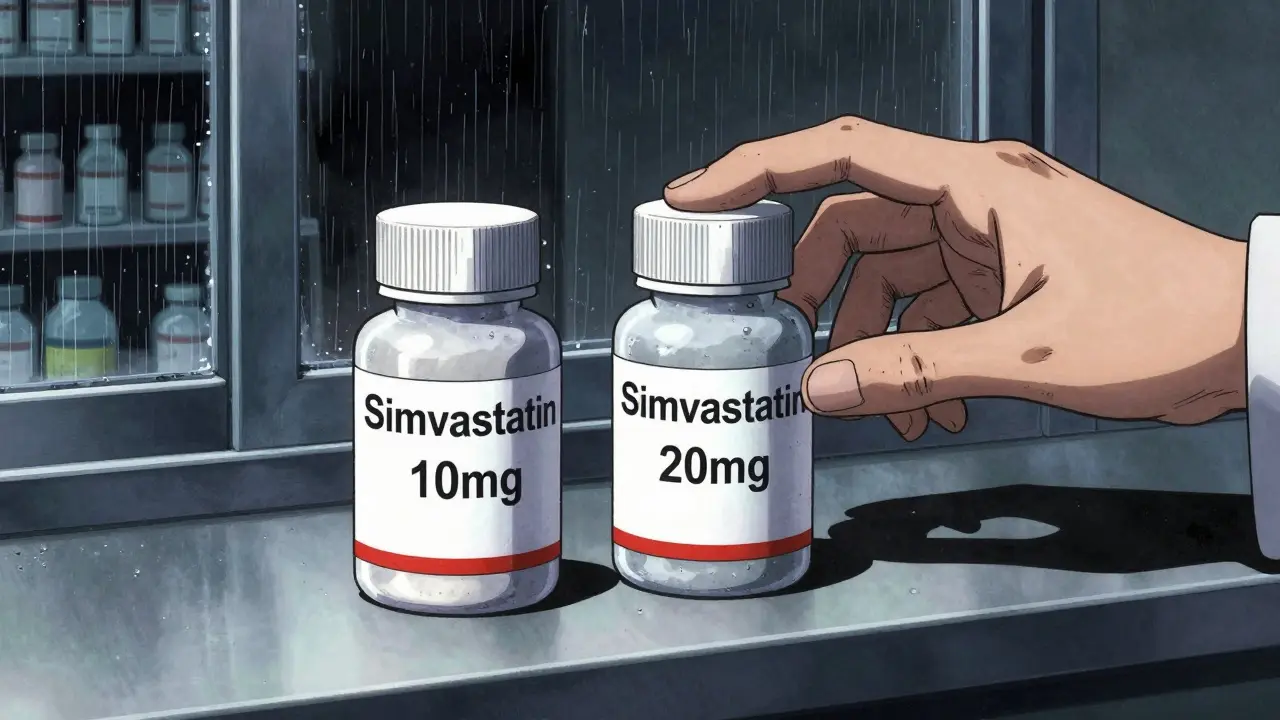
Some drug pairs are notorious. A 2022 study analyzing hospital records found 46 high-risk LASA pairs. The most common? Simvastatin 10 mg and simvastatin 20 mg. That’s right-even the same drug, just a different strength, can cause errors. Pharmacists thought they were grabbing the 10 mg dose, but pulled the 20 mg. The patient ended up with muscle damage and hospitalization.Other dangerous pairs include:
- Doxorubicin and daunorubicin-both chemotherapy drugs, but different dosing and side effects. Confusing them can be fatal.
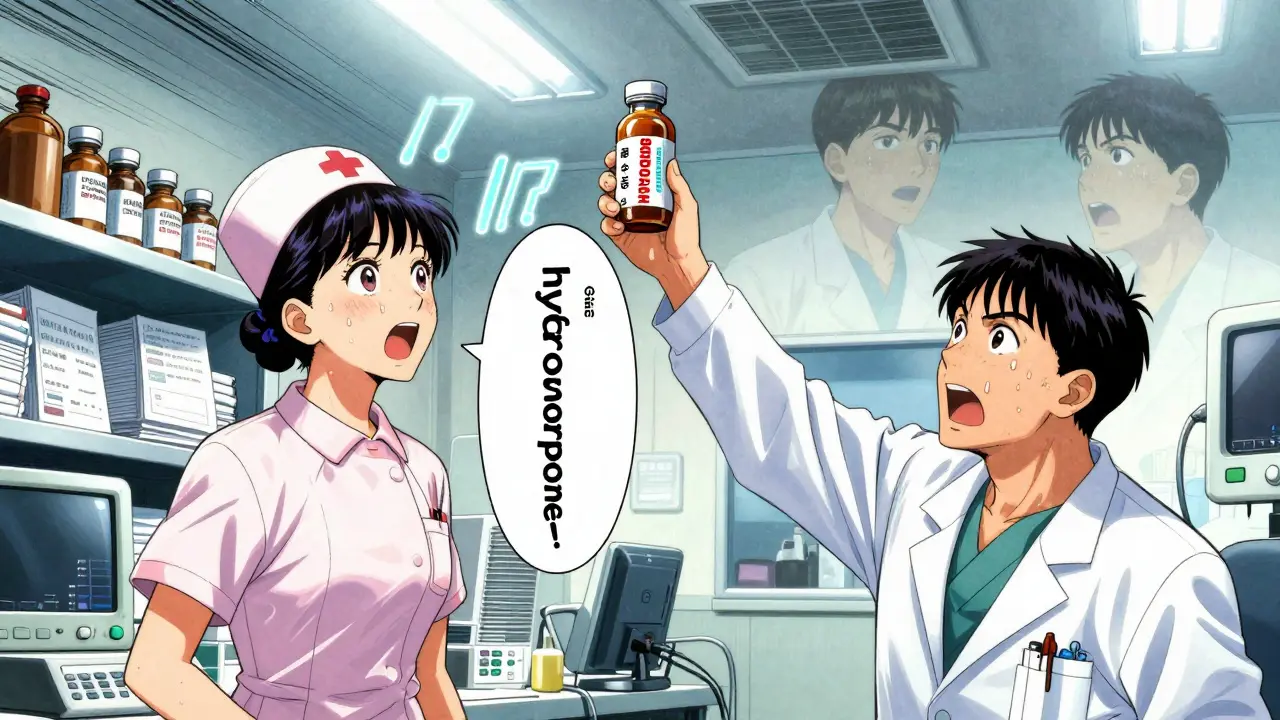
- HYDROmorphone and hYDROcodone-the FDA requires tall man lettering here (capitalized letters to highlight differences), but many still miss it.
- Cisplatin and carboplatin-both used in cancer treatment, but with different toxicity profiles.
- Levothyroxine and Synthroid-yes, they’re the same drug, but one’s generic, one’s brand. Nurses have nearly given the wrong vial during night shifts.
- Vecuronium and versed-one paralyzes muscles, the other sedates. Mix them up in the ICU, and you’re risking a patient who can’t breathe.
Even newer drugs are getting caught in this trap. In January 2024, the Institute for Safe Medication Practices added 12 new pairs to its high-alert list, including melphalan and meloxicam. One’s a cancer drug. The other’s a painkiller. They sound almost identical.
Why Current Fixes Fall Short
You’ve probably seen tall man lettering-HYDROmorphone vs. hYDROcodone. It’s meant to help. But a 2022 review found it only works if staff actually know what it’s for. If you don’t know that the capital letters are a warning, you’ll just see it as odd formatting. It’s like putting a red sticker on a bottle and hoping people notice. Many don’t.Electronic health records (EHRs) like Epic and Cerner have built-in LASA alerts. Epic’s SafeMed module cut errors by nearly 30% in a 12-hospital study. But not every hospital uses it. Smaller clinics, rural pharmacies, and urgent care centers often lack the budget or tech support to implement these tools. A 2023 survey found that only 38% of small facilities have any kind of LASA alert system-compared to 72% of large hospitals.
Even when alerts exist, they’re often ignored. Clinicians get flooded with pop-ups-dosage warnings, allergy checks, drug interactions. LASA alerts become background noise. One nurse on Reddit shared: “I get 15 alerts per shift. I’ve stopped reading them. I just click ‘acknowledge’ and move on.”
What Actually Works
The best defense isn’t one fix-it’s layers. The Joint Commission says every hospital should create its own LASA list, based on what drugs it actually uses. A hospital that doesn’t stock vecuronium doesn’t need to warn about it. But if they do? Then it’s on the list.Effective strategies include:
- Physical separation: Keep high-risk LASA drugs on different shelves or in different bins. No mixing.
- Clear labeling: Use bold, color-coded labels. Not just tall man letters-add a red border around high-alert drugs.
- Verbal double-checks: When a drug is given verbally, the receiver must repeat the full name and strength back. No shortcuts. “Give me thyroid med” is a red flag.
- Staff training: At least 2-4 hours of annual training for all staff. Oncology and ICU teams need quarterly refreshers.
- AI voice recognition: Johns Hopkins is testing AI that listens to verbal orders and flags similar-sounding drugs in real time. Early results show 89% accuracy.
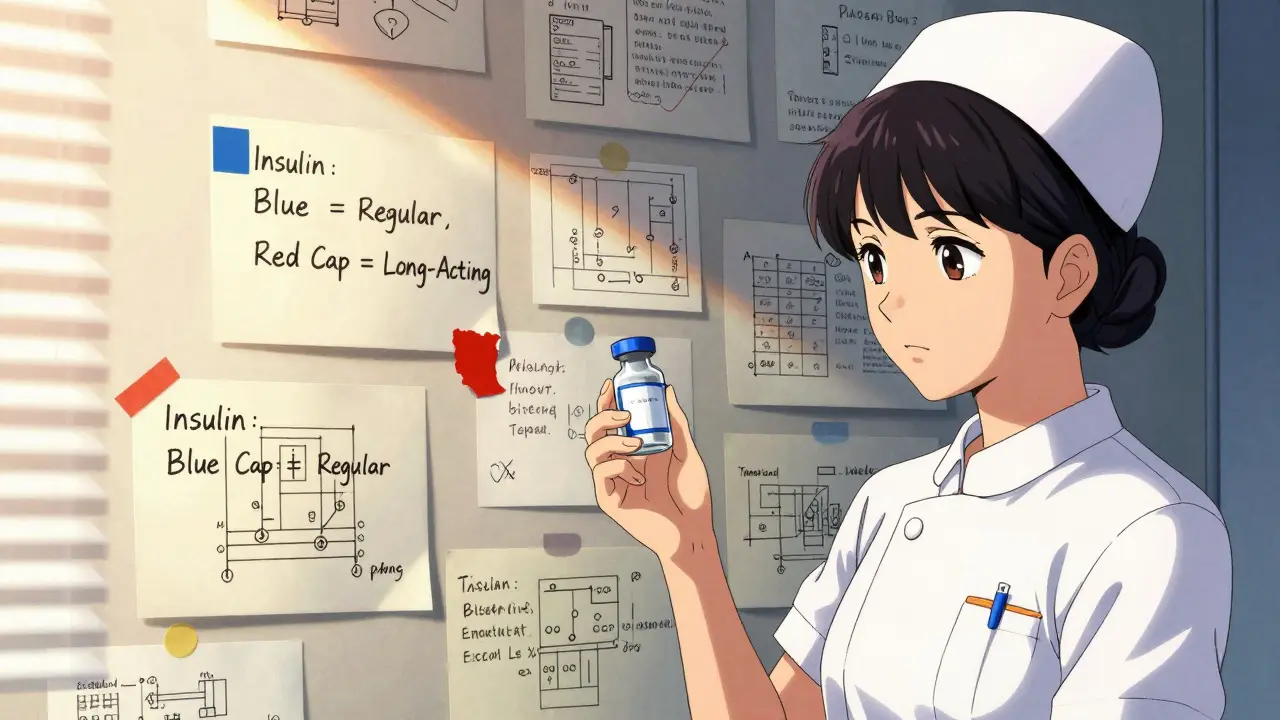
One hospital in Adelaide started using color-coded caps on insulin vials-blue for regular, red for long-acting. Within six months, their insulin errors dropped by 60%. Simple. Cheap. Effective.
The Bigger Picture
The problem isn’t just human error. It’s systemic. Drug companies still get to name new medications without strict, standardized testing. In 2022, the FDA rejected 34 new drug names because they were too similar to existing ones-up from 22 in 2018. That’s progress. But it’s still reactive. What if we stopped approving names that could cause confusion before they ever hit the market?The World Health Organization and the International Pharmaceutical Federation are pushing for global standards: a universal naming system that avoids phonetic and orthographic overlap. It’s not impossible. Look at how airplane parts are labeled-every screw, wire, and valve has a unique identifier. Why can’t drugs have the same?
For now, the burden falls on frontline staff. Nurses, pharmacists, doctors-they’re the last line of defense. But they shouldn’t have to be. Technology, regulation, and design need to catch up.
What You Can Do
If you’re taking medication:- Always confirm the name and strength with your pharmacist.
- Ask: “Is this the same as the last time?” If the pill looks different, ask why.
- Write down your meds-name, dose, frequency-and bring it to every appointment.
- If you hear “thyroid med” or “pain pill,” ask for the full name. Don’t assume.
If you work in healthcare:
- Use your facility’s LASA list. If you don’t have one, push for it.
- Never rely on memory. Always verify.
- Speak clearly. Say the full name. Spell it out if needed.
- Report near-misses. Not to blame, but to fix.
Medication safety isn’t about being perfect. It’s about building systems that catch mistakes before they hurt someone. LASA errors are preventable. But only if we stop treating them as accidents-and start treating them as design failures.
What are look-alike, sound-alike (LASA) medications?
Look-alike, sound-alike (LASA) medications are drugs that have names, packaging, or physical appearances that are so similar they can be easily confused. This can happen visually (e.g., hydromorphone vs. hydrocodone), auditorily (e.g., propranolol vs. propafenone), or through packaging design. These similarities lead to medication errors during prescribing, dispensing, or administration.
How common are LASA medication errors?
LASA errors account for about 25% of all medication errors in the U.S., according to the Anesthesia Patient Safety Foundation and Medscape. A 2022 study found that drug name confusion caused 64.62% of LASA-related errors. These mistakes happen at every stage-from doctors writing prescriptions to nurses giving doses-and are especially dangerous with high-alert drugs like insulin, opioids, and chemotherapy agents.
What is tall man lettering, and does it work?
Tall man lettering uses capital letters to highlight differences in similar drug names, like HYDROmorphone and hYDROcodone. It was introduced by the FDA in 2001 and now applies to over 200 drug pairs. However, studies show it’s only marginally effective-many staff don’t know what it means or ignore it amid too many alerts. It helps, but only if paired with training and other safety measures.
Which drugs are most often confused?
The most frequently confused pairs include: simvastatin 10 mg and simvastatin 20 mg (same drug, different strength); doxorubicin and daunorubicin (both chemotherapy); hydromorphone and hydrocodone; cisplatin and carboplatin; levothyroxine and Synthroid; vecuronium and versed. New pairs like melphalan and meloxicam were added to high-alert lists in 2024.
Can LASA errors be prevented?
Yes, but not with one solution. Prevention requires layered strategies: physical separation of high-risk drugs, color-coded labels, verbal double-checks, staff training, and electronic alerts. Hospitals that use comprehensive protocols have seen error rates drop by up to 37%. AI voice recognition tools and standardized drug naming rules are emerging as promising long-term fixes.
Cassie Widders
January 11, 2026 AT 17:15Been a pharmacist for 12 years. Seen this too many times. One time I almost gave someone insulin instead of heparin. The labels looked identical under the fluorescent light. Scared the hell out of me.
Darryl Perry
January 13, 2026 AT 12:23This is why we need mandatory FDA naming standards. Drug companies prioritize marketing over safety. They name drugs to sound impressive, not to avoid confusion. It’s corporate negligence wrapped in a white coat.
Konika Choudhury
January 15, 2026 AT 04:54Why do Americans keep making this mistake? In India we use color-coded vials and barcodes. Everyone knows the difference. You people have fancy tech but still mess up because you're lazy. Fix your system not just the labels.
Windie Wilson
January 16, 2026 AT 07:59So let me get this straight - we have AI that can recognize cat breeds from a single photo but can’t tell the difference between ‘hydromorphone’ and ‘hydrocodone’? 😂 The healthcare system is a sitcom written by someone who hates humanity.
Daniel Pate
January 16, 2026 AT 20:13It’s not just about names. It’s about how we’ve outsourced cognition to systems we don’t understand. We trust algorithms, labels, and abbreviations instead of thinking. The real failure isn’t the similarity of drug names - it’s our surrender of responsibility to the machine.
Amanda Eichstaedt
January 17, 2026 AT 02:56I’m a nurse. I’ve had to spell out ‘D-O-X-O-R-U-B-I-C-I-N’ to a doctor who was typing too fast. We all know this happens. But nobody wants to admit it’s systemic. We blame the nurse. The pharmacist. The tech. But it’s the whole damn structure.
Jose Mecanico
January 18, 2026 AT 23:24My hospital started using different colored caps for insulin. Blue for rapid, red for long. No more mix-ups. Simple. Cost nothing. Why isn’t this everywhere?
Alex Fortwengler
January 20, 2026 AT 18:34Big Pharma knows this is happening. They do it on purpose. More confusion = more lawsuits = more money. They’re not trying to fix it. They’re banking on you dying quietly so they can tweak the name next year.
jordan shiyangeni
January 22, 2026 AT 00:50Let me be clear: this isn’t an oversight. It’s a moral failure. The FDA has known about this since the 1990s. They’ve issued guidelines. They’ve issued warnings. Yet, we still have nurses giving vecuronium instead of versed. That’s not incompetence - that’s negligence dressed in scrubs. And if you’re not outraged, you’re complicit.
Abner San Diego
January 23, 2026 AT 10:00Yeah yeah, ‘layers of safety’ - what a buzzword. Meanwhile, my cousin got the wrong chemo because the barcode scanner glitched and the nurse was on her 14th hour. No one’s accountable. No one gets fired. Just another ‘tragic accident.’
Eileen Reilly
January 24, 2026 AT 22:33lol at the ‘tall man lettering’ thing. Like putting a sticker on a bomb and hoping people don’t pull the pin. I work in a clinic and half the staff think ‘HYDROmorphone’ is just how you spell it. They don’t even know it’s a warning.
Monica Puglia
January 26, 2026 AT 10:16My mom had a near miss with levothyroxine vs Synthroid. She didn’t know they were the same thing. I printed out a chart and taped it to her pill organizer. 🧠💙 We need more of this - simple, visual, human stuff. Not more alerts. More clarity.
Ben Kono
January 26, 2026 AT 15:19You guys are missing the point. The real issue is that we don’t train people to question. I’ve seen med students hand a vial to a nurse and say ‘just give it’ - no name, no strength, no nothing. If you’re not trained to speak up, no amount of color coding will save you. Stop blaming the system. Start teaching people to be brave.