

When patients leave a doctor’s office, they’re often handed a stack of papers, told to take a pill, and expected to understand how to manage a chronic condition like diabetes, heart failure, or asthma. But how do we know if they actually understand what they need to do? That’s the real challenge in patient education: measuring generic understanding-not just whether they memorized instructions, but whether they can apply that knowledge in real life.
Why Generic Understanding Matters More Than Memorization
Many healthcare providers assume that if a patient repeats back instructions correctly, they’ve learned. But that’s not enough. A patient might say, "I take my blood pressure pill every morning," but if they don’t know why skipping doses raises their risk of stroke, or how to recognize warning signs like dizziness or swelling, they’re not truly educated. Generic understanding means they can transfer knowledge across situations: recognizing when to call a doctor, adjusting their diet based on symptoms, or explaining their condition to a family member. This isn’t just about compliance. It’s about safety. A 2021 study in the Journal of Patient Safety found that patients with poor health literacy were 3.5 times more likely to be hospitalized for preventable complications. Tracking generic understanding changes the game. Instead of asking, "Did they get the handout?" we ask, "Can they use this information when it matters?"Direct Methods: Seeing What Patients Actually Do
The most reliable way to measure understanding is to watch patients in action. These are called direct assessment methods. They don’t rely on what patients say-they show what they can do.- Teach-back method: After explaining how to use an inhaler, ask the patient to show you how they’d do it. If they fumble with the timing or don’t shake the canister, you know where the gap is.
- Role-playing scenarios: Give them a situation-"Your blood sugar is 220 and you feel shaky. What do you do?" Their answer reveals whether they understand triggers, treatments, and when to seek help.
- Checklists and observation rubrics: Use simple tools during follow-up visits. For example: "Did the patient demonstrate proper wound cleaning?" "Did they identify three signs of infection?" These are scored as yes/no or partial credit.
Formative Assessment: Feedback That Fixes
In school, teachers use quizzes and exit tickets to see if students got the lesson. In patient education, we can do the same.- One-question check-ins: At the end of a consultation, ask: "What’s the one thing you’ll change this week?" Their answer tells you what stuck.
- Text-based feedback: Send a simple follow-up message three days after a visit: "What was the hardest part of your new routine?" Responses help tailor future education.
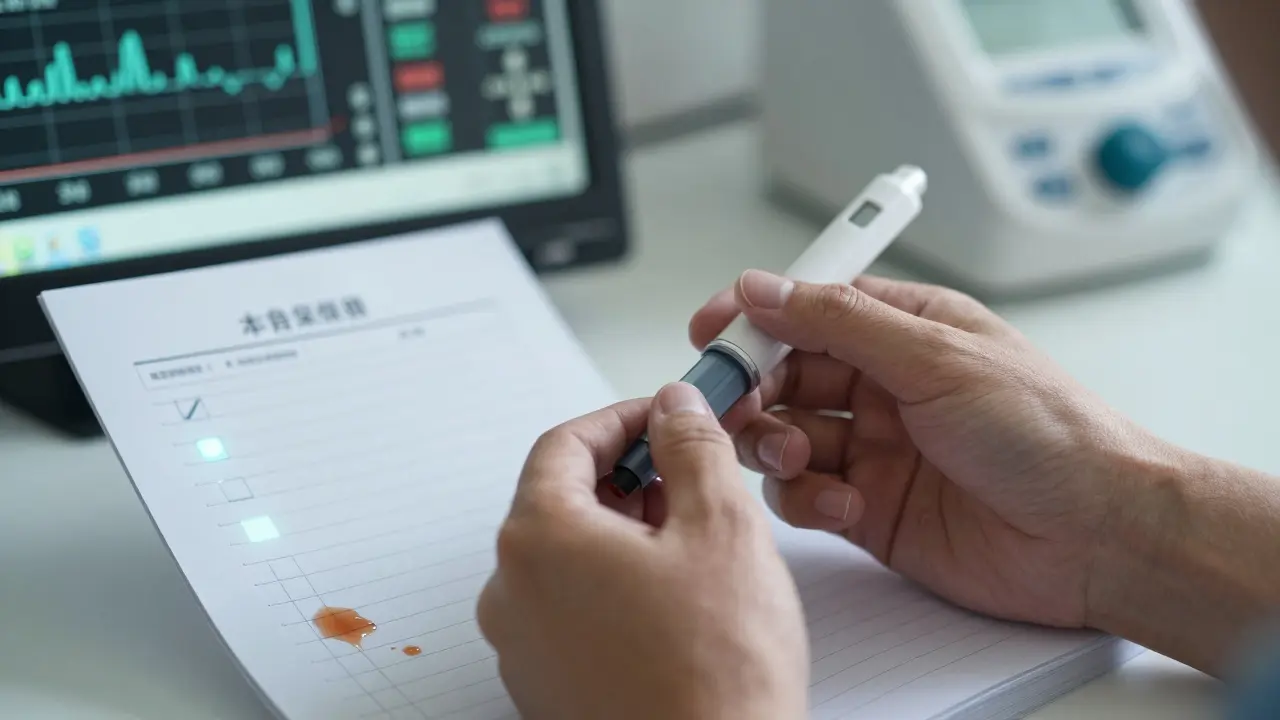
- Visual progress trackers: Give patients a chart to mark daily: "Did you take your meds? Did you walk 30 minutes?" Review it together next visit.
Summative Assessment: Did They Learn Overall?
Summative assessments happen at the end of a learning period-like after a 6-week diabetes course. They answer: "Did the program work?"- Pre- and post-tests: Ask the same 5 questions before and after education. A rise in correct answers shows learning. But don’t just count right answers-look at why someone got it wrong.
- Case study analysis: Give them a real-life scenario: "Your cousin has high blood sugar. What advice would you give?" Their response shows if they can generalize knowledge.
- Performance portfolios: Collect photos, videos, or logs of patients managing their care over time. A diabetic patient who logs meals, checks glucose, and adjusts insulin based on activity? That’s proof of understanding.
Indirect Methods: What Patients Say About Their Learning
These methods ask patients how they feel about what they learned. They’re useful-but not enough on their own.- Surveys: "How confident are you managing your condition?" (Scale: 1-5)
- Focus groups: "What part of your treatment feels confusing?"
- Follow-up interviews: "What helped you stick to your plan?"
What Doesn’t Work: Relying on Paper and Memory
Too many programs still rely on:- Handouts with small print
- One-time verbal instructions
- Assuming patients remember everything

The Best Approach: Mix It Up
There’s no single perfect method. The most effective programs use a mix:- Start with a formative check (teach-back or one-question survey) during the visit.
- Follow up with a performance task (e.g., show how to use a glucose meter) within 48 hours.
- End with a summative review after 30 days (pre/post test or case scenario).
- Supplement with indirect feedback (surveys or interviews) to understand emotional barriers.
Tools That Help
You don’t need fancy tech to track understanding. But some tools make it easier:- Simple apps: Like MyTherapy or Medisafe, which let patients log meds and symptoms. Review logs together.
- Video demonstrations: Record a patient doing a task, then play it back to spot errors.
- Rubrics: Use a 3-point scale: "Needs help," "Partial understanding," "Fully confident." Keep it visual.
What’s Next?
The future of patient education isn’t more pamphlets. It’s smarter feedback loops. AI-powered tools are emerging that analyze patient responses to voice or text questions and flag misunderstandings in real time. But even without tech, simple methods-like teach-back and daily check-ins-are proven, low-cost, and powerful. The goal isn’t to turn patients into medical experts. It’s to give them the confidence and clarity to manage their health-every day, in real life. And that starts with asking the right questions… and watching what they do.How do you know if a patient truly understands their treatment plan?
You don’t ask them if they understand. You ask them to show you. Use the teach-back method: after explaining, say, "Can you show me how you’ll do this at home?" Watch their actions-not their words. If they can correctly demonstrate the task, explain why it matters, and describe what to do if something goes wrong, they’ve got generic understanding.
Are patient surveys useful for measuring education effectiveness?
Surveys can tell you how confident a patient feels, but not what they actually know. A patient might say they "understand" their diabetes plan but still can’t name three warning signs of high blood sugar. Use surveys to support direct evidence-not replace it. Combine them with observation or performance tasks for the full picture.
What’s the difference between formative and summative assessment in patient education?
Formative assessment happens during learning-it’s feedback to improve. For example, asking a patient to demonstrate insulin injection during a visit. Summative assessment happens at the end-it’s a final check. Like giving a short test after a 4-week course. Formative fixes problems early; summative tells you if the whole program worked.
Can patients with low literacy still show understanding?
Absolutely. Understanding isn’t tied to reading level. A patient who can’t read a pamphlet might still show perfect technique in using an inhaler, correctly identify symptoms, or explain their medication schedule in their own words. Use visual aids, demonstrations, and spoken explanations-not written ones-to assess true understanding.
How often should you reassess patient understanding?
Reassess at key points: right after education, 3-7 days later (to catch memory gaps), and during follow-up visits. Chronic conditions change over time-so does understanding. A patient who mastered their insulin routine in January might need a refresher in June if their diet or activity level changes. Make reassessment part of routine care, not a one-time event.
Chris Bird
March 11, 2026 AT 11:20Shourya Tanay
March 13, 2026 AT 09:14Mike Winter
March 14, 2026 AT 10:43Randall Walker
March 15, 2026 AT 00:11Miranda Varn-Harper
March 15, 2026 AT 00:17Alexander Erb
March 16, 2026 AT 15:59Donnie DeMarco
March 16, 2026 AT 17:05LiV Beau
March 18, 2026 AT 15:17Adam Kleinberg
March 20, 2026 AT 03:10Denise Jordan
March 21, 2026 AT 16:47Gene Forte
March 22, 2026 AT 23:33Kenneth Zieden-Weber
March 24, 2026 AT 06:52