

OTC Label Safety Checker
Why use this? Before picking a box off the shelf, check if your personal health history conflicts with common active ingredients. This tool simulates the "Warnings" section logic found on Drug Facts panels.
Step 1: Your Health Profile
Select any conditions that apply to you:
Safety Analysis
What to look for on the box:
Why You Should Never Skip Reading the Back of the Bottle
You walk into the pharmacy aisle, grab a box of pain relievers because your head is throbbing, and head straight to the checkout. Sounds familiar? Millions of people do this every day. It happens so fast that we often ignore the most critical piece of information on the package: the OTC Drug Facts Labelsstandardized labeling system designed to inform consumers about nonprescription medications. Skipping this step isn't just lazy; it can be dangerous. The Food and Drug Administration mandates these labels for a reason-to prevent overdoses and mix-ups. When you understand what to look for, you take control of your health.
Imagine trying to assemble furniture without the manual. You might get close, but eventually, something won't fit. Medicines work the same way. A standardized format helps you find exactly what you need, whether you're looking for the strength of the tablet or a hidden allergy warning. Without it, confusion leads to errors. Studies show that when patients actually read these labels, adverse medication events drop significantly. This guide breaks down exactly how to navigate these labels, what every section means, and the mistakes that even careful shoppers make.
The Blueprint Behind the Label
Before you learn to read them, you need to know why they exist. The FDA established the Drug Facts label through a final regulation published in 1999. The goal was simple: consistency. Before this rule, companies could list ingredients however they wanted. One brand put warnings at the bottom; another hid them in small print. The Office of Nonprescription Products realized that inconsistent labeling was putting people at risk.
Today, the requirements fall under 21 CFR § 201.66. This regulation applies to everything regulated under the Federal Food, Drug, and Cosmetic Act. That includes traditional pills, but also things you might not immediately recognize as drugs, such as hand sanitizers, sunscreens, and anti-cavity toothpaste. If there is a Drug Facts panel on the back, it follows a strict order. Manufacturers cannot rearrange the sections to hide bad news. This predictability is a powerful tool for safety.
Decoding the Eight Required Sections
You don't need to be a pharmacist to decode this label, but knowing the order helps you scan efficiently. Every compliant product must list these eight sections in a specific sequence. Here is what you need to look for in each one.
1. Title
This is the header itself. It simply reads "Drug Facts" or "Drug Facts (continued)" if the information runs over to another side of the box. Seeing this title tells you the packaging meets regulatory standards.
2. Active Ingredient(s)
This is arguably the most important section. The substance in the medicine that makes it work, listed by its medical name. You will see the name of the ingredient followed by the amount per dose. For example, a bottle might list Acetaminophen 500 mg. Knowing this helps you avoid taking two medicines with the same ingredient, which is a common cause of accidental overdose. If you are buying different brands for the same symptom, cross-reference this section first.
3. Purpose(s)
While the active ingredient tells you what is inside, the purpose tells you what it does. You will see categories like "Pain Reliever," "Antihistamine," or "Cold Relief." This helps you confirm the drug is right for your symptoms before you open the cabinet. Sometimes products have dual purposes, like treating both fever and pain.
4. Use(s)
This section details the specific conditions or symptoms the product treats. Unlike the Purpose section, which uses broad categories, Use lists actual ailments. Examples include temporary relief of minor headaches, body aches, or sore throat pain. Always verify that your specific symptom is listed here. Using a cold medicine to fix an upset stomach won't work and might make you feel worse.
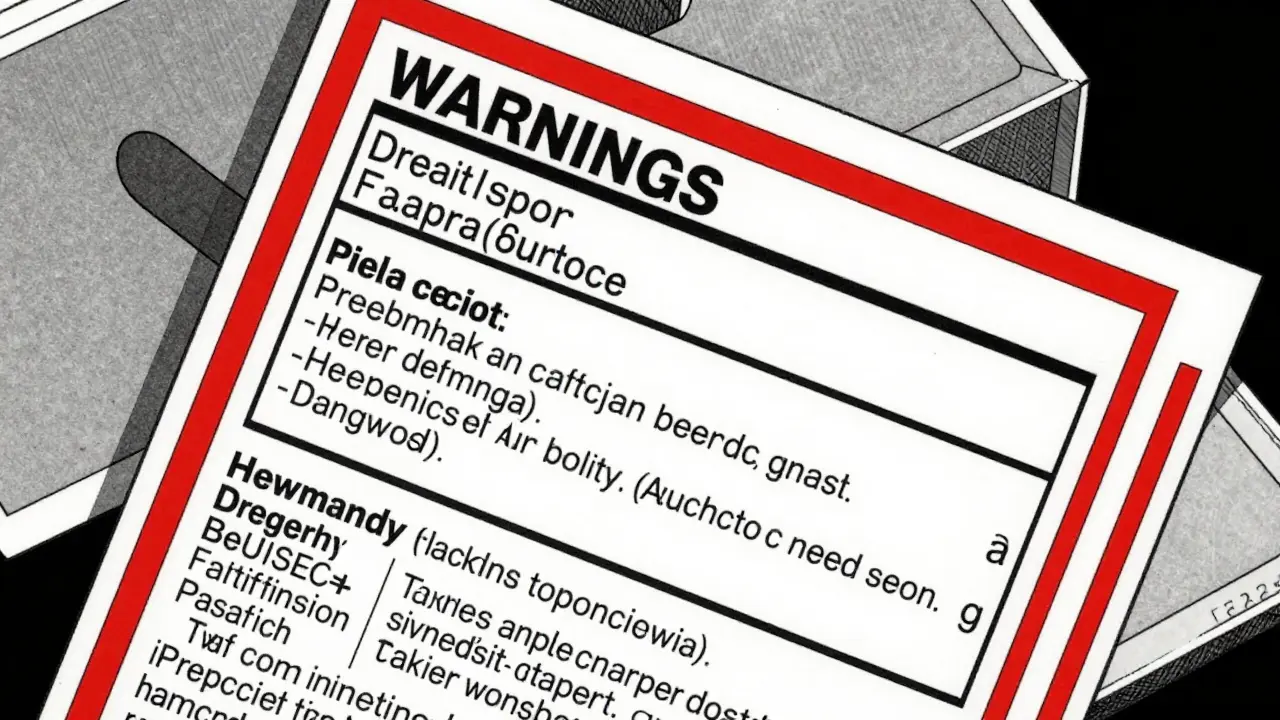
5. Warnings
If any part of the label demands full attention, it is this box. It highlights serious risks, drug interactions, and contraindications. Some warnings appear in red letters inside a bordered box. These are usually critical safety alerts, like liver warnings for acetaminophen or asthma alerts for certain decongestants.
- Ask a doctor before use if you have high blood pressure or glaucoma.
- Avoid alcohol while taking sedating antihistamines.
- Stop using this product if dizziness occurs.
The regulation mandates keeping children away from these areas, so you will often see the warning "Keep out of reach of children" prominently displayed here. Ignoring these alerts is how most ER visits happen with OTC meds.
6. Directions
This section provides precise dosage instructions. It answers when, how, and how often to take the product. Age-specific dosing is crucial here. You might see different amounts for adults versus children aged 12+.
Precision matters. The label should specify units clearly, such as milliliters (mL) or teaspoons. Do not guess. Using a kitchen spoon instead of the measuring device in the cap can result in a dose that is too weak or toxic. Always double-check the frequency-taking a pill every 4 hours instead of 8 can pile up toxins in your body faster than your liver can process them.
7. Other Information
This area contains practical details like storage instructions (e.g., store below 25 degrees Celsius) and sodium content for orally ingested products. People on low-sodium diets often overlook that their liquid cough syrup or tablets contain significant salt. The regulation requires disclosure of sodium per unit to protect those managing heart conditions.
8. Inactive Ingredients
These are the components that help form the pill or mask the taste but aren't therapeutic. Why care? Allergies. Many people react to fillers, colorings, or preservatives like parabens rather than the drug itself. If you have known allergies, scan this list last to ensure no hidden triggers are present.
| Section | Key Information to Find | Why It Matters |
|---|---|---|
| Active Ingredient | Name and Strength | Avoids duplication with other meds |
| Purpose | Category (Analgesic, Antacid, etc.) | Confirms drug function |
| Warnings | Risks and Contraindications | Prevents severe reactions |
| Directions | Dosage and Frequency | Ensures safe intake |
The Hidden Dangers Most People Miss
Even when we look at the label, our brains trick us into missing the bad parts. Research indicates that consumers often focus on the relief offered by the product and gloss over the warnings. A study involving 1.2 million cases annually related to improper use found that standardized labeling has helped reduce errors, yet millions still slip through the cracks.
One major issue is measuring devices. About 27% of users report using incorrect tools for liquid medications. Household teaspoons vary wildly in size compared to the calibrated cup included with the medicine. If the label says "teaspoon," use the cup. If the label says "milliliters," measure milliliters. Mixing metric and household measurements is a recipe for disaster.
Another blind spot is combination products. Multi-symptom cold medicines often combine five or six active ingredients. If you take the multi-symptom tablet plus a separate night-time sleep aid, you might be doubling up on a sedative without realizing it. Always add up the active ingredients across all bottles you plan to use together. The FDA recommends checking labels systematically to ensure the total daily limit is never exceeded.
Special populations require extra vigilance. Pregnant women, seniors, and individuals with chronic kidney or liver disease have metabolisms that handle medication differently. Standard doses can become toxic quickly. The "Ask a Doctor" warnings in the Warning section are not suggestions; they are necessary safety checks for these groups.

Making Sense of Digital Trends
The landscape of drug labeling is evolving. While the physical paper label remains the gold standard, the FDA is exploring digital enhancements. Recent guidance mentions pilot programs testing QR codes that link to more detailed online information. This doesn't replace the physical label but supplements it.
In 2023, updates were issued regarding digital labeling options for e-commerce sales. As people buy more medicine online, getting accurate information is harder. The industry anticipates that adherence to the Drug Facts format will remain critical as the global market grows. Even with digital apps, the core information must stay consistent to maintain trust.
Freshness matters too. Expired medicines might lose potency or change chemical composition. The expiration date usually sits near the "Other Information" section. Store your medicines in a cool, dry place as indicated to extend their life. Humidity in bathrooms degrades pills faster than you think.
Practical Steps for Safe Usage
To truly master these labels, adopt a routine. Healthcare professionals recommend a systematic approach before swallowing anything. Treat the back of the box like a contract you are signing with your body. Follow this quick routine:
- Check the Active Ingredient: Match it against other meds currently on your counter. Are you already taking Tylenol elsewhere?
- Scan the Warnings Box: Read the red-text alerts. Do you have high blood pressure? Does this contain decongestants that raise it?
- Verify Uses: Is the specific symptom you have listed? Don't stretch the definition.
- Confirm Directions: Do you have a measuring tool? Does the child's age match the recommended dose?
Safety organizations like Poison Control emphasize that reading the label is non-negotiable. Their annual reports consistently show that proper label review significantly lowers the chance of accidental ingestion or overdose. By slowing down and looking closely, you align with the decades of design work intended to keep you safe.
What does NDC stand for on a medicine box?
NDC stands for National Drug Code. It is a unique identifier required by the FDA that appears on the front panel of the package. It consists of three distinct sections that identify the manufacturer, the specific product, and the package size. This code ensures pharmacies and hospitals can accurately track and dispense the correct medication.
Do OTC drug labels apply to supplements?
No, the Drug Facts label is specific to Over-the-Counter Drugsmedications that do not require a prescription. Dietary supplements typically use a Supplement Facts label instead, which follows different formatting rules. Supplements do not undergo the same rigorous approval process for claims as OTC drugs.
Why are some warnings printed in red text?
Red text is used for critical safety alerts that require immediate attention. Regulations mandate that specific warnings, such as liver toxicity alerts for acetaminophen or severe interaction warnings, must appear in a boxed format with red lettering to ensure high visibility and prevent overlooked dangers.
Can I use household spoons to measure liquid medicine?
What is the difference between 'Purpose' and 'Uses' on the label?
The 'Purpose' section categorizes the drug type (e.g., Analgesic), explaining its general class. The 'Uses' section lists the specific symptoms or conditions treated (e.g., headache relief). Together, they tell you what the drug is and what specific problem it solves.
Taking time to read the Drug Facts label transforms a routine trip to the store into an informed act of self-care. The system works only if we engage with it. Next time you reach for a remedy, pause, flip the box over, and give your health the respect it deserves.
Tommy Nguyen
March 28, 2026 AT 07:30everyone really needs to check those labels before taking anything trust me your health depends on it
Kameron Hacker
March 29, 2026 AT 13:56This analysis overlooks critical systemic flaws. Regulatory frameworks prioritize corporate compliance over patient welfare creating dangerous knowledge gaps. Consumers lack specialized training to interpret complex pharmacological terminology rendering self-assessment unreliable. Mandatory professional consultation should precede all over-the-counter transactions rather than relying on layperson interpretation of abbreviated disclosures.
Paul Vanderheiden
March 30, 2026 AT 01:39love seeing people take charge of their own health journey remember small actions like reading labels save lives and prevent accidents dont skip checking active ingredients even when rushed cause sometimes what feels safe isnt always accurate
Richard Kubíček
March 31, 2026 AT 08:36Interesting perspective though I think most people genuinely want to understand what they're putting in their bodies the issue isn't apathy it's accessibility of information. sometimes labels are confusing even when well designed especially for those with limited health literacy. maybe solutions lie in simplifying further or integrating digital tools alongside physical packaging.
Monique Louise Hill
April 1, 2026 AT 03:13You know what's truly alarming? People continue to medicate themselves recklessly despite clear warnings! 😤 Stop treating your body like a testing ground-READ THE LABELS FOR GOODNESS SAKE!
Sarah Klingenberg
April 1, 2026 AT 06:19haha monique makes a valid point honestly i learned this lesson the hard way after mixing ibuprofen with cold meds once :P now i always cross-reference ingredients religiously
Shawn Sauve
April 2, 2026 AT 16:30While discussing health matters, it's important to respect individual choices. That said, verifying drug facts ensures safety for all involved. Thanks for sharing practical tips! :)
walker texaxsranger
April 3, 2026 AT 07:32fda mandated labels are merely corporate liability shields redacted for profit margins not patient safety. nomenclature obfuscation via therapeutic equivalence claims masks proprietary formulations exploiting patent loopholes. trust medical professionals not pharma-backed guidelines designed to maximize shareholder returns
Eva Maes
April 4, 2026 AT 23:38This glossy guide romanticizes consumer diligence while ignoring structural inequities. Marginalized communities navigate labyrinthine healthcare systems where 'reading labels' presumes literacy resources and autonomy denied to countless populations. Privilege dressed as empowerment.
Rachael Hammond
April 5, 2026 AT 05:16eva brings up real points but imo we still gotta do what we can with our own end cant change whole system overnight but hey staying informed helps
Monique Ball
April 5, 2026 AT 20:57Oh my goodness!!! This post is absolutely crucial!!! Everyone please pay close attention to EVERY SINGLE DETAIL ON DRUG LABELS!! 🛑 It literally saves lives!!! Have you ever considered that one teaspoon varies wildly in measurement?! 😱 Always use the included measuring device!!! Never guess dosages!!! And NEVER mix medications with overlapping active ingredients!!! Did you know acetaminophen hides in many multi-symptom formulas?? 💊 Liver damage can occur silently!!! Check expiration dates meticulously!!! Humidity ruins medications faster than expected!!! Digital QR codes won’t replace paper labels yet!!! Store meds properly in cool dry areas!!! Children’s safety demands child-proof caps always!!! Pharmacists remain excellent resources for clarification!!! Share this knowledge with elderly relatives who may struggle reading fine print!!! Medication errors are preventable through vigilance!!! Let’s prioritize health literacy together!! 🌟🩺💉