
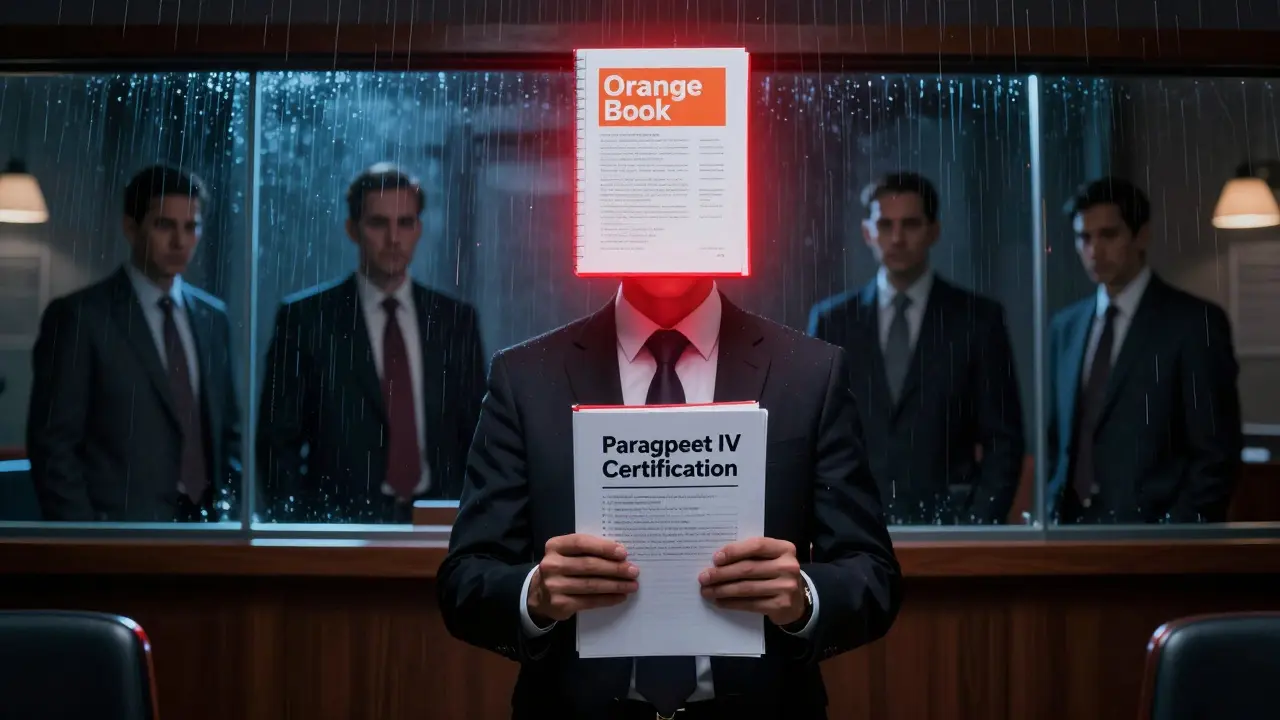
When a generic drug company wants to sell a cheaper version of a brand-name medicine, it doesn’t just wait for the patent to expire. It can legally challenge that patent before the drug even hits the shelves. That’s where Paragraph IV certification comes in - a powerful, high-stakes legal tool built into U.S. drug law to speed up generic competition and lower prices.
What Exactly Is a Paragraph IV Certification?
It’s a formal statement included in an Abbreviated New Drug Application (ANDA), the paperwork a generic company files with the FDA to get approval to sell a copy of a brand-name drug. In this statement, the generic maker claims one or more patents listed for that drug in the FDA’s Orange Book are either invalid, unenforceable, or won’t be infringed by making or selling the generic version. This isn’t just a guess. The law (21 U.S.C. § 355(j)(2)(B)(iv)) requires the applicant to provide a detailed explanation of why they believe the patent doesn’t hold up. That means citing scientific data, legal precedents, or technical arguments - not just saying "we think it’s broken." The real legal trick here? Under the Hatch-Waxman Act of 1984, this certification is treated as an "artificial act of infringement." That sounds odd - how can you infringe a patent before you even make the product? But it’s intentional. It lets the brand-name company sue the generic maker right away, in court, instead of waiting until the generic drug is already on shelves and sales are bleeding away. This keeps the fight in the courtroom, not the marketplace.Why Does This System Exist?
Before 1984, generic drug makers had no clear path to enter the market. Brand companies could extend their monopoly by filing new patents on minor changes - like a new pill shape or coating - long after the original patent expired. Generic companies had no legal way to challenge those patents without risking massive lawsuits after launch. The Hatch-Waxman Act changed that. It created a balance: give brand companies extra patent time to reward innovation, but give generic companies a clear, structured way to break through those barriers. The result? Over $1.7 trillion in healthcare savings since 1984, according to the FDA. The biggest incentive? The first generic company to successfully challenge a patent gets 180 days of exclusive market access. During that time, no other generic can enter. That’s a huge financial prize - on a blockbuster drug, it can mean hundreds of millions in revenue. That’s why companies spend millions on lawyers and scientists to build their case.The Four Types of Patent Certifications - And Why Paragraph IV Is the Riskiest
There are four types of patent certifications under Hatch-Waxman. Only one is a full legal challenge:- Paragraph I: "This drug has no patents." Used in about 5% of applications. Low risk, low reward.
- Paragraph II: "The patent expires on X date." Used in 15% of cases. Simple. Wait until expiration, then launch.
- Paragraph III: "We’ll wait until the patent expires." Used in 20% of cases. Safe, but no early entry.
- Paragraph IV: "This patent is invalid or won’t be infringed." Used in 60-70% of ANDAs. High risk, high reward.
The Real Cost of Challenging a Patent
Winning a Paragraph IV case isn’t cheap. The median cost per case? Around $12.7 million, according to Fish & Richardson’s 2022 report. Some run over $15 million. That’s not just lawyer fees - it’s patent attorneys, expert witnesses, lab testing, court filings, and years of preparation. And it’s not just about money. The notice letter sent to the brand company must be perfect. If it’s too vague, the FDA will reject the entire application - even if your legal argument is sound. In 2021-2022, 12% of Paragraph IV filings were rejected for this reason alone. One common mistake? Underestimating the "detailed statement" requirement. Courts don’t need a PhD thesis, but they do need a clear, rational basis. Saying "our drug is different" isn’t enough. You need to show how your formulation avoids the patented method, or why the patent’s claims are too broad to be valid.Big Wins - And Big Losses
There are success stories. In 2004, Apotex challenged GlaxoSmithKline’s patent on Paxil (an antidepressant). They won. During their 180-day exclusivity window, they made over $1.2 billion. But there are also cautionary tales. Teva’s generic version of Copaxone (used for multiple sclerosis) was approved in 2017 - but they lost their 180-day exclusivity because they didn’t get tentative FDA approval within 30 months of filing their Paragraph IV notice. That meant other generics flooded the market the same day. Teva made almost nothing. The lesson? Timing matters. So does precision. Even winning in court doesn’t guarantee market access if you miss a regulatory deadline.
How the Game Has Changed
Brand companies aren’t sitting still. They’ve learned to protect their drugs with "patent thickets" - dozens of overlapping patents on minor details like dosage, delivery systems, or manufacturing methods. This makes it harder for generics to find a weak spot. In response, generic companies are now combining Paragraph IV challenges with Inter Partes Review (IPR) proceedings at the Patent Trial and Appeal Board. IPR lets them challenge patents directly at the USPTO, often faster and cheaper than court. In 2022-2023, 42% of Paragraph IV cases included parallel IPRs. The 2023 Supreme Court case Amgen v. Sanofi also changed the game. The Court ruled that a patent must enable the full scope of its claims - meaning if a patent claims "all possible versions" of a drug but only describes one, it’s invalid. That raised the bar for brand companies trying to protect broad claims, especially for biologics. Meanwhile, the FDA’s 2023 Orange Book Modernization Act cracked down on vague patent listings. Fewer "junk patents" are being added, which should make Paragraph IV challenges more predictable.Who’s Playing This Game?
The top five generic manufacturers - Teva, Viatris, Sandoz, Hikma, and Amneal - filed 58% of all Paragraph IV certifications between 2022 and 2023. These companies have legal teams dedicated to patent challenges. Smaller players struggle with the cost. But the stakes are too high to ignore. Over 90% of top-selling branded drugs face at least one Paragraph IV challenge. If a drug makes over $1 billion a year, it’s almost guaranteed someone will challenge its patents. The FTC has also stepped in. They’ve cracked down on "pay-for-delay" deals - where brand companies pay generics to delay entry. In 2013, the Supreme Court ruled these deals can violate antitrust law. Since then, fewer settlements happen without a clear legal basis.What’s Next?
The future of Paragraph IV is tied to complex drugs - inhalers, injectables, and biosimilars. These are harder to copy than pills. But as technology improves, more generics are targeting them. Evaluate Pharma predicts a 78% increase in Paragraph IV challenges for these products by 2028. The Congressional Budget Office estimates these challenges will keep saving the U.S. healthcare system $150-200 billion every year through 2030. That kind of savings doesn’t happen by accident. It happens because the law lets generics fight patents - early, legally, and with real consequences. Paragraph IV certification isn’t just a legal formality. It’s a financial battleground. It’s where science, law, and profit collide. And for patients? It’s the reason cheaper drugs get to market faster - even when the brand companies don’t want them to.Can a generic drug company challenge any patent using Paragraph IV?
No. Only patents listed in the FDA’s Orange Book for the reference drug can be challenged. If a patent isn’t listed, it can’t be contested through Paragraph IV. Generic companies must file their challenge only against patents that are officially recognized by the FDA as covering the brand drug’s active ingredient, formulation, or method of use.
What happens if the brand company doesn’t sue after a Paragraph IV notice?
If the brand company doesn’t file a lawsuit within 45 days of receiving the Paragraph IV notice, the FDA can approve the generic drug immediately. No 30-month stay kicks in. The generic maker can launch right away, and the patent remains enforceable - but the brand company loses the chance to block entry through the Hatch-Waxman process.
Why does the first filer get 180 days of exclusivity?
The 180-day exclusivity is designed to incentivize companies to take the financial and legal risk of challenging a patent. Without it, few would bother - the cost is too high, and the payoff uncertain. The first to file gets a head start, which helps offset their investment and encourages competition. But this exclusivity can be forfeited if the company fails to market the drug, withdraws its application, or changes its certification.
Can a Paragraph IV challenge be filed before a patent expires?
Yes. In fact, it’s usually filed years before expiration. Generic companies typically start preparing their challenge 36 to 48 months before the patent is set to expire. This gives them time to develop their legal strategy, run tests, and submit the ANDA with the Paragraph IV certification.
Are Paragraph IV challenges only for small molecules?
No. While most Paragraph IV challenges have targeted traditional small-molecule drugs, they’re increasingly being used for complex generics - like inhalers, injectables, and biosimilars. The 2023 Amgen v. Sanofi decision made it harder to defend broad biologic patents, opening more doors for generic challengers in this space.
Kelly McRainey Moore
January 22, 2026 AT 03:49Wow, I had no idea generic drug companies could legally take on Big Pharma like this. It’s wild how the system is built to force a fight in court instead of letting them just launch and deal with lawsuits later. Kinda like a legal duel with pill bottles.
Also, 180 days of exclusivity? That’s like winning the lottery but with more depositions.
Amber Lane
January 22, 2026 AT 13:21This is why my insulin is cheaper now.
Ashok Sakra
January 23, 2026 AT 01:40THEY ARE ALL IN THE POCKET OF THE PHARMA LIEGE!!! THEY LET THE BIG COMPANIES CONTROL EVERYTHING AND THEN THEY SAY ‘OH WE’RE PROMOTING COMPETITION’ BUT NOOOO THE REAL WINNERS ARE THE LAWYERS AND THE STOCKHOLDERS AND WE THE PEOPLE STILL PAY TOO MUCH!!
lokesh prasanth
January 23, 2026 AT 04:44patent thickets are just corporate jank to stall progress. its not innovation its legal spam. the system is rigged. we need to burn it down.
Samuel Mendoza
January 24, 2026 AT 17:40Actually, the 180-day exclusivity is a terrible policy. It creates monopolies within monopolies. The whole point of generics is competition, but this rewards the first mover with a cartel. That’s not free market, that’s crony capitalism.
shubham rathee
January 24, 2026 AT 18:14you ever wonder if the FDA is just letting pharma write the rules? they list every tiny patent they can think of just to trap generics. its not about health its about control. the orange book is a trapdoor
MAHENDRA MEGHWAL
January 25, 2026 AT 08:16It is indeed a remarkable legal construct, balancing innovation incentives with public access. The Hatch-Waxman Act, despite its complexities, remains one of the most effective legislative frameworks in pharmaceutical regulation. One must appreciate the careful calibration of rights and responsibilities.
Kevin Narvaes
January 27, 2026 AT 06:55so like... the whole system is just rich lawyers playing chess with our medicine? and the only reason generics win is because they got more cash than the little guy? i mean... we’re all just pawns in a game no one asked for
Sangeeta Isaac
January 27, 2026 AT 22:56so the first generic company to file gets a 6-month monopoly? that’s like saying ‘congrats you’re the only one allowed to sell bandaids after you beat up the guy who invented them’
also ‘patent thickets’ sounds like something a villain in a spy movie would use to hide his death ray
Ben McKibbin
January 29, 2026 AT 12:31What’s fascinating is how this system quietly reshapes healthcare economics without most people realizing it. The $1.7 trillion in savings? That’s not just numbers-it’s insulin for diabetics, antibiotics for kids, cancer meds for grandparents. This isn’t corporate drama-it’s public health engineering.
And yeah, the 180-day exclusivity is messy, but without it, no one would risk the $12 million gamble. It’s not perfect, but it’s the only mechanism we’ve got that actually works.
Melanie Pearson
January 30, 2026 AT 00:46This is a direct assault on American intellectual property. The United States leads the world in pharmaceutical innovation because we protect our patents. Allowing generics to challenge them with legal loopholes undermines the very foundation of medical progress. This is not competition-it is theft dressed in legal jargon.
Uju Megafu
January 30, 2026 AT 22:20they don't want you to know this but the whole paragraph iv thing is just a distraction so they can keep selling you overpriced pills while pretending they care about cheap medicine. the real problem? the same 5 companies control 90% of the market and they all know each other. this isn't freedom. it's a club.