
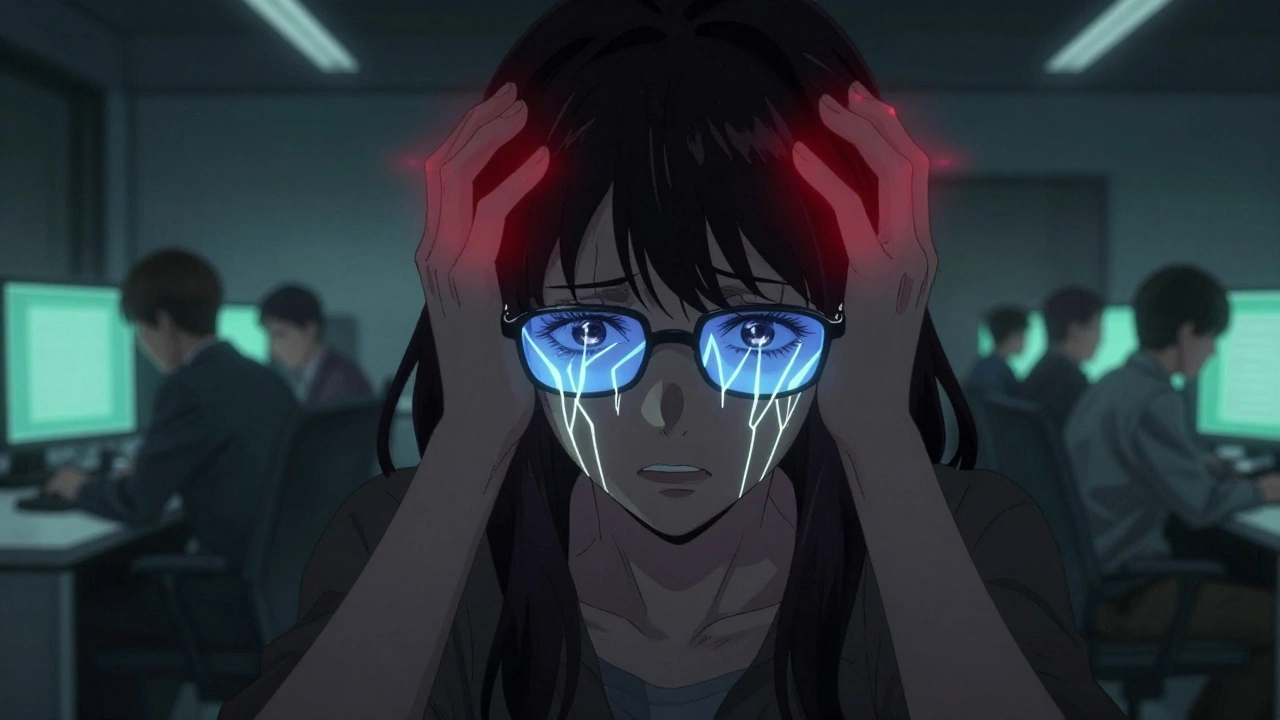
Light hurts your eyes. Not just when you step outside on a sunny day, but even under office fluorescents, your phone screen, or a simple lamp. If this sounds familiar, you’re not alone. About 35% of people experience photophobia - not a fear of light, but a painful, physical reaction to it. It’s not something you just ‘get used to.’ It’s a signal. Something in your body is out of balance.
What’s Really Going On?
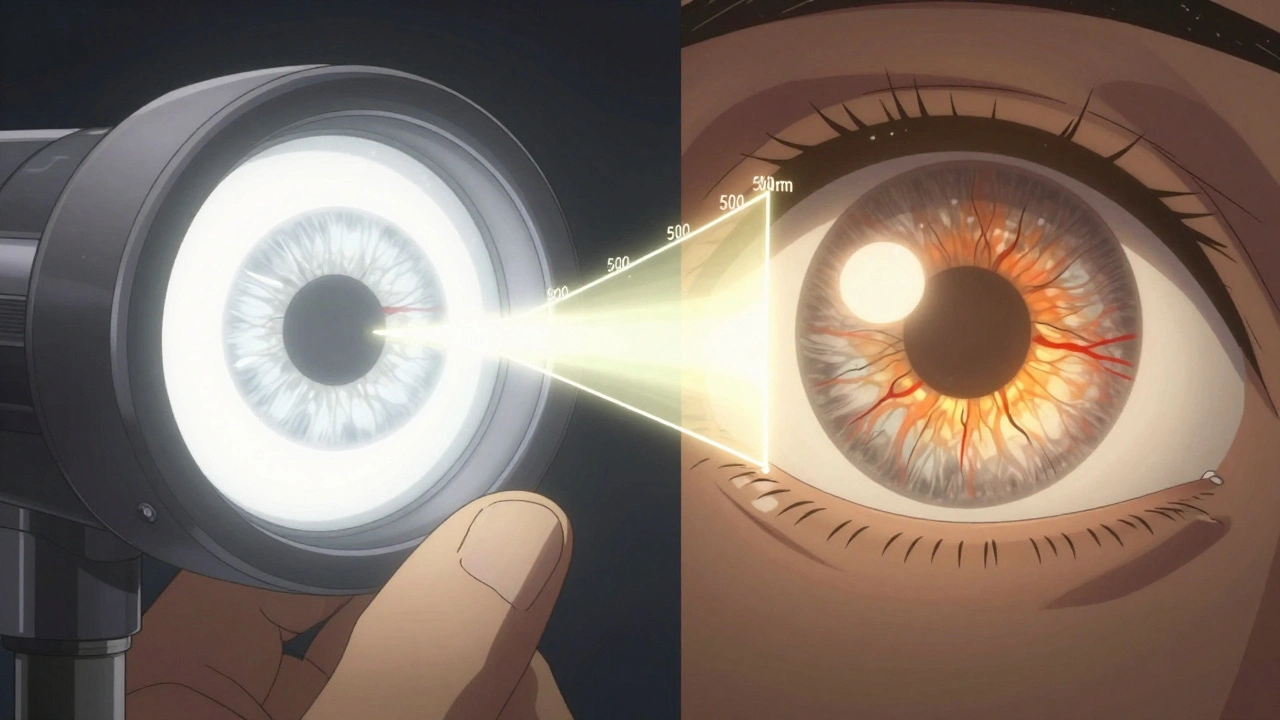
Photophobia isn’t a disease. It’s a symptom. Think of it like a fever. You don’t treat the fever itself - you find out what’s causing it. The problem starts in your eyes and brain. When light hits your retina, signals travel through nerves to your brain. In people with photophobia, those signals get amplified. Your brain turns up the volume on light, even when it shouldn’t. Studies using fMRI show photophobic individuals have 3.2 times more brain activity in the thalamus under normal office lighting than people without the condition. This isn’t just about brightness. It’s about specific wavelengths. The worst offenders are blue-green light between 500 and 550 nanometers - the kind emitted by LEDs, fluorescent bulbs, and digital screens. That’s why you might feel fine in natural sunlight but get a headache under a ceiling light.Why Does This Happen? The Three Main Causes
There are three big reasons why your eyes hate light. And knowing which one applies to you changes everything. 1. Eye Conditions (45% of cases)Problems inside your eye can make it hypersensitive. Uveitis - inflammation of the middle layer of the eye - is one of the most common. In fact, 92% of people with uveitis report light sensitivity before any other symptoms appear. Other culprits include corneal abrasions, dry eye disease, albinism, and iritis. If you’ve had recent eye pain, redness, or blurred vision along with light sensitivity, this is likely the cause. 2. Neurological Issues (40% of cases)
This is where migraines come in. 76-80% of migraine sufferers experience photophobia during an attack. But it’s not just during the headache. Many people report sensitivity even between attacks. That’s because the same nerve pathways that trigger migraine pain - the trigeminal system - also react to light. Other neurological causes include concussions, meningitis, and certain brain tumors. If your light sensitivity comes with nausea, dizziness, or headaches, neurological causes are likely. 3. Medications and Autoimmune Disorders (15% of cases)
Some drugs - like certain antibiotics, antihistamines, and even some antidepressants - can increase light sensitivity. Autoimmune diseases like lupus are also a major factor. In fact, 46% of non-eye-related photophobia cases link back to autoimmune conditions. If you’re on new medication or have joint pain, rashes, or fatigue along with light sensitivity, this could be the missing piece.
How Bad Is It? The Three Levels of Photophobia
Not everyone with photophobia is the same. Severity falls into three clear categories:- Mild (48%): Only bothered by direct sunlight. You might squint or look away, but indoor lighting is fine.
- Moderate (37%): Need sunglasses indoors under fluorescent or LED lights. Office work becomes a struggle.
- Severe (15%): Painful even in dimly lit rooms. Normal lighting at 50 lux (about the level of a dim lamp) triggers discomfort. These people often avoid going out, miss work, or stop using screens entirely.
What Doesn’t Work (And Why)
A lot of people try quick fixes that don’t help - and sometimes make things worse. Blue-light blocking glasses? They’re popular, but they’re not the answer. Most block light around 450nm - the blue part. But photophobia is triggered by green-blue light at 500-550nm. Wearing the wrong glasses can leave you exposed to the real problem. One Reddit user wrote: “I bought those cheap blue-light glasses. My eyes hurt even more.” That’s because they didn’t target the right wavelengths. Dark rooms? Avoiding light might feel good short-term, but it makes your eyes more sensitive over time. Plus, you risk vitamin D deficiency - people with chronic photophobia have a 27% higher chance of being deficient. And here’s a big one: Doctors dismissing it as “just migraines.” In patient surveys, 82% of people with uveitis were initially told they just had migraines. That delay can lead to permanent damage. If your eye doctor doesn’t check for inflammation, you’re not getting the full picture.The Proven Solution: FL-41 Tinted Lenses
There’s one treatment backed by solid science: FL-41 tinted lenses. These aren’t regular sunglasses. They’re specially filtered to block 70% of the 500-550nm wavelengths that trigger photophobia - without making everything look orange or dark. In clinical trials, people using FL-41 lenses saw a 43% reduction in symptoms. For migraine sufferers, they also reduced cortical spreading depression - the wave of brain activity that starts a migraine - by 31%. Real people notice the difference. One Amazon review from a user named “MigraineWarrior” says: “TheraSpecs FL-41 glasses reduced my migraine frequency from 18 to 5 per month within three weeks.” That’s not luck. That’s science. You don’t need expensive designer frames. Brands like TheraSpecs dominate the market with 63% share, and their glasses cost around $149. Some insurance plans cover them if you have a diagnosis. You can also get them as clip-ons or prescription lenses. Pro tip: It takes 2-3 weeks to adjust. At first, colors might look strange. Your brain needs time to recalibrate. Stick with it.What Else Can You Do?
Lenses help, but they’re not the whole solution. A full plan includes three phases: Phase 1: Immediate Relief- Wear FL-41 lenses indoors and outdoors.
- Lower indoor lighting to 100-200 lux (dimmer than a typical office).
- Use warm-white LED bulbs (2700K or lower) instead of cool white.
- Install blackout curtains or use eye masks at night if light leaks in. Phase 2: Diagnosis
- See an ophthalmologist for a full eye exam - including checks for uveitis, dry eye, and glaucoma.
- If eye exams are clear, see a neurologist. Ask about migraines, concussion history, or autoimmune markers.
- Get blood tests if autoimmune disease is suspected (like ANA for lupus).
- Cost: $300-$1,200 depending on insurance and tests needed. Phase 3: Treatment
- If it’s migraines: CGRP inhibitors like Aimovig can reduce frequency. They cost about $690/month, but many insurance plans cover them.
- If it’s uveitis: Steroid eye drops or oral meds can clear it up fast - if caught early.
- If it’s autoimmune: Immunosuppressants or biologics may be needed.
- If it’s dry eye: Artificial tears, punctal plugs, or prescription drops like Restasis.

What’s New in 2025?
The field is moving fast. In May 2023, the FDA approved the first diagnostic tool for photophobia: the Photosensitivity Assessment Device (PAD-2000). It measures how your pupil reacts to light - with 94% accuracy. No more guessing. Next up: a topical eye drop targeting TRPM8 receptors, which play a key role in light sensitivity. Phase 3 trials are underway, with FDA submission expected in Q2 2025. Early results show a potential 60% reduction in sensitivity. Workplaces are catching on too. 28% of Fortune 500 companies now use adjustable, migraine-friendly lighting. OSHA’s new lighting standards (effective January 2024) require offices to keep light between 300-500 lux with options to dim task lighting. That’s a win for anyone with photophobia.When to Worry
Most cases improve with treatment. But photophobia can be a red flag. The American Academy of Ophthalmology warns of “diagnostic overshadowing” - when doctors assume it’s just a migraine and miss something serious. Go to the ER if you have:- Sudden, severe light sensitivity with headache and stiff neck
- Eye redness, vision loss, or floaters
- Fever, confusion, or vomiting along with light sensitivity
Final Thoughts
Photophobia isn’t something you live with. It’s something you manage - and often, cure. The key is not just reducing light, but understanding why your body reacts. FL-41 lenses help. But diagnosis is the real game-changer. If you’ve been suffering for months or years, it’s not your fault. It’s just that no one told you what to look for. Start with a good eye doctor. Track your symptoms. Try FL-41 lenses. And don’t let anyone tell you it’s “just in your head.” Your eyes are sending a message. Listen to them.Is photophobia the same as being sensitive to bright light?
No. Everyone reacts to bright light - squinting, looking away, wearing sunglasses. Photophobia is a medical condition where even normal lighting causes pain, headaches, or nausea. It’s not just discomfort - it’s a neurological response that interferes with daily life.
Can blue-light blocking glasses help with photophobia?
Most blue-light blocking glasses don’t help. They filter blue light around 450nm, but photophobia is triggered by green-blue light between 500-550nm. Using the wrong glasses can make symptoms worse. Only FL-41 tinted lenses are proven to target the right wavelengths.
How long does it take to get used to FL-41 lenses?
Most people adapt in 2-3 weeks. At first, colors may look slightly distorted - things might look warmer or less vibrant. This is normal. Your brain adjusts to the filtered light, and after a few weeks, the distortion fades. Studies show 68% of users report full adaptation within this time.
Can photophobia cause permanent vision damage?
Photophobia itself doesn’t damage vision. But the conditions that cause it can. Untreated uveitis, for example, can lead to glaucoma, cataracts, or retinal detachment. That’s why getting a proper diagnosis is critical - it’s not about the light, it’s about what’s behind it.
Is photophobia more common in certain people?
Yes. Women are affected in 65% of cases. It’s most common between ages 25 and 55. People with migraines, autoimmune diseases like lupus, or a history of head injuries are at higher risk. Digital screen use has also increased diagnoses by 14% annually since 2020.
Should I avoid all sunlight if I have photophobia?
No. Avoiding sunlight entirely can lead to vitamin D deficiency and make your eyes more sensitive over time. Instead, wear FL-41 tinted sunglasses outdoors. These block harmful UV and the worst wavelengths while still letting in enough light to stay healthy. Always choose lenses with 100% UV protection.
Can photophobia be cured?
It depends on the cause. If it’s from a treatable condition like dry eye or uveitis, it can go away completely. If it’s linked to migraines or an autoimmune disease, it may require ongoing management. But with the right treatment - lenses, medication, lighting changes - 78% of people see major improvement within six months.
Sheldon Bird
December 13, 2025 AT 03:47Been dealing with this for years. FL-41 lenses changed my life. I used to quit my job because the office lights felt like needles. Now I can actually work without wanting to scream. 🙌
Karen Mccullouch
December 14, 2025 AT 10:15Of course it’s all about FL-41 lenses. What about the fact that Big Pharma doesn’t want you to know the real cause? It’s the 5G towers + LED lighting combo. They’re weaponizing light to make people dependent on expensive glasses. 🤡
Michael Gardner
December 15, 2025 AT 14:06Wait, so you’re telling me the 3.2x brain activity stat is from fMRI studies, but the 43% symptom reduction is from a single small trial? Sounds like cherry-picked science to me. Also, why are we still using the term ‘photophobia’? It’s not a phobia. It’s a sensory processing issue. Stop mislabeling things.
Willie Onst
December 16, 2025 AT 02:56Hey, I just want to say this post was so thoughtful. I’ve been living with this since my concussion in 2020, and no one ever explained it like this. FL-41 lenses felt like magic - not because they’re expensive, but because they finally *saw* me. Keep sharing stuff like this. 🌱
Jennifer Taylor
December 17, 2025 AT 07:58OMG I KNEW IT. I’ve been telling everyone since 2021 that this is all because of the Illuminati’s new lighting agenda. They replaced all streetlights with 550nm LEDs to make us more docile. My dog even started avoiding the porch. The government doesn’t want us to see the truth - or feel the sun. I’ve been wearing 3 layers of tinfoil hats since then. My neighbor called the cops. Worth it. 🌞👑
Shelby Ume
December 18, 2025 AT 00:36Thank you for this comprehensive, evidence-based breakdown. As a nurse who works in neurology, I see patients every week who are dismissed as ‘just anxious’ or ‘overreacting.’ This post gives them language, validation, and a clear path forward. Please share it with every primary care clinic you can. This is the kind of content that saves people from years of suffering.
Jade Hovet
December 19, 2025 AT 05:02i just got my theraspecs last week and omg i cryed when i walked into my kitchen and didn’t feel like my eyes were on fire?? like… i forgot how normal light was supposed to feel?? i’m still adjusting but i’m already sleeping better and not needing to nap after work 😭💙
nithin Kuntumadugu
December 20, 2025 AT 19:05FL-41? Pfft. You think it’s that simple? You’re all just sheep. The real issue is the glyphosate in your water + the fact that they’ve been slowly replacing natural light with LED since 2012. I’ve been living off candlelight since 2018. My skin glows. My eyes are calm. Your glasses are just a distraction from the real enemy: corporate monoculture. 🌑
Rawlson King
December 22, 2025 AT 08:08Interesting. But you cite Amazon reviews and Reddit quotes as evidence. No peer-reviewed meta-analysis? No control group data? This reads like a sponsored post disguised as medical advice. FL-41 lenses may help a subset of patients, but you’re overselling them as a universal solution. Don’t confuse anecdote with evidence.
Yatendra S
December 23, 2025 AT 17:21What if the real problem isn’t the light… but our disconnection from natural circadian rhythms? We’ve replaced the sun with artificial spectra that confuse our pineal glands. FL-41 lenses are a band-aid. The real solution? Morning sunlight exposure, blue-light curfews, and relearning how to be in darkness. We’ve forgotten how to be human.