
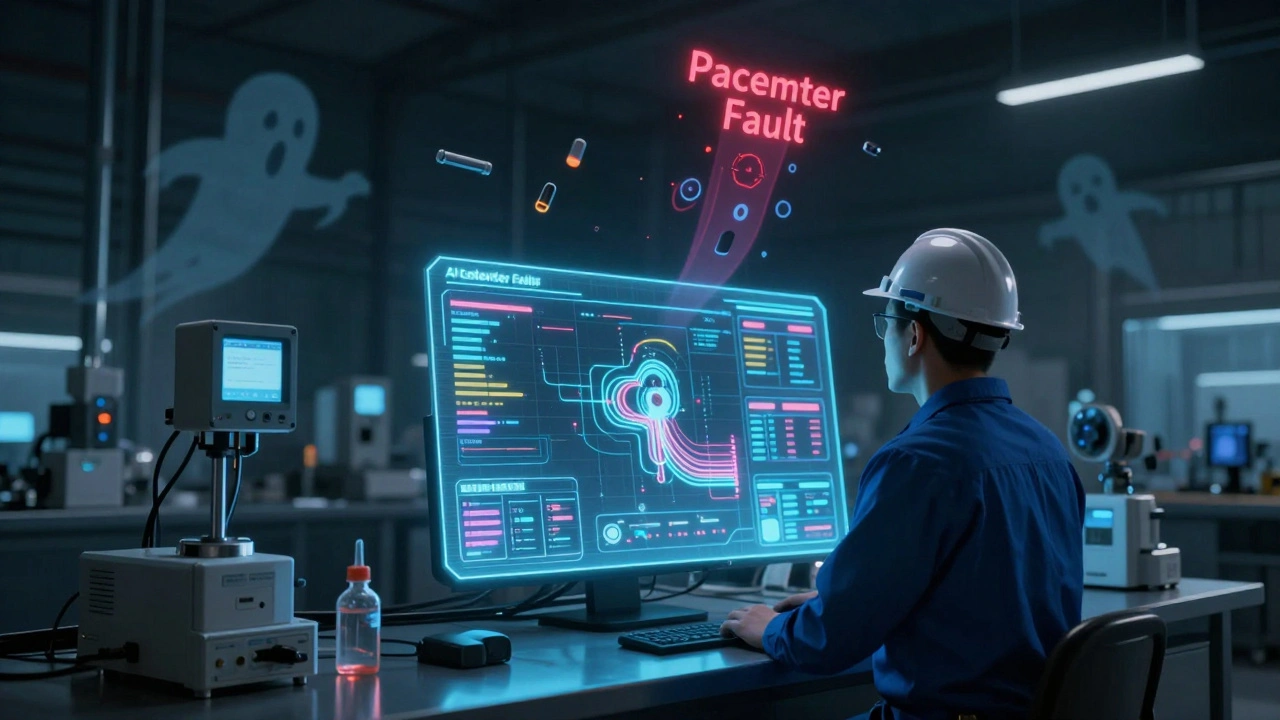
When you buy a medical device, a car, or even a smartphone, you assume it works. Not because you’ve tested it yourself, but because you trust the brand. That trust isn’t built on ads or logos. It’s built on quality assurance-the quiet, invisible system that catches defects before they reach you. But in 2025, that system is under more pressure than ever. And when quality slips, it doesn’t just cost money. It breaks trust. And once trust is broken, brands don’t recover easily.
Quality Isn’t a Department Anymore. It’s the Core of Brand Identity
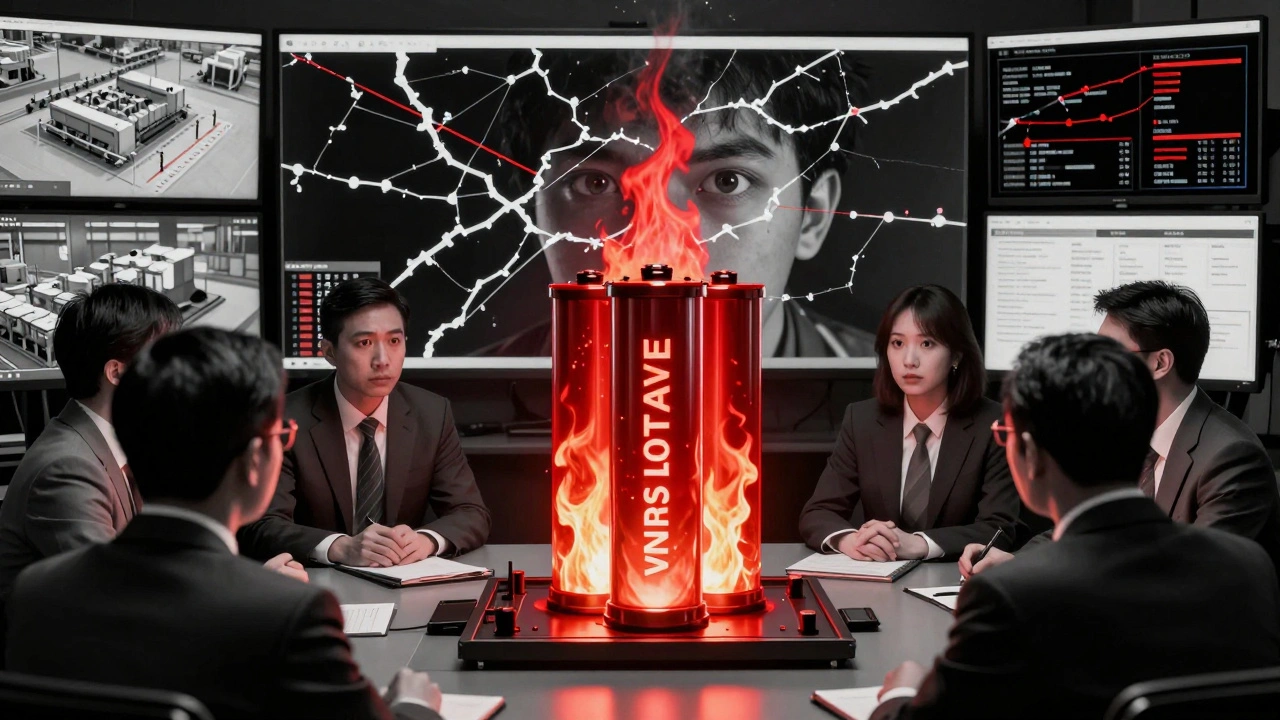
Five years ago, quality assurance was tucked into the back of the factory floor, handled by inspectors with calipers and clipboards. Today, it’s in the boardroom. According to the ZEISS U.S. Manufacturing Insights Report 2025, 95% of manufacturing executives say quality is mission-critical-not just for compliance, but for survival. Why? Because customers now expect perfection. A single defective pacemaker, a faulty EV battery, or a smartphone that overheats doesn’t just get returned. It gets posted online. It goes viral. And suddenly, a brand known for reliability is labeled unsafe.
Manufacturers in medical and aerospace sectors know this best. They’ve seen what happens when quality fails. The FDA doesn’t issue warnings lightly. A recall can cost hundreds of millions and take years to rebuild reputation. That’s why 72% of medical device makers have already invested in AI-powered inspection systems. They’re not just fixing defects. They’re preventing them before they happen.
The Hidden Cost of Rework: More Than Just Waste
Every time a part is scrapped or reworked, it’s not just a loss of material. It’s a loss of time, momentum, and trust. Thirty-eight percent of manufacturers say the cost of rework is their biggest quality challenge. But here’s what most people don’t realize: rework doesn’t just eat profits. It erodes confidence.
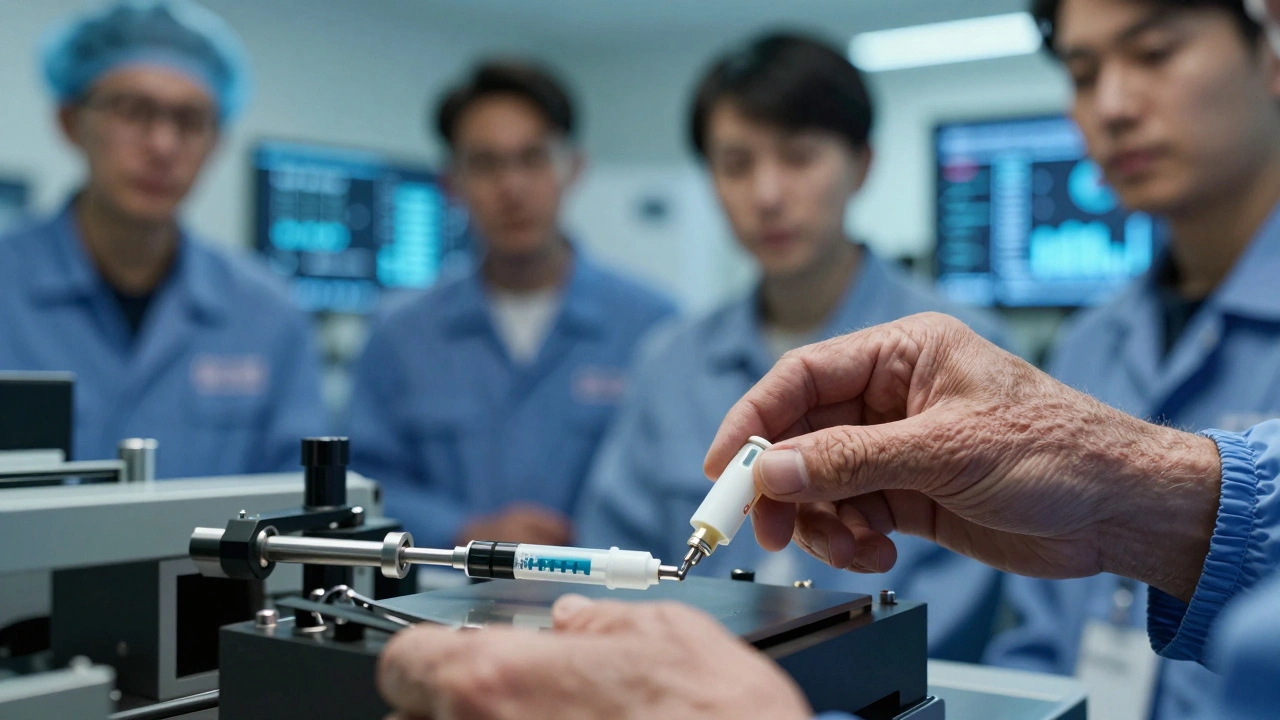
Take a medical device company in Ohio that spent $1.2 million a year fixing faulty connectors in insulin pumps. They weren’t missing standards. They were missing precision. After installing a multi-sensor metrology system that measured parts at the micron level, they cut rework by 63%. That wasn’t just savings. It was peace of mind-for the factory floor, for the executives, and most importantly, for the patients using the device.
When quality is inconsistent, customers notice-even if they don’t know why. A parent buying a pediatric monitor doesn’t care about the calibration process. They care that it didn’t fail during a night shift. That’s brand psychology in action: reliability becomes emotional safety.
Technology Isn’t the Fix. Integration Is.
Companies are spending millions on automation, AI, and real-time monitoring. But here’s the problem: 54% of manufacturers report that their new quality tools don’t talk to each other. A robot might scan a part. A sensor might log temperature. But if the data doesn’t flow into the same system that tracks supplier batches and employee training records, you’re just collecting noise.
Deloitte’s 2026 outlook found that manufacturers using integrated systems saw 22% lower rework costs and 18% faster time-to-market. Why? Because when quality data flows freely, problems are caught early. A supplier sends a batch of screws with slightly off-thread dimensions? The system flags it before it reaches the assembly line. No rework. No delay. No customer complaint.
But integration isn’t just technical. It’s cultural. One automotive supplier in Michigan tried installing AI inspection software but didn’t train their team. The result? Operators ignored alerts because they didn’t understand them. Defect rates went up 40%. The technology wasn’t the issue. The mindset was.
The Skills Gap Is a Brand Risk
Forty-seven percent of manufacturers say the biggest challenge isn’t technology-it’s people. There aren’t enough workers who know how to run modern quality systems. And those who do? They’re being poached. The median salary for a quality engineer with AI/ML skills hit $98,500 in Q2 2025-22% higher than traditional roles.
This isn’t just a hiring problem. It’s a trust problem. When a factory can’t staff its quality team properly, corners get cut. Training gets skipped. Data gets entered manually. And mistakes slip through. A Reddit thread from July 2025 with over 200 comments from factory workers summed it up: “We’re expected to maintain aerospace-grade precision while moving at consumer electronics speed.”
Brands that treat quality as a people-first function-not just a tech upgrade-win. One medical device maker in Minnesota hired former assembly line workers, trained them as data analysts, and gave them authority to halt production if something felt off. Within a year, customer-reported defects dropped 41%. Why? Because the people closest to the product were empowered to protect it.
Suppliers Are Part of Your Brand Too
Most brands don’t make everything in-house. They rely on suppliers for components. But when a supplier delivers a faulty sensor, it’s your name on the label. That’s why leading manufacturers now treat suppliers like extensions of their own teams.
Reader Precision’s case studies show companies that share forecasts, hold joint quality reviews, and even co-develop inspection protocols achieve 31% greater supply chain resilience. One electronics maker in California started sending its quality engineers to supplier sites-not to audit, but to train. They didn’t just fix parts. They fixed processes. The result? Their defect rate dropped 37% in 18 months.
When a brand takes responsibility for its entire supply chain, customers sense it. It’s not just about compliance. It’s about showing you care enough to protect your customers from every angle.
The Future of Quality: Predictive, Not Reactive
The most advanced manufacturers aren’t waiting for defects to happen. They’re predicting them. Using machine learning models trained on decades of production data, they can now spot patterns that signal a problem before it occurs. A vibration spike in a CNC machine. A slight shift in material temperature. A pattern of minor deviations in a batch of connectors.
Early adopters report 27% fewer quality deviations reaching end products. That’s not luck. That’s foresight. And it’s becoming the new baseline. Forrester predicts that by 2027, manufacturers who delay investing in predictive analytics will see defect rates 23% higher than those who act now.
This isn’t science fiction. It’s happening now. A company in Wisconsin uses AI to analyze 12 million data points per hour from its production line. It doesn’t just catch defects. It tells operators exactly what to adjust-down to the torque setting on a screwdriver. No guesswork. No delays. Just precision.
Why This Matters More Than Ever
In 2025, quality isn’t about meeting standards. It’s about earning trust. Every product you ship is a promise. And when that promise is broken-whether by a flawed component, a rushed inspection, or a poorly trained worker-it doesn’t just cost money. It costs loyalty.
Brands that treat quality as a strategic advantage, not a cost center, are pulling ahead. They’re investing in integrated systems, training their people, and holding suppliers accountable. They’re not just building products. They’re building confidence.
And in a world where customers can cancel subscriptions, switch brands, or destroy reputations with a single tweet, that confidence is the most valuable thing you can manufacture.
Why is quality assurance more important now than in the past?
Because today’s customers expect flawless performance, and social media turns one defect into a brand crisis. Quality is no longer just about compliance-it’s about trust, reputation, and survival. A single recalled product can cost millions in lost sales and damage a brand’s image for years.
Can technology alone fix quality problems in manufacturing?
No. Technology like AI and automated inspection helps, but only if it’s integrated with people and processes. Companies that bought expensive tools but didn’t train staff saw defect rates go up. The real fix is combining tech with skilled workers, clear workflows, and cross-team collaboration.
How do supplier issues affect brand trust?
They affect it deeply. If your supplier delivers a faulty part, your brand gets blamed-even if you didn’t make it. Leading companies now treat suppliers like partners: sharing data, co-training staff, and jointly setting quality standards. This builds resilience and reduces the risk of hidden failures.
What’s the biggest mistake manufacturers make with quality?
Thinking quality is a department, not a culture. Many invest in shiny new tools but ignore training, data silos, and communication gaps. Quality fails not because of bad tech, but because of broken connections-between teams, systems, and people.
Is investing in quality worth the cost?
Absolutely. Manufacturers using integrated quality systems see 22% lower rework costs and 18% faster time-to-market. Long-term, those who prioritize quality achieve 28% higher profit margins by 2030. The cost of not investing-lost customers, recalls, damaged reputation-is far higher.
Kristi Pope
December 10, 2025 AT 13:16Quality isn’t just about sensors and AI-it’s about the person who notices the screw that’s just a hair too loose and says ‘wait, something’s off.’
Those quiet moments? That’s where trust is built.
Not in the boardroom. Not in the code. In the hands that care enough to stop the line.
Jean Claude de La Ronde
December 10, 2025 AT 22:52so like… we’re paying $1200 for a phone that might explode if you look at it wrong and we’re supposed to be ‘impressed’ by a robot that scans it 17 times before it gets shipped?
bro. we’re not fixing quality. we’re just making the failure more *expensive*.
Aman deep
December 12, 2025 AT 11:35My cousin works at a med device plant in Bangalore. They used to have 3 QA folks checking 500 units a day by hand.
Now? One person monitors a dashboard that flags anomalies. But here’s the thing-they trained those workers to *feel* the machine’s rhythm.
Not just read numbers. Listen. Smell the overheating bearings.
That’s the magic no AI can replicate.
Eddie Bennett
December 13, 2025 AT 05:04I’ve seen this play out in my brother’s auto plant. Bought a fancy AI vision system. Cost $2M. Workers ignored it because the alerts were useless.
Then they brought in a retired QA guy to help tweak the thresholds.
Defects dropped 40% in two months.
Turns out, the tech was fine.
The ego was the problem.
Vivian Amadi
December 14, 2025 AT 15:08Oh please. You think a $98k quality engineer is gonna save us from Chinese suppliers dumping junk parts? Wake up. The whole system is rigged.
Brands don’t care about trust-they care about quarterly reports.
And customers? They’ll buy the cheaper thing even if it kills them. You think Tesla’s battery fires are because of ‘quality gaps’? No. They’re because someone cut a corner to hit a deadline.
Stop romanticizing inspections.
Jimmy Kärnfeldt
December 15, 2025 AT 13:49There’s something beautiful about the idea that quality is a culture, not a checklist.
It’s not about perfect parts. It’s about people feeling safe enough to speak up.
When I worked at that small lab in Oregon, the janitor was the one who caught the contamination because he noticed the smell.
He wasn’t trained. He just cared.
That’s the real innovation.
Ariel Nichole
December 17, 2025 AT 04:40I love how this post doesn’t just say ‘tech is good’ but actually shows how integration and people matter.
It’s like trying to build a symphony with only violins.
You need the cellos. The drums. The guy who tunes the bass.
Quality’s the whole orchestra.
john damon
December 18, 2025 AT 16:55AI is cool but also… 🤖😭
My phone overheated last week. I took it to the store. They said ‘it’s a known issue.’
So I tweeted it. Now my whole feed is ‘OMG YOUR PHONE IS A TERRORIST’
Meanwhile, the company’s stock is up 3%.
Who’s really winning here?
Taylor Dressler
December 20, 2025 AT 10:33Let’s clarify something: predictive analytics isn’t magic. It’s statistics applied with domain knowledge.
When a manufacturer trains a model on 10 years of production data, including supplier batch IDs, environmental logs, and operator shift patterns, it doesn’t just ‘predict’ defects-it identifies root causes.
The real value isn’t in catching the defect. It’s in preventing the condition that caused it.
And yes, that requires integrating systems. And yes, that requires training people. No shortcuts.
Aidan Stacey
December 20, 2025 AT 22:47Remember when Apple had that ‘bendgate’ scandal? People lost their minds.
But here’s the truth-no one was *surprised*. We all knew the phone was too thin.
And yet, we bought it anyway.
That’s not a quality failure. That’s a cultural one.
We’ve trained ourselves to accept risk for convenience.
And now we’re mad when the risk becomes real?
Maybe we’re the problem.
Mia Kingsley
December 22, 2025 AT 12:35Wait so you’re saying if I buy a $2000 laptop and it dies in 6 months it’s because the QA team didn’t have enough emojis? LMAO.
FACTORY WORKERS AREN’T ANGELS. THEY’RE HUMAN. THEY’RE TIRED. THEY’RE PAID $18 AN HOUR.
YOU THINK A $98K ENGINEER IS GONNA SAVE THE WORLD?
NO. THE WORLD NEEDS BETTER WAGES. NOT MORE SENSORS.
Katherine Liu-Bevan
December 23, 2025 AT 00:48One of the most powerful things I’ve seen: a company that started letting frontline workers submit quality improvement ideas via a simple Slack channel.
No managers. No forms. Just ‘Hey, this jig is worn out and we’re getting 0.3mm variance.’
They fixed it. Saved $300k a year.
And the best part? The workers felt seen.
That’s not a tech win.
That’s a human win.
And that’s what lasts.