
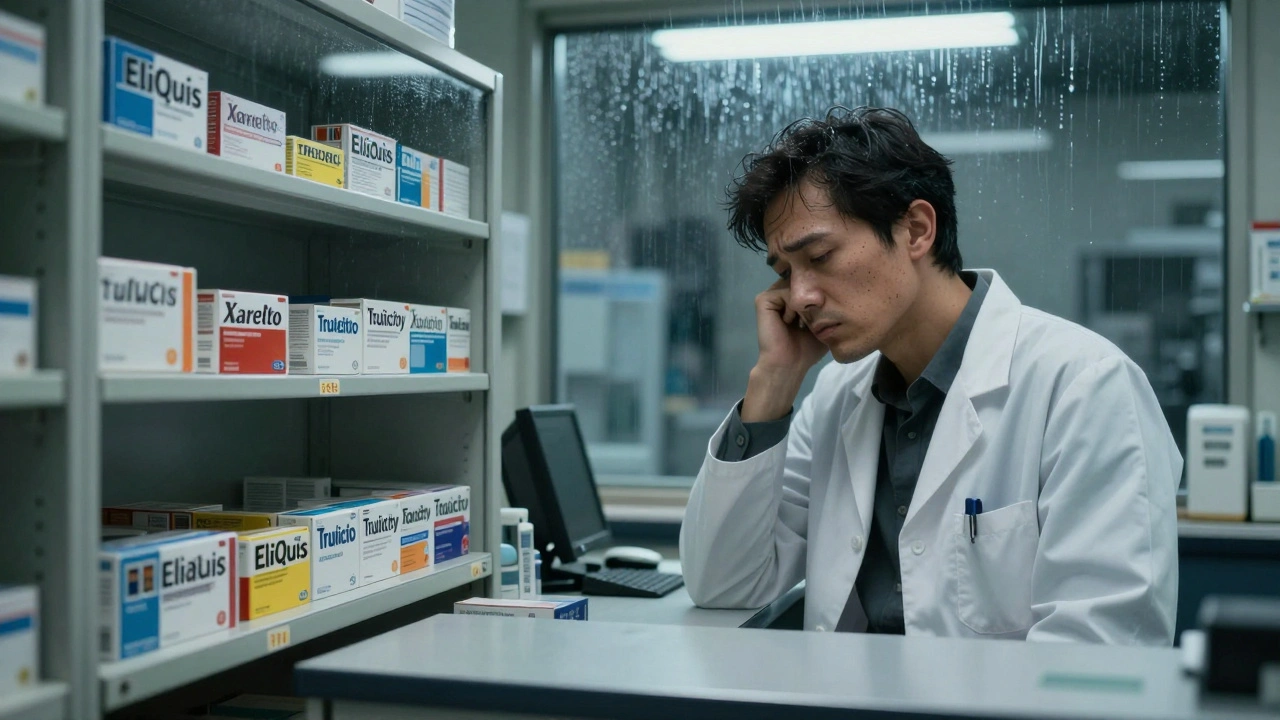
When the FDA approves a generic drug, you might assume it’ll hit pharmacy shelves soon after. But in reality, many approved generics sit on the shelf for years - not because they’re unsafe, not because they’re untested, but because of patent litigation. Between 2023 and 2025, this delay became the norm, not the exception.
Why Approved Generics Don’t Reach Patients
The FDA approved 63 first generics in 2025, according to GoodRx. That sounds like progress. But here’s the catch: the average time between FDA approval and actual market launch is now 3.2 years. That’s more than three full years of patients paying full price for brand-name drugs while cheaper versions sit idle. The main reason? The 30-month statutory stay. When a generic company files an Abbreviated New Drug Application (ANDA) and challenges a patent with a Paragraph IV certification, the brand-name manufacturer can sue. Once they do, the FDA can’t give final approval until 30 months pass - or the court rules in favor of the generic. Even if the patent is weak, the clock keeps ticking. That’s not a safety rule. It’s a legal delay tactic.Patent Thicketing: The Real Enemy
Brand-name companies aren’t just defending one patent anymore. They’re stacking them. In 2020, the average New Drug Application listed 12.3 patents. By 2025, that number jumped to 14.7. Some drugs now have over 20 patents listed in the FDA’s Orange Book. Take Humira. Its core patent expired in 2016. But AbbVie filed dozens of follow-up patents on delivery methods, dosing regimens, and formulations. Each one triggered a new 30-month stay. The result? Humira kept its monopoly until 2023 - seven years past its original patent expiry. That’s not innovation. That’s patent thicketing. Dr. Aaron Kesselheim from Harvard Medical School put it bluntly: “The current patent thicketing strategies have extended monopolies beyond the intended 20-year term by an average of 3.7 years per drug.”Who Gets Hurt the Most?
Patients. Pharmacists. Hospitals. Medicare. A 2025 survey by the Association for Accessible Medicines found that 82% of pharmacists regularly get asked by patients why a drug they’ve been told is “approved” still isn’t available. Top offenders? Eliquis, Trulicity, Steglatro, and Xarelto. One pharmacist on Drugs.com wrote: “We had the generic for Xarelto approved last November. But the brand company filed three new patents last month. Now we’re looking at another 30-month delay.” Patients For Affordable Drugs Now documented 412 cases between 2023 and 2025 where people skipped doses or went without medication because generics weren’t on the shelf. The brand-name version cost an average of $487 per month. The generic? Projected at $85. Medicare Part D spent $3.2 billion more than it should have in 2025 because of these delays, according to the Congressional Budget Office.
Complex Generics Face Longer Delays
Not all generics are created equal. Simple oral pills - like metformin or lisinopril - move faster. But injectables, inhalers, and complex formulations? They’re stuck. In 2025, 89% of delayed complex generics faced patent-related blocks. Compare that to just 63% of simple oral solids. Oncology drugs are the worst. The average delay between FDA approval and market launch for cancer generics? 4.1 years. Why? These drugs require more complex manufacturing. But the real bottleneck isn’t production - it’s patents. One 2025 PMC study found 14 out of 15 oncology drug shortages between 2023 and 2025 were tied to patent litigation, not supply chain issues.Supply Chains Are a Secondary Problem
Yes, supply chain problems exist. In 37% of delayed generic launches, manufacturers cited issues with Active Pharmaceutical Ingredients (API). Many of these APIs come from India or China, and disruptions there can slow things down. But here’s the key: even when supply chains are stable, patent litigation still holds up 72% of all delays, according to Drug Patent Watch. That’s more than supply, more than FDA backlog, more than manufacturing issues combined. Leading companies like Teva and Sandoz are responding by diversifying their API suppliers. In 2022, they averaged 1.8 approved suppliers per drug. By 2025, that number rose to 3.4. It’s a smart move - but it doesn’t fix the patent problem.The U.S. vs. The Rest of the World
The U.S. is the outlier. In Europe, the average time between generic approval and market launch is just 1.7 years. Why? No 30-month stay. No patent litigation that automatically freezes approval. Europe’s system lets generics enter as soon as they’re approved - unless a court rules the patent is valid. In the U.S., the system is designed to favor brand companies. The 30-month stay was meant to be a temporary pause. Now it’s a weapon. And it’s being used aggressively. Biosimilars are following the same pattern. Humira alone had 242 patents challenged in litigation. That created a 10-year exclusivity window. But even with that, 17 biosimilars were approved by Q3 2025. The system is strained, but not broken.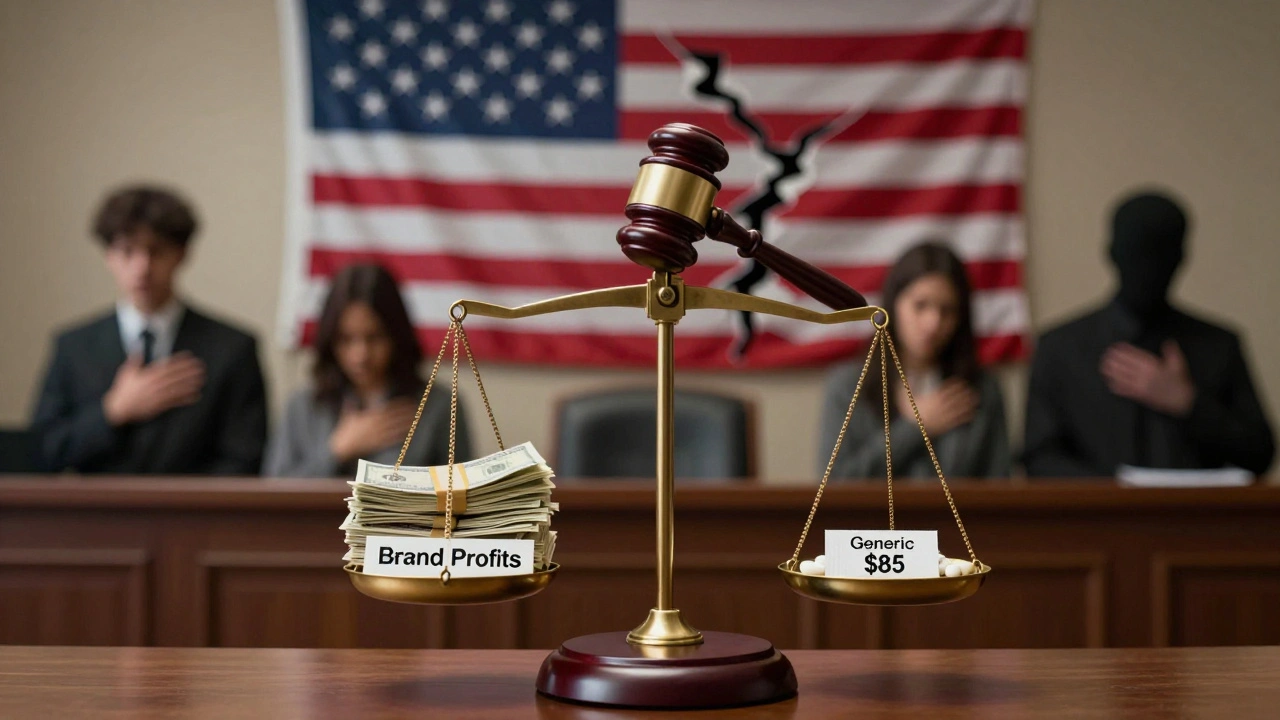
Jennifer Anderson
December 7, 2025 AT 11:19so like… we’re paying $500 a month for a pill that’s been proven safe for years? and the system just lets them drag this out for 3 years? this isnt healthcare, its corporate extortion
Helen Maples
December 8, 2025 AT 12:14The 30-month stay was never intended to function as a perpetual litigation shield. It was designed as a temporary equitable pause during patent validity adjudication. The systematic abuse of Paragraph IV certifications to trigger indefinite delays constitutes a pernicious distortion of the Hatch-Waxman Act’s original intent. The statutory framework is being weaponized to preserve monopolistic rents, directly contravening the public health mandate embedded in the legislation.
Empirical data from Drug Patent Watch confirms that patent litigation accounts for 72% of generic market entry delays-exceeding supply chain, manufacturing, and FDA backlog combined. This is not regulatory inefficiency; it is strategic rent-seeking. The FDA’s AI-assisted review system, while commendable for non-patent cases, is rendered functionally inert when litigation is invoked. The structural imbalance is deliberate, not accidental.
Furthermore, the exponential growth in patent listings per drug-from 12.3 in 2020 to 14.7 in 2025-demonstrates a calculated escalation in patent thicketing. This practice, exemplified by Humira’s 242 litigation-triggering patents, artificially extends exclusivity beyond the 20-year statutory term by an average of 3.7 years per drug, as documented by Kesselheim. Such conduct undermines the foundational premise of patent law: incentivizing innovation, not obstructing competition.
The CREATES Act’s failure to pass the Senate is not merely legislative inertia; it is a manifestation of pharmaceutical industry capture. PhRMA’s opposition to patent caps, despite 67% stakeholder support for reform, reveals a regulatory environment where corporate lobbying outweighs public interest. The Congressional Budget Office’s $3.2 billion Medicare overpayment in 2025 is a direct fiscal externality of this abuse.
Small generics, with average litigation costs of $12.7 million, are being systematically priced out of the market. RBC Capital Markets’ finding that 63% of delayed generics involve firms under $500 million in revenue underscores a consolidation trend that reduces market diversity and innovation. The result is fewer competitors, higher prices, and diminished access.
Europe’s model-where generics enter upon approval unless a court rules the patent valid-is not merely a procedural difference; it is a philosophical contrast. The U.S. system presumes infringement until proven otherwise; Europe presumes competition until proven unlawful. The former is a barrier; the latter is a gateway.
Until Congress amends the Hatch-Waxman Act to cap patent listings, eliminate automatic stays, and impose sanctions for frivolous litigation, patients will continue to ration insulin, oncology drugs, and anticoagulants. This is not a market failure. It is a moral failure.
Oliver Damon
December 9, 2025 AT 18:22The structural asymmetry here is fascinating from a game theory perspective. The brand firms operate under a zero-sum incentive structure: delay equals profit. The generic firms, by contrast, face a high fixed-cost, low-margin model where litigation risk is existential. The 30-month stay effectively transforms patent litigation from a judicial process into a financial endurance contest.
What’s particularly insidious is the feedback loop: the more patents a brand files, the longer the delay, the more revenue preserved, the more capital available to file even more patents. It’s a positive feedback loop of rent extraction. The FDA’s Orange Book, meant to be a transparent registry, has become a weaponized database of legal landmines.
The fact that complex generics-injectables, inhalers, oncology drugs-face 89% patent-related delays, while simple solids face only 63%, reveals a targeted strategy. These are the drugs with the highest margins and most vulnerable patient populations. The industry isn’t just defending patents; it’s selectively weaponizing them against therapies where substitution has the greatest impact.
And yet, the FTC’s seven enforcement actions since 2024 are a glimmer of hope. The Jazz Pharmaceuticals settlement forcing earlier entry proves that antitrust enforcement can pierce the patent veil. But enforcement is reactive, not systemic. What we need is a presumption of invalidity for patents filed within 12 months of original approval-no more evergreening.
Until then, we’re not just waiting for generics-we’re waiting for the legal system to catch up with its own principles.
Kurt Russell
December 9, 2025 AT 21:48THIS IS OUTRAGEOUS. I had to skip my Xarelto dose last month because the pharmacy said the generic was ‘approved’ but ‘not available’-and they laughed when I asked why. $487 a month? I’m not a billionaire. I’m a teacher. I work two jobs. People are dying because of this. This isn’t capitalism-it’s a hostage situation. We need to burn it all down and start over.
Kyle Flores
December 11, 2025 AT 18:45i get that the system is messed up but like… what can we actually do? the big pharma companies have so much money and lobbyists. even if congress passed something, they’d just find a loophole. i feel like we’re stuck waiting for someone with real power to care.
but hey, at least the FDA is trying with the AI reviews? maybe that’ll help a little with the non-patent stuff? i just hope they don’t forget about the little guys who can’t afford 12 million in legal fees.
Ryan Sullivan
December 13, 2025 AT 12:58Let’s be brutally honest: the generic manufacturers are complicit. They file ANDAs with Paragraph IV certifications knowing full well they’ll trigger 30-month stays. It’s not a challenge-it’s a business model. They’re not trying to get drugs to patients; they’re trying to extract settlements from brand companies. The entire system is a rigged casino where the house always wins, and the ‘patients’ are just the suckers betting on a broken wheel.
Stop pretending this is about access. It’s about profit redistribution. And if you think Congress will fix it, you’re delusional. The only thing that’ll change this is a class-action lawsuit against every single patent ever filed post-2015. Until then, shut up and pay.
Wesley Phillips
December 14, 2025 AT 01:40ok but like… why are we even talking about this like its complicated? its just pharma companies being greedy. they got a patent, it expired, now they wanna keep charging $500 for a pill that costs 2 bucks to make. its not rocket science. why does this take 3 years? because they dont wanna lose money. end of story.
also humira? yeah that thing was a cash cow. 242 patents? that’s not innovation thats just spamming the system like a bot.
also why are we still letting them do this? someone please just pass a law already im tired of waiting
Sadie Nastor
December 15, 2025 AT 10:08i just want to say thank you to everyone who’s fighting this. i’ve been on insulin for 12 years. i’ve watched the price go from $200 to $500 even though the formula hasn’t changed. when i heard the generic was approved but wouldn’t be available for 3 years… i cried. not because i’m weak, but because i’m tired. tired of being treated like a number. tired of being told ‘patents are the law’ when the law is being twisted. i don’t know how to fix it. but i know i’m not alone. and that means something.