
Antidepressant Sexual Side Effects Comparison Tool
Compare Antidepressant Effects on Sexual Function
Key Sexual Side Effects
Erectile Function
64% of users experience issues with SSRIsOrgasmic Function
53% of men experience delayed or absent orgasm with SSRIsDesire/Libido
61% of women experience desire loss with SSRIsLubrication
52% of women experience dryness with SSRIsAlternative Options
Bupropion (Wellbutrin)
Best Alternative
Works on dopamine and norepinephrine (not serotonin)
2x less likely to cause sexual dysfunction than SSRIs
68% improvement rate in clinical studies
Mirtazapine (Remeron)
Moderate Alternative
Lower sexual side effect rates than SSRIs
5-10% incidence of sexual dysfunction
May cause weight gain and sedation
Switching Strategies
When you start taking an antidepressant, you’re hoping to feel better - not worse. But for a lot of people, the very thing meant to lift their mood ends up dragging down their sex life. Antidepressant sexual side effects are more common than most doctors admit, and more disruptive than most patients expect. If you’ve noticed your desire vanished, your body won’t respond the way it used to, or your partner is asking questions you don’t know how to answer - you’re not alone. And more importantly, you’re not stuck with it.
Why Antidepressants Kill Libido
It’s not your fault. It’s not your relationship. It’s neurochemistry. Antidepressants, especially SSRIs like sertraline, fluoxetine, and paroxetine, work by increasing serotonin in the brain. That helps with depression. But serotonin doesn’t just talk to mood centers - it also shuts down the pathways that control sexual arousal. Think of it like turning down the volume on your body’s natural signals. Dopamine and norepinephrine - the chemicals that make sex feel good - get drowned out. The result? Low desire, trouble getting or keeping an erection, delayed or absent orgasm, and dryness in women. These aren’t rare side effects. They’re the rule.Studies show 35% to 70% of people on SSRIs experience sexual dysfunction. When you use detailed questionnaires instead of just asking patients if anything’s changed, the number jumps to 80%. Men report erectile issues (58%), reduced libido (64%), and delayed ejaculation (53%). Women report low lubrication (52%), anorgasmia (49%), and desire loss (61%). And here’s the kicker: if you’re depressed, you might already have some of these problems. About 35% to 50% of people with untreated depression have sexual issues. So it’s hard to tell: is it the illness or the medicine?
Not All Antidepressants Are Created Equal
Some antidepressants are far worse than others when it comes to sex. Paroxetine (Paxil) is the worst offender. If you’re switching from one SSRI to another, avoid paroxetine. It has the highest rate of orgasm problems - for every 2 to 5 people switched to it, one will develop sexual side effects that weren’t there before. Sertraline (Zoloft) and citalopram (Celexa) are next in line. Fluoxetine (Prozac) is a bit better, but still risky.On the flip side, bupropion (Wellbutrin) is the standout. Four clinical trials show it causes far fewer sexual problems than SSRIs. In one study, 68% of people who switched from an SSRI to bupropion saw their sexual function improve. It doesn’t boost serotonin - it works on dopamine and norepinephrine, which actually help with desire and arousal. It’s not a miracle drug - some people still get side effects - but it’s the best alternative for those struggling with libido loss.
Mirtazapine (Remeron) and agomelatine (Valdoxan) also have lower rates of sexual side effects. Nefazodone (Serzone) used to be a good option too, but it’s rarely used now because of rare liver damage. And then there’s esketamine (Spravato), the nasal spray for treatment-resistant depression. In trials, only 3.2% of users reported sexual side effects - far lower than SSRIs. But it costs $880 per dose and requires clinic visits. Not practical for most.
What You Can Do Right Now
You don’t have to live with this. There are proven, evidence-backed ways to fix it - without quitting your antidepressant.- Switch medications: This is the most effective move. Going from an SSRI to bupropion gives you the best chance of improvement. A 2019 study found 58% of women on SSRIs saw better sexual function after adding bupropion. It’s not just about swapping pills - you need to do it right. Cross-taper over 2 to 4 weeks. Stopping paroxetine cold turkey can cause dizziness, nausea, and brain zaps. Fluoxetine lasts longer in your system, so switching from it is easier.
- Add bupropion: If you want to keep your current antidepressant, adding bupropion (150mg daily) can help. It’s not a magic fix, but it works for many. One trial showed 58% of women had improved orgasm and desire after adding it.
- Try sildenafil (Viagra): For men with erectile problems, this works. In studies, 65% to 70% of men on SSRIs saw improvement with Viagra, compared to 25% on placebo. It doesn’t fix low desire, but it helps with performance.
- Use cyproheptadine: This older antihistamine is used off-label for SSRI-induced anorgasmia. A 2021 study found 52% of people who took 4mg nightly saw improvement. It’s cheap, available as a generic, and has few serious side effects.
- Reduce your dose: Sometimes, lowering the dose helps. About 20% to 30% of people see improvement. But be careful - too low and your depression might come back.
- Take a drug holiday: Skipping your pill for a day or two before sex sounds tempting. But with short-acting drugs like paroxetine, it can trigger withdrawal symptoms. Only do this under your doctor’s supervision.

The Hidden Risk: Post-SSRI Sexual Dysfunction
Most people assume if they stop the drug, the problem goes away. But for a small number - about 0.5% to 1.2% - it doesn’t. This is called Post-SSRI Sexual Dysfunction (PSSD). Symptoms include permanent low libido, erectile dysfunction, genital numbness, and emotional blunting. It’s rare, but real. Since 2010, 28 peer-reviewed case reports have documented it. Some people report symptoms lasting over a year after quitting. The FDA and European regulators are now paying attention. In 2022, the FDA required stronger warnings on antidepressant labels. If you’ve been on an SSRI for months or years and notice lingering issues after stopping, talk to a specialist. Don’t assume it’s all in your head.Why Doctors Don’t Talk About This
Many doctors don’t ask about sex. They assume patients won’t bring it up. Or they think it’s a minor issue compared to depression. But it’s not. A 2023 analysis of Reddit posts found 78% of people with sexual side effects said it damaged their relationships. Nearly half quit their meds without telling anyone. GoodRx data shows 23% of SSRI users stop within 90 days because of this. Women are 1.7 times more likely than men to quit over sexual side effects. If your doctor doesn’t bring it up, you have to. Ask: “What’s the sexual side effect risk of this drug?” and “Are there alternatives with fewer effects?”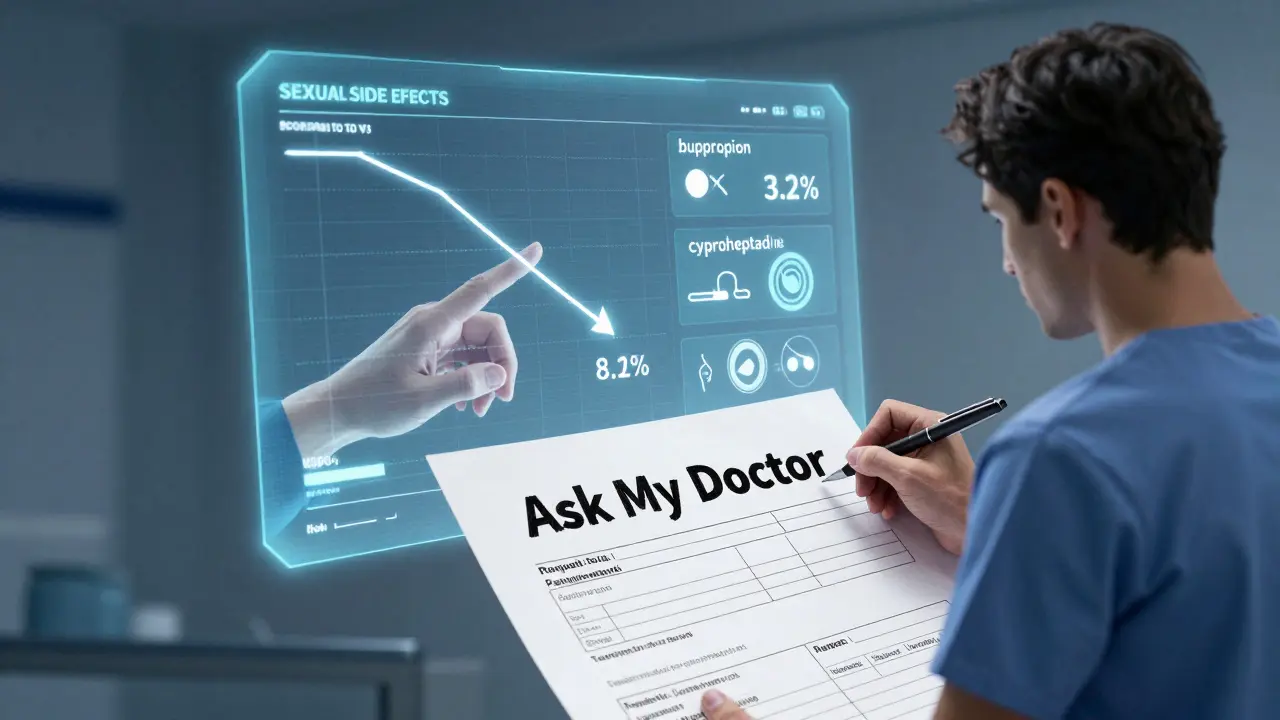
What to Ask Your Doctor
Don’t wait until it’s too late. Ask these questions before starting or while on antidepressants:- What’s the sexual side effect rate for this medication?
- Is bupropion or mirtazapine an option for me?
- Can we try a lower dose first?
- Should we use a tool like the Arizona Sexual Experience Scale (ASEX) to track changes?
- What happens if I want to switch? How long will the transition take?
Doctors who use ASEX - a simple 5-question checklist - catch sexual dysfunction early. It’s 89% accurate. If your doctor doesn’t know it, ask if they can use it.
Cost, Access, and Real-World Barriers
Bupropion XL 150mg costs about $15.72 a month as a generic. Brand-name Zoloft? $57.84. Switching isn’t just better for your sex life - it’s cheaper. But access isn’t equal. In the UK, NHS prescriptions are free, but some GPs still default to SSRIs without discussing alternatives. In the US, insurance often blocks bupropion if you haven’t tried an SSRI first. Push back. You have the right to ask for the best option for your life - not just the most prescribed one.What’s Coming Next
New drugs are in the pipeline. SEP-227162, a serotonin-targeting drug in Phase II trials, showed 87% fewer sexual side effects than sertraline. If it works, it could be a game-changer. For now, though, the best tools we have are already here: switching to bupropion, adding it as a booster, using sildenafil, or trying cyproheptadine. These aren’t experimental. They’re backed by years of research.Depression is serious. But so is losing your sex life. You don’t have to choose between feeling better mentally and feeling better physically. There’s a way forward - if you know what to ask for.
Do all antidepressants cause sexual side effects?
No. While SSRIs like sertraline and paroxetine have high rates of sexual side effects (up to 80%), others like bupropion (Wellbutrin), mirtazapine (Remeron), and agomelatine (Valdoxan) have significantly lower rates. Bupropion, in particular, is known for causing fewer sexual problems and may even improve libido in some people.
How long do sexual side effects last after stopping antidepressants?
For most people, sexual side effects improve within weeks to months after stopping the medication. But for a small percentage - about 0.5% to 1.2% - symptoms can persist for months or even years. This is called Post-SSRI Sexual Dysfunction (PSSD). It’s rare but documented in peer-reviewed studies. If symptoms linger after discontinuation, consult a specialist familiar with the condition.
Can I take Viagra with my antidepressant?
Yes, sildenafil (Viagra) is often prescribed off-label to men experiencing erectile dysfunction from SSRIs. Studies show 65% to 70% of men on SSRIs improve with Viagra, compared to 25% on placebo. It doesn’t help with low desire, but it can restore function. Always check with your doctor first - especially if you have heart issues or take nitrates.
Is bupropion a good alternative to SSRIs?
Yes. Bupropion is one of the best alternatives for people struggling with sexual side effects. Clinical trials show it causes 2 to 3 times fewer sexual problems than SSRIs. In one study, 68% of patients improved after switching. It’s also cheaper than many SSRIs and doesn’t cause weight gain or sexual dysfunction. It may not work for everyone - especially those with anxiety - but it’s the most evidence-backed option for preserving sexual function.
Why don’t doctors talk about this?
Many doctors don’t ask about sex because they assume patients won’t bring it up, or they prioritize depression relief over sexual function. But research shows sexual side effects are a major reason people stop taking antidepressants - especially women. If your doctor doesn’t mention it, ask. Use phrases like, “I’m concerned about how this might affect my sex life - what are my options?” You have the right to make informed choices.
Can I reduce my dose to avoid side effects?
Yes, reducing the dose helps in 20% to 30% of cases. But lowering it too much can make your depression worse. This approach works best when combined with other strategies - like switching to bupropion or adding sildenafil. Never adjust your dose without medical supervision, especially with short-acting SSRIs like paroxetine, which can cause withdrawal symptoms.
What’s the best way to switch antidepressants?
Switching should be done slowly over 2 to 4 weeks using a cross-taper. For example, gradually reduce your SSRI while slowly increasing bupropion. This avoids withdrawal symptoms and keeps your mood stable. Switching from paroxetine (which has a short half-life) requires extra care - sudden stops can cause dizziness, nausea, and brain zaps. Fluoxetine is easier to switch from because it stays in your system longer.
Are there natural remedies for antidepressant-related sexual side effects?
There’s no strong evidence that herbs, supplements, or lifestyle changes reliably fix sexual side effects caused by antidepressants. While exercise, stress reduction, and better sleep help overall well-being, they won’t reverse neurochemical changes from SSRIs. Some people report mild improvement with L-arginine or ginseng, but studies are small and inconsistent. The only proven solutions are medication changes, add-ons like bupropion or sildenafil, or dose adjustments under medical supervision.
Lisandra Lautert
February 22, 2026 AT 03:50Just switched from Zoloft to Wellbutrin. Sex life is back. Like, actually back. My partner noticed. I noticed. My therapist cried. Worth every second of the withdrawal hell.
David McKie
February 23, 2026 AT 12:38You people are so naive. This isn’t about ‘side effects’-it’s about pharmaceutical corporations turning human biology into a profit center. They don’t care if you can’t cum, as long as you keep buying the bottle. The real tragedy? Doctors are complicit. They get kickbacks. They get free lunches. They don’t ask about sex because they don’t want to know the truth.
And now we’re supposed to be grateful for ‘bupropion’? Like it’s a gift? It’s not. It’s the bare minimum. The FDA should shut down SSRIs entirely. This isn’t medicine. It’s chemical control disguised as care.
Southern Indiana Paleontology Institute
February 25, 2026 AT 00:47Y’all are overthinkin’ this. I got on Prozac, lost my mojo, switched to Wellbutrin, boom-back to normal. No fancy science, no therapist talk. Just dumb simple: if it breaks your dick, change the pill. America’s got the best meds in the world. Use ‘em right.
Also, Viagra’s not a joke. My buddy took it with Lexapro. Got hard. Got lucky. Got married. Point is: don’t be a hero. Take the pill. Do the deed.
Anil bhardwaj
February 25, 2026 AT 03:27I’ve been on citalopram for 3 years. Sex? Gone. Not even a spark. Tried everything-dose down, add bupropion, even tried yoga. Nothing worked. Then I stopped cold. Waited 6 months. Still nothing. I’m not even mad anymore. Just… numb. Like my body forgot how to feel. I guess that’s the price.
lela izzani
February 25, 2026 AT 18:56For anyone considering switching: talk to your doctor about the Arizona Sexual Experience Scale (ASEX). It’s a 5-question tool that’s 89% accurate at catching sexual side effects early. Most docs don’t know it exists, so bring it up. Print it out. Hand it to them. It’s not rude-it’s advocacy.
Also, if you’re on paroxetine, don’t quit cold. The brain zaps are real. Cross-taper with bupropion over 3 weeks. It’s messy, but safer. And yes-cyproheptadine works. I’m not a doctor, but I’ve seen it help 3 friends. 4mg at night. Cheap. Available. Worth asking about.
Stephen Archbold
February 26, 2026 AT 03:44My partner’s on sertraline. We’ve been together 8 years. Last year, she said, ‘I don’t feel anything anymore-not even when you touch me.’ I didn’t know what to say. We cried. We talked. We Googled. Found this post. Switched her to bupropion. Three months later? She said, ‘I think I just had an orgasm.’
That’s not a side effect. That’s a life. Thank you for writing this. I’m not a medical person, but I know love. And love needs to feel something.
Nick Hamby
February 27, 2026 AT 14:18There’s a deeper philosophical question here: when we medicate depression, are we sacrificing the fullness of human experience for the illusion of stability? Sexual dysfunction isn’t merely a side effect-it’s a symptom of a system that treats the mind as a machine to be tuned, not a soul to be understood.
SSRIs don’t just alter neurotransmitters; they alter our relationship to pleasure, intimacy, and embodiment. To dismiss this as ‘just a side effect’ is to reduce human vulnerability to a pharmacological footnote.
That said-bupropion remains the most elegant solution we have. It doesn’t suppress desire; it rekindles it. In that, it’s not just a drug-it’s a reclamation.
Shalini Gautam
March 1, 2026 AT 04:40Why is everyone talking about bupropion like it’s the holy grail? I tried it. Made me anxious as hell. My panic attacks doubled. I’d rather be numb than wired. Not everyone can just ‘switch’-some of us have comorbid anxiety. Don’t act like this is a one-size-fits-all fix.
Also, cyproheptadine? Sounds like something my grandma used for allergies. I’m not popping antihistamines to get off. I need real solutions, not folk remedies.
Erin Pinheiro
March 3, 2026 AT 01:13Ugh. Another ‘I’m a victim of Big Pharma’ post. Newsflash: depression is a real illness. If you can’t handle a little low libido, maybe you’re not ready for adulthood. My therapist says 80% of people on SSRIs don’t complain. You’re just being dramatic. Also, you’re all forgetting that antidepressants save lives. Maybe try gratitude before you whine about your sex life.
Brandice Valentino
March 3, 2026 AT 10:20I mean… bupropion? Really? That’s the best we’ve got? Like, is this 2008? I thought we’d have like, gene-targeted serotonergic modulators by now. This is so… basic. Also, I tried Viagra. It made me feel like a 65-year-old man at a wedding. Not sexy. Just… sad. We need innovation. Not a Band-Aid on a bullet wound.
Larry Zerpa
March 5, 2026 AT 04:06Let’s be real: this whole thing is a distraction. The real issue is that we medicate depression instead of fixing society. You’re stressed because your job sucks, your rent is insane, and your friends ghost you. But no-let’s blame serotonin. Let’s blame the pill. Let’s not fix capitalism. Let’s just give you a different pill.
Also, PSSD? That’s not a medical condition. It’s a Reddit myth. 1.2%? That’s like saying 1 in 83 people get haunted by their antidepressants. You’re all too online.
Gwen Vincent
March 6, 2026 AT 14:35I’m a nurse. I’ve seen this too many times. A woman comes in, crying, saying her husband won’t touch her. She’s on paroxetine. She’s scared to say anything. She thinks it’s her fault. I hand her this exact article. She cries again-but this time, she’s not alone.
You’re not broken. You’re not selfish. You’re not dramatic. You’re just a person trying to heal-and the system forgot to ask you about your body.
Keep speaking up. It matters.