
Brand vs Generic Medications: What Really Matters for Your Health
When you pick up a prescription, you might see two options: the familiar brand name like Brand Name Drugs, pharmaceutical products sold under a trademarked name by the original manufacturer or the plain label of a Generic Medications, drugs that contain the same active ingredient as the brand version but are sold without a brand name. Many people assume the brand is better—maybe safer, maybe stronger. But here’s the truth: if your doctor says it’s okay, a generic pill is just as effective. The FDA requires generics to have the same active ingredient, strength, dosage form, and route of administration. They must also meet the same strict standards for quality and performance. The only real difference? The price. Generic versions often cost 80% less because they don’t carry the marketing, research, or patent costs of the original.
So why do some people feel like generics don’t work as well? Sometimes it’s the placebo effect. Other times, it’s the inactive ingredients—fillers, dyes, or coatings—that change how the pill looks, tastes, or even how fast it dissolves. These don’t affect the drug’s main action, but they can cause minor differences in how your body reacts. For example, someone switching from a brand statin to a generic might notice a change in muscle soreness, not because the atorvastatin changed, but because the binder in the generic version affected absorption slightly. That’s why doctors sometimes stick with brand names for drugs with narrow therapeutic windows, like warfarin or levothyroxine, where tiny changes can matter. But for most people, for most conditions—high blood pressure, cholesterol, depression, infections—generics are a safe, smart choice. And if you’re buying Cheap Generic Lipitor, the generic version of the cholesterol-lowering drug atorvastatin, often purchased online for cost savings or Cheap Generic Cymbalta, the generic form of duloxetine, used for depression and nerve pain, you’re not cutting corners—you’re making a smart, evidence-based decision.
The big question isn’t whether generics work—it’s whether you’re getting them from a trustworthy source. That’s why posts here cover how to safely buy generic meds online, what to watch for in packaging, and how to spot fake pharmacies. You’ll also find comparisons between brand and generic versions of common drugs like Bentyl, Lipitor, and Cymbalta, plus real talk about side effects, cost savings, and what your doctor might not tell you about switching. Whether you’re managing chronic pain, high blood pressure, or depression, the right choice isn’t always the most expensive one. It’s the one that works for your body, your budget, and your life. Below, you’ll find detailed guides that cut through the noise and show you exactly what to look for when choosing between brand and generic—and how to make sure you’re getting the best value without risking your health.
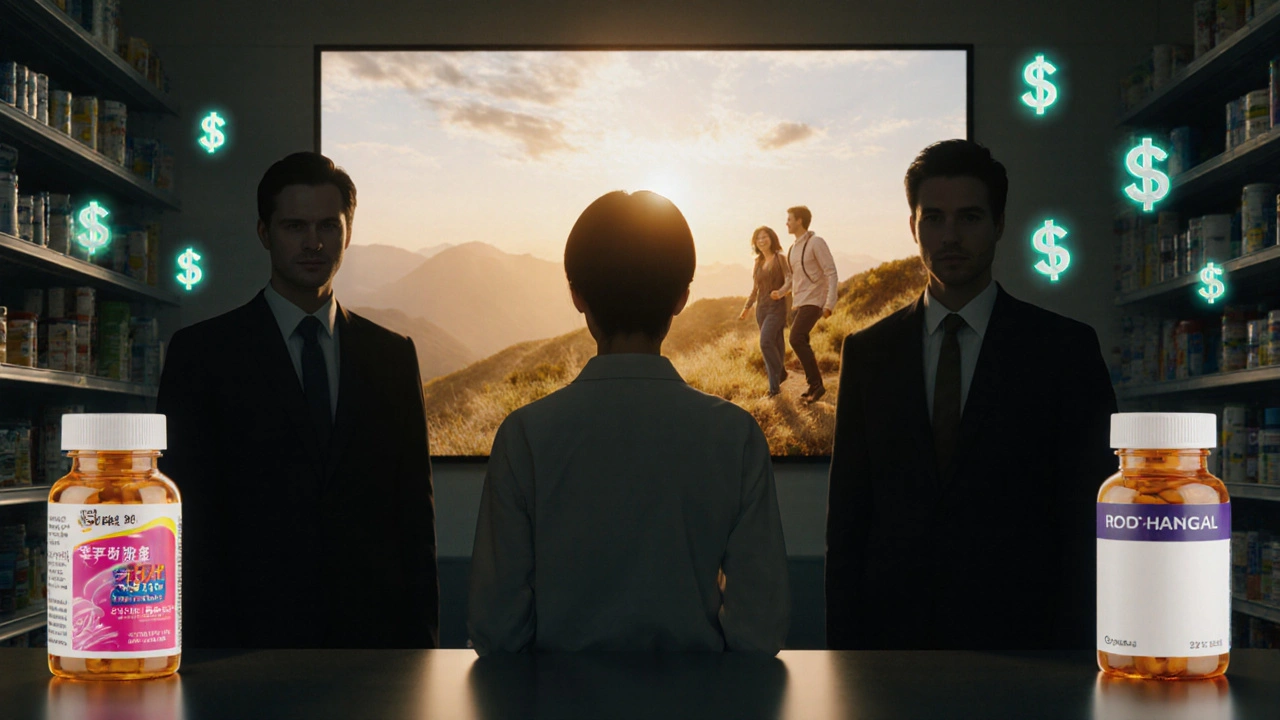
How Advertising Shapes Public Perception of Generic Medications
Advertising for brand-name drugs shapes patient and doctor perceptions, making generics seem less effective - even though they're chemically identical. Learn how marketing influences prescriptions and what you can do about it.