

When a generic drug company gets a letter from the FDA saying their application is tentatively approved, it’s not a celebration - it’s the start of a long, high-stakes wait. They’ve passed every scientific test. Their drug is identical to the brand-name version. Their manufacturing is clean. Their paperwork is perfect. But they can’t sell it. Not yet. Why? Because a patent is still in force. And now, they’re stuck in regulatory limbo, hoping a court or a patent expiration will clear the path.
This isn’t a glitch in the system. It’s how the U.S. generic drug market actually works. Since the Hatch-Waxman Act passed in 1984, tentative approval has become the standard path for generic companies to prepare for market entry when branded drugs still hold patent protection. It’s not a delay - it’s a strategic tool. And for companies betting millions on a single generic product, getting it wrong can cost hundreds of millions.
What Tentative Approval Really Means
Tentative approval isn’t approval. The FDA makes this clear: a tentatively approved ANDA (Abbreviated New Drug Application) is not an approved drug. It’s a status - like being on the waitlist for a sold-out concert. You’ve got your ticket, but you can’t walk in until the person ahead of you leaves.
The FDA grants tentative approval when an ANDA meets all technical, scientific, and quality requirements - but can’t be fully approved because of an active patent or exclusivity period on the brand-name drug. The agency has already reviewed the chemistry, manufacturing, labeling, and bioequivalence data. They’ve inspected the factory. They’ve confirmed the generic works just like the original. All that’s left is waiting for the legal barrier to fall.
Companies don’t get this status by accident. It’s earned after months - sometimes years - of work. The FDA’s standard review time for an ANDA is about 10 months under GDUFA deadlines. If the application is complete and clean, but blocked by a patent, the FDA issues a Tentative Approval letter instead of a Complete Response Letter. That’s a win. It means you’re in the queue. You’re not starting over. You’re just waiting.
The Patent Litigation Game
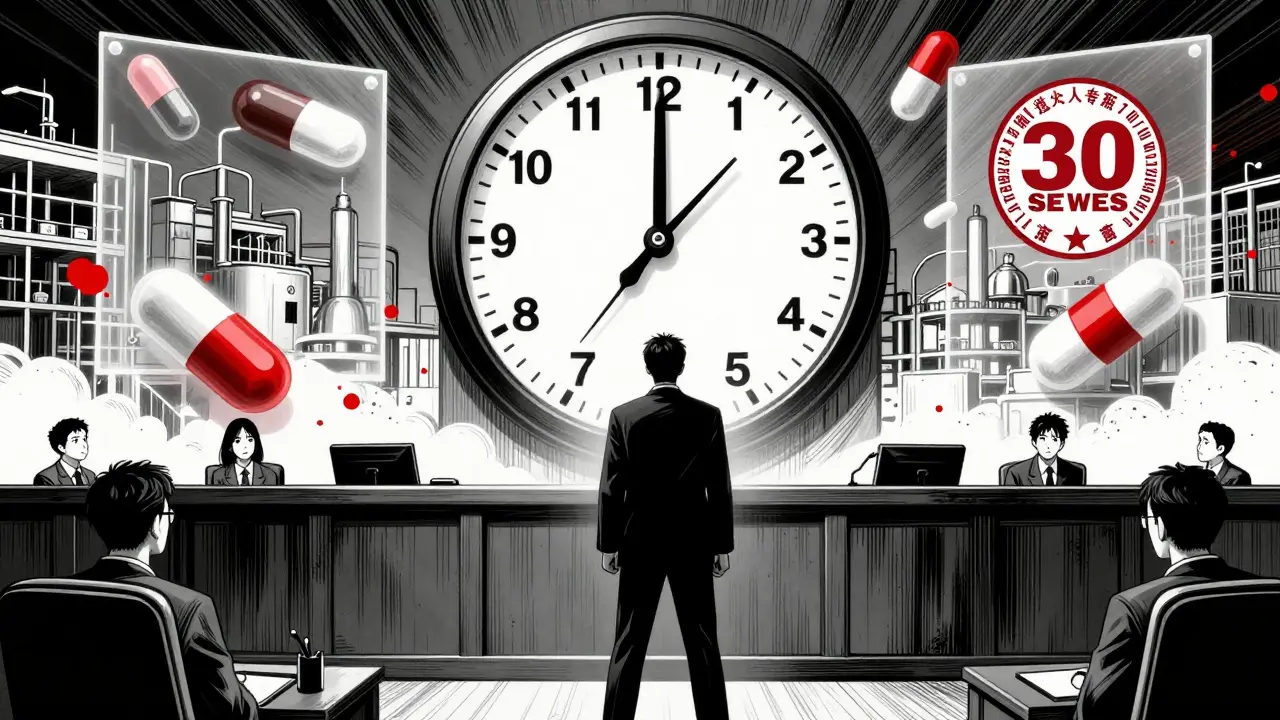
Most companies that get tentative approval are playing a legal game called a Paragraph IV certification. This is when a generic manufacturer says, “We believe this patent is invalid, or our drug doesn’t infringe it.” That triggers a 45-day window for the brand-name company to sue. If they do, the FDA is legally required to delay final approval for up to 30 months - unless the court rules in favor of the generic sooner.
That 30-month clock is the heart of the system. It’s why companies rush to file for tentative approval early. The first company to file a Paragraph IV certification gets 180 days of exclusivity - meaning no other generic can enter the market during that time. That’s a huge financial advantage. A drug like Cialis or Jardiance can generate over $1 billion in annual sales. One company capturing 80% of that market for six months? That’s a $400 million payday.
But here’s the catch: you have to be ready to launch the second the patent expires. That’s where tentative approval becomes critical. If you’re not prepared - if you haven’t submitted the right paperwork in time - someone else might slip in ahead of you, even if you filed first.
The Waiting Game Isn’t Passive
Many companies think once they get tentative approval, they can relax. They can’t. This is the most dangerous phase. The FDA doesn’t automatically approve you when the patent expires. You have to ask for it.
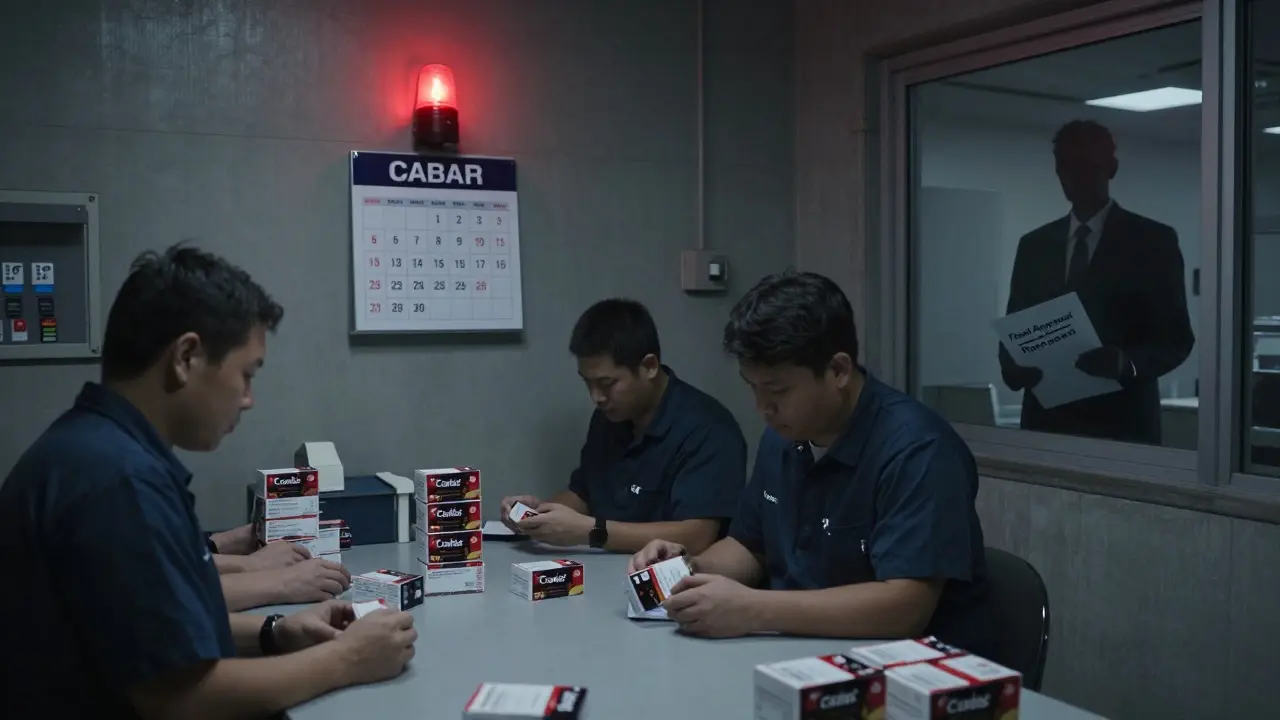
For minor changes - like updating a label or fixing a typo - you must submit your final approval request at least three months before the patent expires. For major changes - like switching manufacturing sites or altering the formulation - you need to file ten months in advance if your application has been tentatively approved for three years or more.
Miss that window? You’re out of line. The FDA will hold your application until they’ve reviewed your amendment. That could add 60 to 90 days to your wait. And in a market where timing is everything, that’s a disaster.
Real-world examples show how costly this is. Aurobindo Pharma lost $150 million in revenue when they delayed submitting a manufacturing change for their Jardiance generic. They had tentative approval for over a year. They thought they had time. They didn’t.
On the flip side, Lupin Limited got their generic Cialis to market within 24 hours of patent expiration in 2018. They submitted their final approval request exactly on time. They captured 42% of the market in the first month. That’s the difference between a win and a loss.
What Can Go Wrong
Even with perfect timing, things can derail. Here are the top three pitfalls:
- Missing exclusivity extensions. Brand-name companies sometimes get extra protection for pediatric studies or rare disease designations. If you don’t track every single exclusivity period, you’ll be caught off guard. Mylan’s EpiPen generic was delayed six months because they didn’t account for a pediatric exclusivity extension.
- Bad documentation. The FDA needs proof that the patent has expired. If your submission doesn’t clearly show the exact expiration date, including any extensions, they’ll send it back. Legal expert Aaron Kantor says 30-60 day delays are common just because companies didn’t attach the right court documents or patent filings.
- Manufacturing issues. Your factory must stay in compliance with cGMP standards the entire time. If the FDA finds a problem during an unannounced inspection while you’re in tentative approval status, your application can be pulled. In 2022, 27% of delayed approvals were due to manufacturing violations.
Industry data shows that about 15% of tentatively approved applications face avoidable delays because of these mistakes. That’s not bad luck - it’s poor planning.
Who Uses This System
Tentative approval isn’t for everyone. It’s a tool for serious players. Of the top 50 generic drug manufacturers, 92% actively pursue it for products with patent barriers. Larger companies like Teva, Sandoz, and Mylan typically have 15 to 25 products in tentative approval status at any one time. Smaller firms manage 2 to 5.
Why? Because it’s the only way to compete. Around 85% of all generic drugs in the U.S. enter the market through this pathway when patents are still active. Without it, generics would be years behind brand-name drugs. Patients would pay more. Healthcare costs would rise.
The system works because it balances two things: protecting innovation and enabling competition. The brand gets its patent term. The generic gets a clear path to market. But it only works if everyone follows the rules - and knows the deadlines.
What’s Changing
The FDA is trying to speed things up. In May 2023, they announced they’ll review final approval requests for minor changes in just 30 days - down from 60 to 90. That’s a big improvement. But the real pressure is coming from complexity.
More drugs are now complex generics - injectables, inhalers, topical creams - that are harder to copy. These take longer to develop. Their patents are more layered. The number of Paragraph IV certifications has been rising steadily, and industry analysts predict a 20% increase by 2025.
There’s also political risk. Proposals like the “Protecting Drug Patents Act” could extend patent terms even further. If passed, it would push back tentative approval timelines for hundreds of drugs. That’s why companies are watching Congress as closely as they watch the courts.
But experts agree: tentative approval isn’t going away. Barclays analysts estimate a 95% chance it remains a core part of the system through 2030. It’s too important. Too proven. Too embedded in the law.
How to Get It Right
If you’re a generic manufacturer, here’s what you need to do:
- File your ANDA early - don’t wait until the patent is about to expire.
- Track every patent and exclusivity period like a clock. Use software. Assign someone to monitor it daily.
- Know the difference between minor and major amendments. Don’t guess.
- Submit your final approval request at least three months before the earliest lawful date. Always.
- Keep your manufacturing site compliant. Inspections don’t stop just because you’re tentatively approved.
- Work with legal and regulatory teams together. One team can’t do this alone.
There’s no shortcut. No magic bullet. Just discipline, timing, and attention to detail.
For patients, this system means cheaper drugs faster. For companies, it means a high-risk, high-reward race. And for the FDA, it’s a delicate balancing act - enforcing patents while making sure generics don’t get stuck in bureaucracy.
Getting tentative approval is a victory. But it’s only the beginning. The real test comes when the patent expires - and you’re ready to move.
Katie Schoen
January 5, 2026 AT 08:16So basically, the FDA is like a bouncer at a club - you’ve got your ticket, you’re dressed right, but you’re still stuck outside while some rich guy’s patent gets to dance first? Wild.
Molly McLane
January 7, 2026 AT 01:37This is such an important story that nobody talks about. I work in health policy, and I’ve seen how these delays hurt patients - especially in rural areas where generics are the only option. Tentative approval isn’t bureaucracy, it’s a lifeline. Just need better oversight on those manufacturing delays.
Ryan Barr
January 7, 2026 AT 20:35Patent trolling disguised as innovation. The system is broken.
Mukesh Pareek
January 9, 2026 AT 01:49Paragraph IV certification is a strategic lever in the ANDA ecosystem - it triggers the automatic 30-month stay under 21 U.S.C. § 355(j)(5)(B)(iii), which effectively functions as a patent litigation arbitrage mechanism. The 180-day exclusivity window is the only economic incentive structure that justifies the sunk cost of bioequivalence studies for low-margin generics.
Harshit Kansal
January 10, 2026 AT 08:16Man, I read this whole thing and all I can think is - someone at Aurobindo just got fired. Like, hard. $150 million? That’s a whole lot of chai and bad decisions.
Brian Anaz
January 10, 2026 AT 17:49Why are we letting foreign companies like Teva and Lupin dominate this? We built the FDA, we invented the Hatch-Waxman Act - now our own patients are paying more because we outsourced the guts of our healthcare system to India and China. Fix this.
Venkataramanan Viswanathan
January 12, 2026 AT 10:45It is imperative to underscore that the tentative approval regime constitutes a cornerstone of the American pharmaceutical regulatory architecture. The alignment between statutory exclusivity provisions and administrative review timelines ensures market competition without compromising intellectual property rights. A meticulous compliance protocol is non-negotiable.
Vinayak Naik
January 13, 2026 AT 03:56bro i used to work in a lab that made generic blood pressure meds and let me tell u - the minute the patent expires, it’s like a damn warzone. trucks rolling out, FDA inspectors camping outside, and someone’s always forgetting to update the label. one time we sent out 20k bottles with the wrong expiration date bc someone missed the ‘minor change’ window. we had to burn ‘em. literally. like, a bonfire in the parking lot. sad but true.
Matt Beck
January 13, 2026 AT 07:55It’s not just about drugs… it’s about time. Time is the last true monopoly. We give corporations patents to protect innovation… but then we let them weaponize time itself - locking out life-saving medicine behind legal loopholes and calendar tricks. The FDA isn’t just a regulator… it’s a timekeeper for human survival. And we’re letting it be gamed. 😔⏳⚖️
Lily Lilyy
January 14, 2026 AT 06:26Thank you for sharing this. It’s so important that we understand how our medicines get to pharmacies. Every patient deserves affordable care, and this system - even with its flaws - helps make that possible. Keep pushing for fairness and transparency. We’re all in this together. 💪❤️