
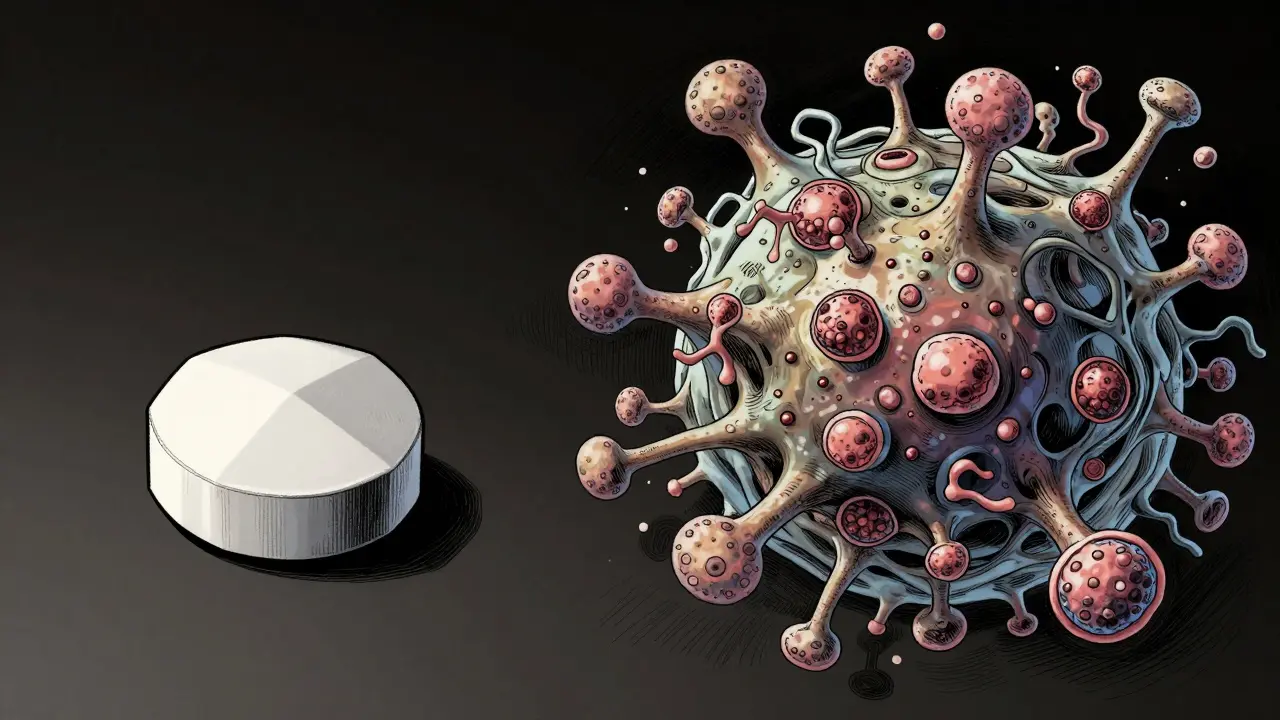
You might have heard about the massive impact of generic drugs-those affordable versions of brand-name pills that save healthcare systems billions. But if you're looking for a "generic" version of a vaccine to lower costs in developing nations, you'll find a frustrating reality: they don't actually exist. Unlike a simple chemical tablet, vaccines are biologically complex, meaning you can't just copy a formula and start printing doses in a new factory.
This isn't just a legal loophole or a corporate secret. It's a fundamental scientific barrier. When we talk about vaccine generics is a common misnomer for biosimilars or follow-on biologics, as vaccines are complex biological products that cannot be perfectly replicated like small-molecule chemical drugs, we are dealing with a production process that is more like brewing a complex craft beer than mixing a chemical solution. If the temperature shifts by a few degrees or a single raw material is impure, the entire batch is trash.
Why You Can't Just "Copy" a Vaccine
To understand why the generic model fails here, we have to look at the chemistry. Traditional generics are "small molecule" drugs. They have a stable, predictable structure. If you can prove the generic version is bioequivalent to the original, the FDA allows a shortcut called the Abbreviated New Drug Application (ANDA).
Vaccines are different. They are Biologics, derived from living organisms. Because they are so complex, there is no such thing as a perfect copy. Even two batches from the same factory can have slight variations. Because of this, every new manufacturer must file a full biological license application, proving from scratch that their version is safe and effective. This removes the "shortcut" that makes traditional generics so cheap and fast to bring to market.
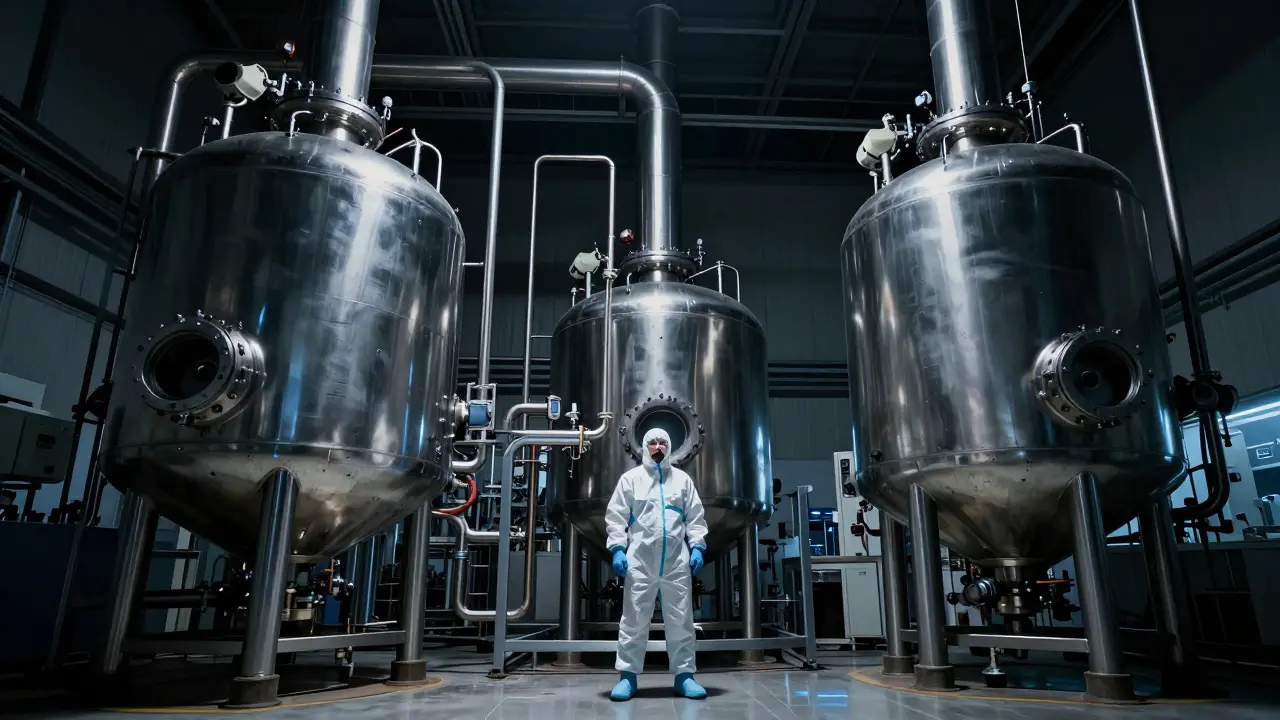
The capital requirements are staggering. While a generic pill plant might be relatively affordable, a single vaccine manufacturing line can cost over $500 million. You need biosafety level 2 or 3 containment and an ultra-precise cold chain. For instance, mRNA vaccines require storage at -70°C. If a clinic in the Democratic Republic of Congo doesn't have that specific freezer, the vaccine is useless, regardless of who manufactured it.
The Giant Gap in Global Production
For decades, the vaccine world has been a small club. A handful of giants like GSK, Merck, Sanofi, and Pfizer controlled about 70% of the market. This concentration creates a massive bottleneck when a global crisis hits.
India has tried to break this monopoly. The Serum Institute of India is now the world's largest producer by volume, cranking out up to 1.5 billion doses a year. They've managed to bring costs down significantly-producing the AstraZeneca COVID-19 vaccine for $3-4 per dose, while Western firms charged $15-20. However, even with this scale, they operate on thin margins because the overhead for biological production is just that high.
| Feature | Traditional Generics (Small Molecule) | Vaccine Production (Biologics) |
|---|---|---|
| Approval Path | Simplified (ANDA) | Full Biological License Application |
| Manufacturing | Chemical synthesis (predictable) | Cell culture/Biologic process (variable) |
| Entry Cost | Moderate | Extremely High ($200M - $500M+) |
| Supply Chain | Standard chemical precursors | Specialized lipid nanoparticles/substrates |
| Price Drop | Can drop 80-90% with competition | Slow decline; often a "take-it-or-leave-it" model |
The Supply Chain Nightmare
Even if a country has the money to build a factory, they often can't get the ingredients. Vaccine production relies on a tiny group of specialized suppliers. For mRNA technology, only five to seven global suppliers can provide the essential lipid nanoparticles. If those suppliers stop shipping, the rest of the world stops producing.
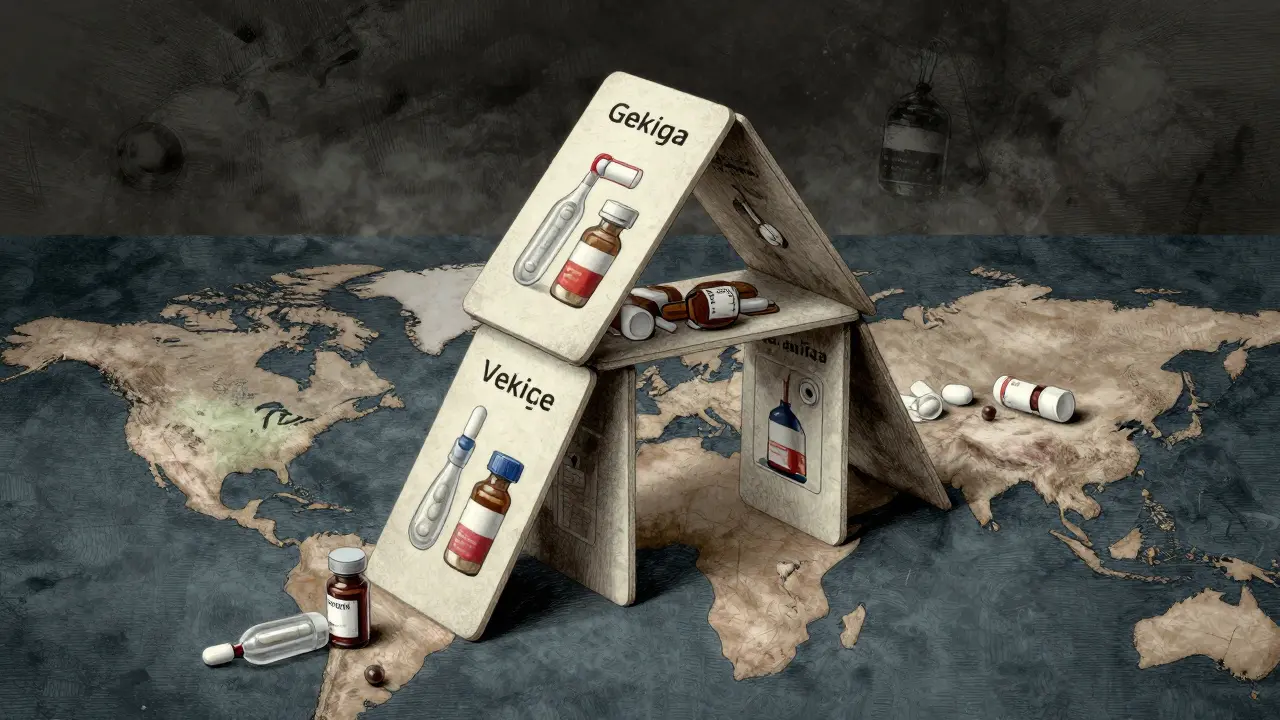
We saw this fragility during the pandemic. India supplies roughly 60% of the world's vaccines by volume, including the vast majority of the WHO demand for measles and DPT vaccines. But India still imports about 70% of its raw materials from China. When the U.S. imposed export restrictions on raw materials during the second wave of COVID-19, it threatened to slash global production by half. It's a house of cards where one missing ingredient can halt billions of doses.
Why Africa Imports 99% of Its Vaccines
The most glaring access issue is in Africa. Despite the growing pharmaceutical market, the continent imports nearly 99% of its vaccines. The gap isn't just about patents; it's about infrastructure. Building a regional hub takes years. The African Union's plan to reach 60% self-sufficiency by 2040 requires an investment of $4 billion and a decade of work.
Technology transfer-the process of sharing the "recipe" and the "how-to"-is where things often stall. The WHO mRNA technology transfer hub in South Africa is a great effort, but it faced an 18-month delay just because they couldn't source the right equipment. Even after starting, its capacity of 100 million doses is less than 1% of what the world needs. It shows that a patent waiver is useless if you don't have the specialized bioreactors to actually make the product.
The Path Forward: Beyond the Generic Dream
If we can't have "generics" in the traditional sense, how do we fix the access problem? The answer lies in decentralized manufacturing and "hub-and-spoke" models. Instead of relying on four companies in the West or one giant in India, the goal is to create smaller, regional production centers that can pivot quickly.
Some experts point to the model used by BioNTech or Moderna-small, innovative firms that scaled rapidly-as a blueprint. If low- and middle-income countries can move from importing finished doses to manufacturing the biological "bulk" locally, they can cut the supply chain distance and reduce costs. But this requires a shift from private market logic to a public health infrastructure approach. Until the $500 million entry fee for a manufacturing line is lowered through international subsidies, the world will remain dependent on a few players.
Why aren't there generic vaccines like there are generic pills?
Vaccines are biologics, meaning they are made from living organisms and are far more complex than chemical drugs. Because they cannot be perfectly replicated, regulators require a full new license application for every manufacturer, rather than the simplified "bioequivalence" test used for generic pills.
Does India produce all the world's vaccines?
Not all, but a huge portion. India provides about 60% of global vaccine production by volume and handles the majority of the WHO's demand for essential vaccines like measles and DPT. However, they still rely heavily on China for raw materials.
What is the main barrier to vaccine equity in Africa?
The primary barriers are the extreme capital costs of building facilities (hundreds of millions of dollars), the lack of a specialized cold chain for distribution, and the difficulty of transferring complex technical knowledge from Western firms to local manufacturers.
What is a "cold chain" and why does it matter?
A cold chain is a temperature-controlled supply chain. Because vaccines are biologics, they degrade if they get too warm. Some mRNA vaccines require ultra-cold storage at -70°C; without this infrastructure, vaccines expire before they can be injected, regardless of how many are produced.
Can patent waivers solve the vaccine shortage?
Patent waivers remove the legal barrier, but they don't solve the technical ones. You still need specialized bioreactors, lipid nanoparticles, and highly trained scientists. Without a full technology transfer and massive investment in factories, a patent waiver alone doesn't increase the number of doses.
Next Steps for Improving Global Access
Depending on who you are, the solution looks different:
- For Policymakers: Focus on funding "regional hubs" rather than individual factories to share the burden of raw material sourcing.
- For Health Ministries: Invest in the "last mile" cold chain. Production is useless if the vaccine spoils 10 miles from the clinic.
- For Pharma Companies: Move toward open-source technology transfers for essential vaccines to prevent total system collapse during the next pandemic.
Rauf Ronald
April 4, 2026 AT 13:59This is such a great breakdown of the biologics side of things! 🚀 Most people don't realize that the "recipe" is only half the battle. The actual hardware and the cold chain logistics are where the real nightmare begins. If we can push for more modular manufacturing units, we might actually see some progress in those regional hubs!
Darius Prorok
April 5, 2026 AT 13:03It's basically just high-end chemistry with more steps. People act like it's magic, but it's just expensive equipment.
GOPESH KUMAR
April 6, 2026 AT 23:02The obsession with "solutions" ignores the inherent duality of the pharmaceutical industry. We want the altruism of a public good but we operate within the greed of a capitalist framework. It is a paradox that cannot be solved by simply building a few more bioreactors in South Africa. The systemic failure is not technical, it is moral. Why do we assume the West will ever truly let go of the leash? The Serum Institute is a drop in the ocean compared to the sheer weight of corporate lobbying. We keep talking about "technology transfer" as if it's a PDF file you can just email to a developing nation. It's an illusion of progress designed to keep the global south dependent while looking benevolent on a WHO report. The real bottleneck is the will to dismantle the profit motive in a pandemic. Until that happens, we are just rearranging deck chairs on the Titanic. True autonomy requires the total decoupling of healthcare from shareholder value, which is a fantasy in the current geopolitical climate. We're just pretending the "hub-and-spoke" model is a viable strategy when it's really just a way to outsource the risk while keeping the IP locked in a vault. It's all a game.
Jay Vernon
April 6, 2026 AT 23:59Wow, I didn't know about the -70°C thing! That sounds so hard to do ❄️🙏
Benjamin cusden
April 7, 2026 AT 13:45The comparison to brewing beer is a bit reductive, though I suppose it serves a purpose for the layperson. The actual epigenetic and molecular variability is far more complex than a simple fermentation process.
Toby Sirois
April 8, 2026 AT 14:02Actually, the beer analogy is fine for people who don't get this. The point is that you can't just copy-paste these things. If you don't have the money, you don't get the meds. Simple as that.
Timothy Burroughs
April 10, 2026 AT 13:53why are we spending us money to help other countries build factories when we should be focusing on our own borders first... typical globalist trash
Laurie Iten
April 12, 2026 AT 04:33the concept of ownership over a biological sequence is a strange modern fiction... we are essentially patenting nature
Victoria Gregory
April 13, 2026 AT 08:53I totally agree with that!! ✨ It's so wild how we view health as a product rather than a right... maybe we can find a middle ground where everyone wins?? 🌸💖
Del Bourne
April 13, 2026 AT 17:45To add to the point about the cold chain, it's worth noting that some research is going into thermostable vaccines. If we can develop versions that stay potent at room temperature, the infrastructure barrier drops significantly. It would be a game-changer for rural distribution in sub-Saharan Africa.
Ruth Swansburg
April 15, 2026 AT 16:53We must prioritize these investments now! Let's get these hubs running!
Kathleen Painter
April 16, 2026 AT 16:56It's really heartening to see the African Union taking a lead on this, even if the timeline is long. I think we often underestimate the power of regional cooperation when it comes to sharing resources like raw materials or specialized staff, which might be the only way to actually bypass the monopoly of the big pharma giants without waiting for them to suddenly become charitable.
Windy Phillips
April 17, 2026 AT 08:24It is just so typical that the world waits until a crisis to realize the system is broken... but then we act surprised when it happens again!!!
Nathan Kreider
April 19, 2026 AT 05:27I really hope the hub-and-spoke model works. It sounds like a way for everyone to help each other out.
Nikhil Bhatia
April 19, 2026 AT 19:57Too much reading for something that basically says pharma is expensive.