
Drug-Induced TdP Risk Estimator
Check the factors that apply to your current situation to see the cumulative risk profile. Note: This is an educational tool, not a clinical diagnosis.
Medications & History
Physiological Factors
Risk Assessment Result
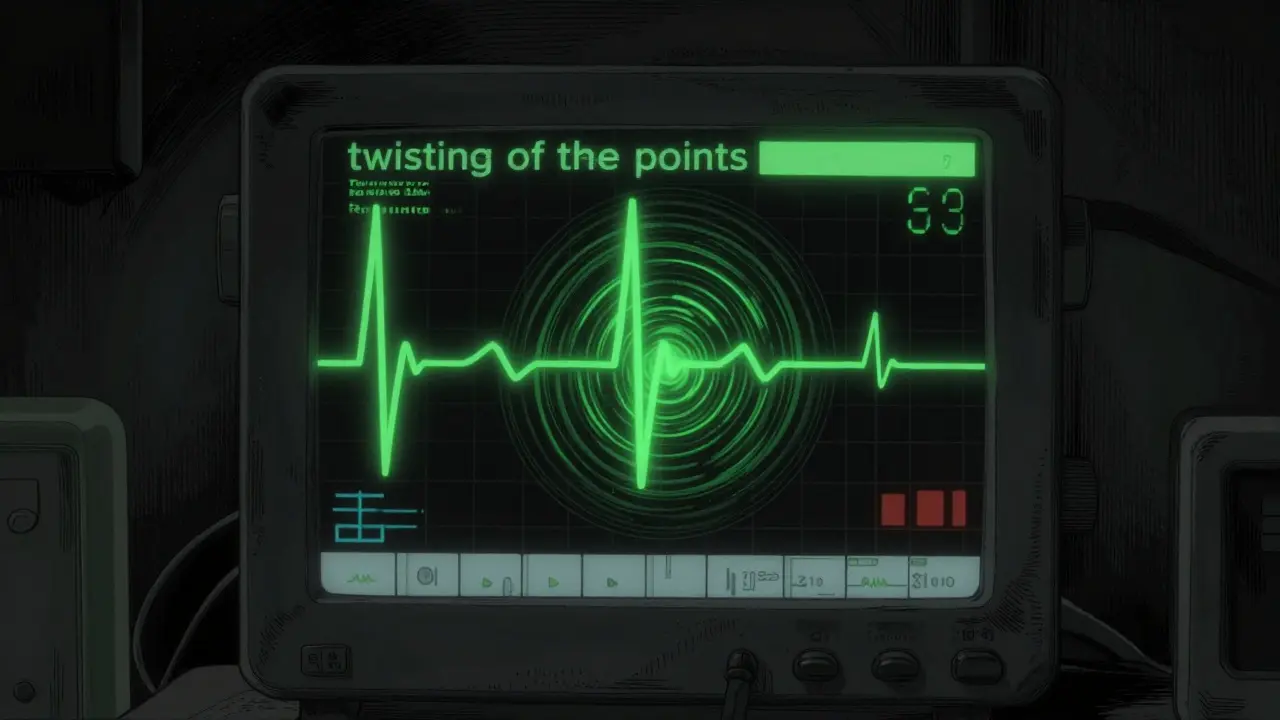
Imagine a heart rhythm that doesn't just skip a beat, but literally twists around itself on a monitor. That is exactly what happens during Torsades de Pointes (TdP), a life-threatening heart rhythm disorder. While it sounds complex, the scary part is that it can be triggered by common medications you might find in any home medicine cabinet. For many, there are no warning signs until the heart suddenly stops or enters a chaotic state. Understanding how to spot the danger and prevent the trigger is the difference between a routine prescription and a medical emergency.
What Exactly is Torsades de Pointes?
TdP is a specific type of polymorphic ventricular tachycardia. In plain English, it's a fast, irregular heartbeat that starts in the lower chambers of the heart. On an ECG, the electrical peaks look like they are twisting around a center line-hence the French name, which means "twisting of the points." This doesn't happen out of nowhere; it almost always occurs because of QT prolongation, which is when the heart takes too long to "reset" electrically after a beat.
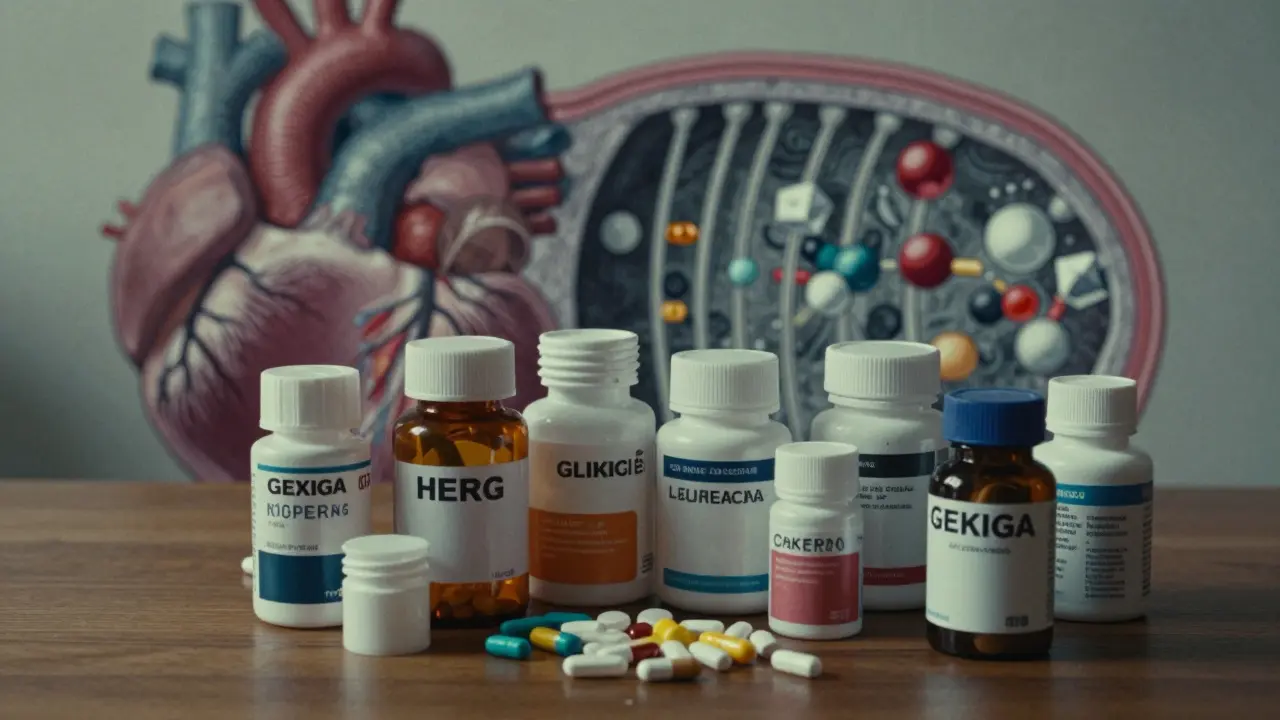
At the cellular level, this usually happens because of a glitch in the hERG channel. This channel is like a gate that lets potassium leave the heart cells to stop the electrical charge. When certain drugs block this gate, the electrical phase stays active too long. This delay creates a window of vulnerability where a stray electrical spark can trigger the "twisting" rhythm, which can then degenerate into full-blown cardiac arrest.
Identifying High-Risk Medications
It is a common misconception that only heart medications cause this. In reality, over 200 different drugs can prolong the QT interval. While Class III antiarrhythmics like sotalol were the first to be linked to TdP, we now know that many non-cardiac drugs are just as risky.
Some of the most frequent culprits include:
- Antibiotics: Macrolides (like erythromycin and clarithromycin) and fluoroquinolones (like moxifloxacin).
- Psychiatric Meds: Antipsychotics (haloperidol) and certain antidepressants (citalopram and escitalopram).
- Anti-nausea Drugs: Ondansetron is frequently used in hospitals and clinics but can be dangerous in high doses.
- Other: Methadone and certain antifungals like ketoconazole.
| Risk Category | Meaning | Example Medications |
|---|---|---|
| Known Risk | Clear evidence of TdP cases | Sotalol, Haloperidol, Methadone |
| Possible Risk | Theoretical risk or limited evidence | Certain newer antipsychotics |
| Conditional Risk | Risk only with other factors (e.g., low potassium) | Some antidepressants |
Who is Most at Risk?
Not everyone taking a QT-prolonging drug will develop TdP. However, certain "red flags" significantly increase the danger. Interestingly, women are far more likely to experience TdP-representing about 70% of cases-even though men and women show similar levels of QT prolongation on paper. Age also plays a role, with 68% of reported cases occurring in people over 65.
Beyond demographics, your blood chemistry is critical. If your potassium or magnesium levels are low, your heart becomes much more unstable. For instance, having potassium levels below 3.5 mmol/L can increase your risk of TdP by more than three times. This is why patients on diuretics (water pills) are at a higher risk; those pills often flush potassium out of the body.
Other risk factors include:
- Bradycardia: A slow heart rate (under 60 bpm) makes the QT interval more unstable.
- Kidney or Liver Issues: If your body can't clear a drug, it builds up in your system. Citalopram cases, for example, spike when kidney function is poor.
- Drug Cocktails: Taking two or more QT-prolonging drugs at once creates a compounding effect.
- Genetic Predisposition: People with Romano-Ward syndrome or Jervell and Lange-Nielsen syndrome are born with a longer QT interval and are highly susceptible.
How to Recognize the Danger on an ECG
Recognition happens in the QTc interval-the QT interval adjusted for the patient's heart rate. A normal QTc varies, but once it hits 450ms in men or 460ms in women, it is considered prolonged. The real danger zone is 500ms; once you hit this mark, the risk of TdP increases two to three-fold.
Doctors look for specific patterns before the "twisting" starts. One classic sign is the "short-long" cycle: a short interval followed by a surprisingly long one. You might also see prominent U waves-small bumps after the T wave-which act as a warning that the heart is struggling to repolarize. If the QTc increases by 60ms from the patient's baseline, it's a signal to stop the offending drug immediately.
Prevention Strategies and Clinical Steps
Preventing TdP is mostly about smart screening and monitoring. The gold standard is a 5-step approach that ensures no patient falls through the cracks. First, screen for genetic risks. Second, check electrolytes-specifically ensuring potassium is above 4.0 mmol/L and magnesium is above 2.0 mg/dL. Third, use tools like CredibleMeds.org to check every medication the patient is taking.
Fourth, get a baseline ECG before starting a high-risk drug. Finally, set a monitoring plan. For example, if someone is starting methadone or a high dose of citalopram, they shouldn't just be "watched"-they need scheduled ECGs to track the QTc. Data shows that following these specific protocols can reduce the incidence of TdP by nearly 80%.
Emergency Management: What Happens During a Crisis?
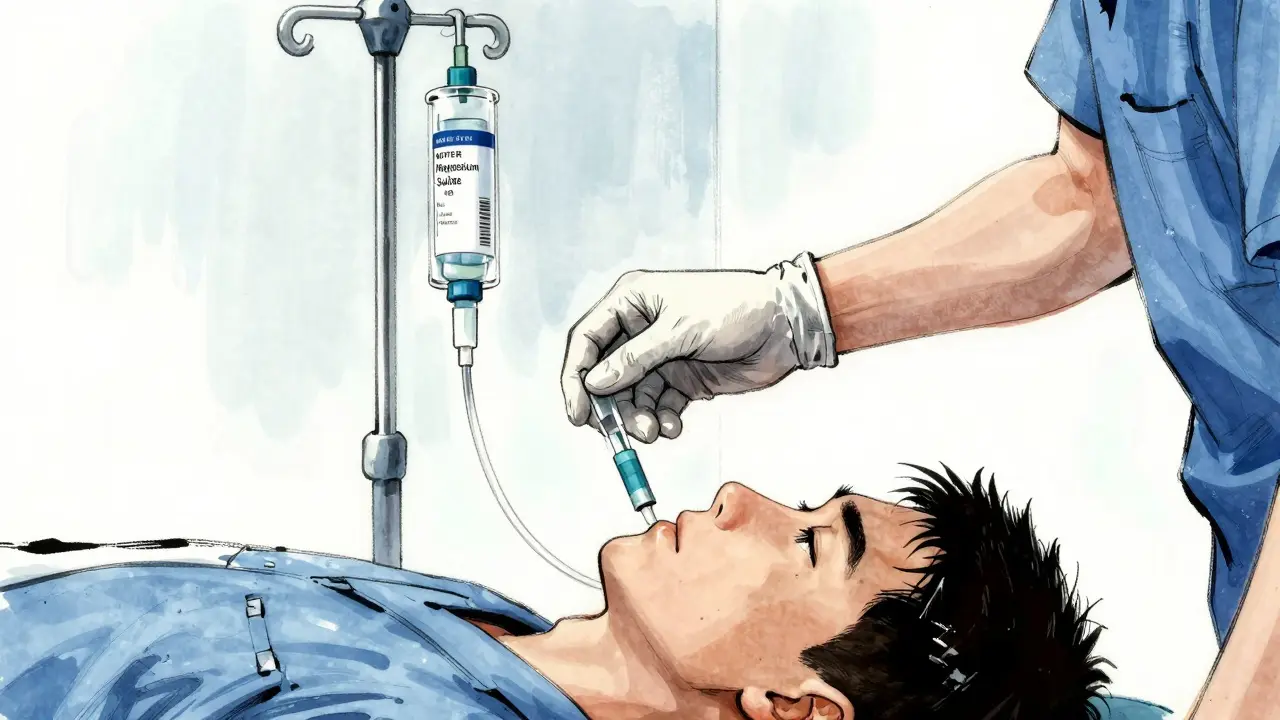
When TdP actually happens, every second counts. The first line of defense is almost always Magnesium Sulfate. Administering 1-2 grams of IV magnesium works in about 82% of cases by stabilizing the electrical membranes of the heart cells. If that fails, doctors use temporary pacing to keep the heart rate above 90 bpm, which effectively "shortens" the QT interval and stops the twisting.
Are all drugs that prolong the QT interval dangerous?
No. While many drugs can prolong the QT interval, the absolute risk of developing Torsades de Pointes is very low for most people. The danger increases significantly when a patient has other risk factors, such as low potassium, a slow heart rate, or is taking multiple high-risk medications simultaneously. Monitoring is usually sufficient to keep patients safe.
What is the most common symptom of QT prolongation?
The most frightening aspect of QT prolongation is that it often has no symptoms at all until the arrhythmia starts. When TdP occurs, a person might suddenly feel dizzy, faint (syncope), or collapse. In severe cases, it can lead to sudden cardiac death if it progresses to ventricular fibrillation.
Can I stop taking my medication if I'm worried about QT prolongation?
You should never stop a prescribed medication without consulting your doctor. Many drugs that carry a QT risk provide life-saving benefits. Instead, ask your doctor if you need a baseline ECG or if your electrolyte levels (potassium and magnesium) should be checked to ensure you are in a low-risk category.
How does the QTc differ from the QT interval?
The QT interval changes based on how fast your heart is beating-it gets shorter as your heart rate increases. The QTc (Corrected QT) uses a mathematical formula, such as Bazett's formula, to adjust the measurement to a standard heart rate. This allows doctors to accurately determine if the interval is truly prolonged regardless of the patient's pulse.
Which antibiotics are the biggest culprits?
Macrolides like erythromycin and clarithromycin are well-known for prolonging the QT interval. Fluoroquinolones, such as moxifloxacin, also carry a risk. While azithromycin is in the same class, it generally carries a lower risk, though caution is still advised for elderly patients or those with heart disease.