
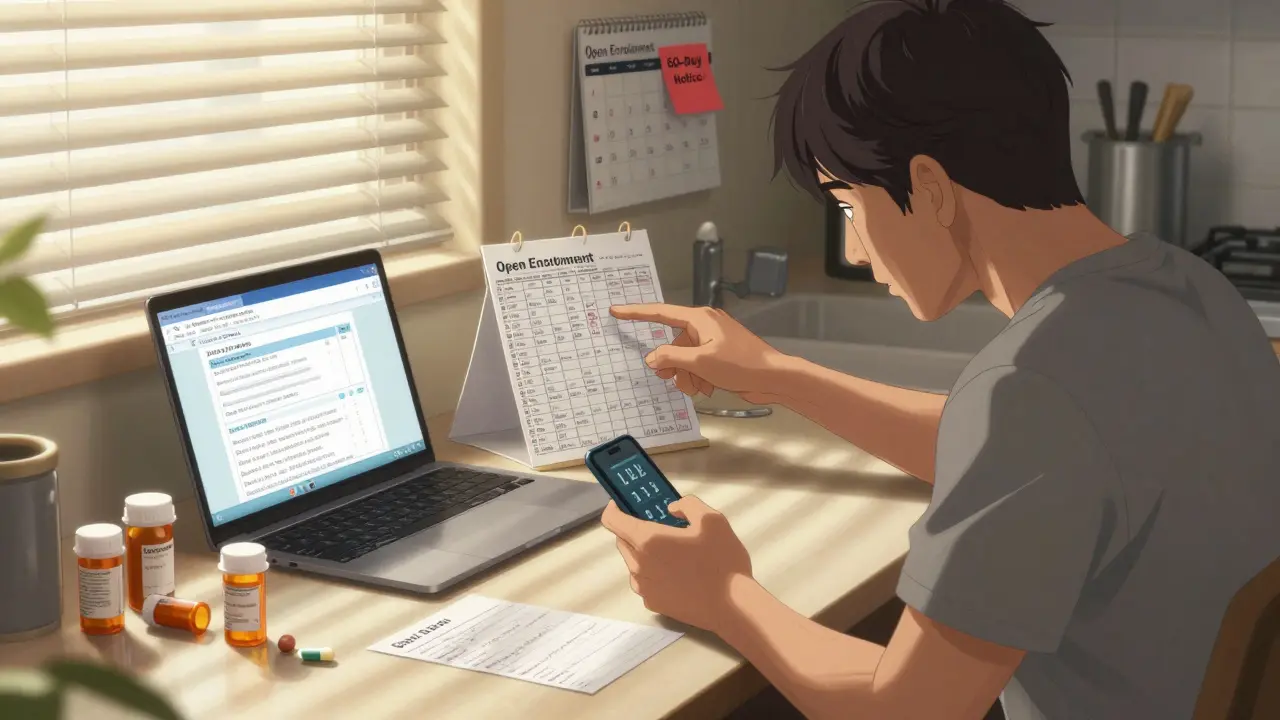
A drug formulary is a list of prescription medications that your health insurance plan covers. It’s not just a catalog-it’s a decision-making tool that affects what drugs you can get, how much you pay, and sometimes even which doctor can prescribe them. If you’ve ever been told your medication isn’t covered, or that you need to try another drug first, you’ve run into the real-world impact of a formulary.
What’s Actually on the List?
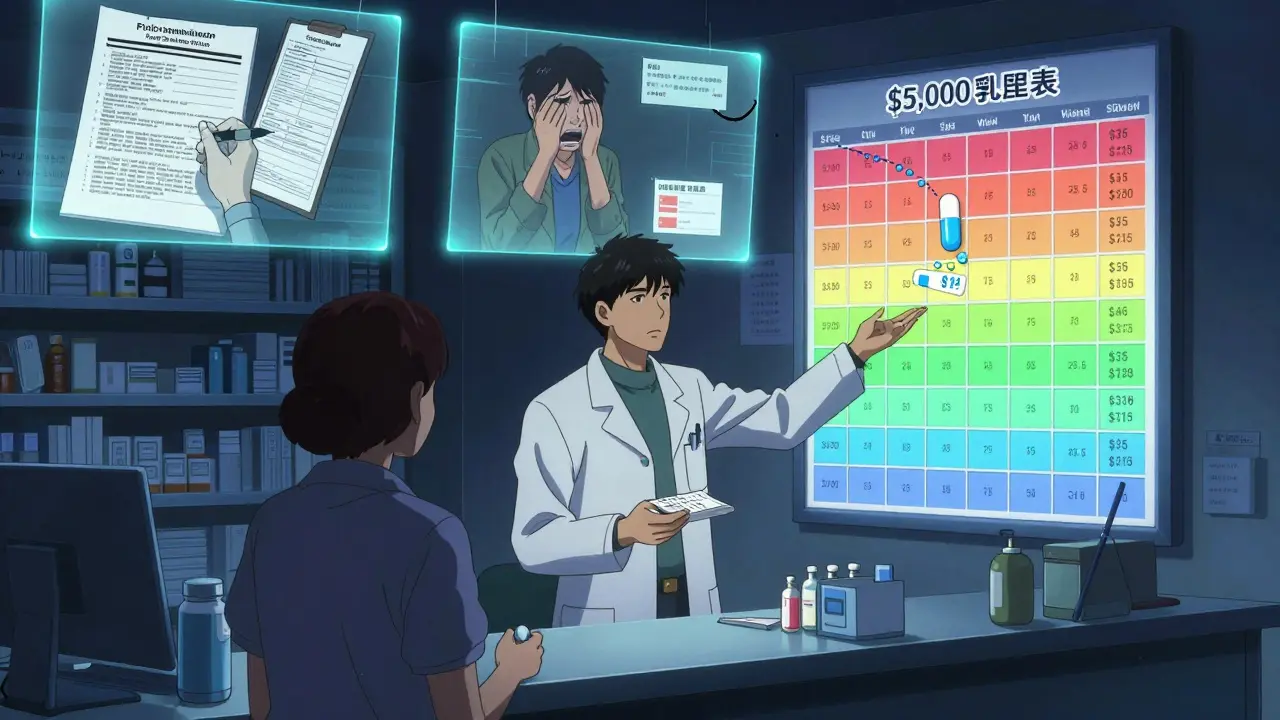
Every health plan-whether it’s Medicare Part D, Medicaid, or a private insurer-has its own drug formulary. These lists are created by Pharmacy Benefit Managers (PBMs) who work with insurers, pharmacists, and doctors. They don’t just pick drugs randomly. They look at three things: how well the drug works, how safe it is, and how much it costs. The goal? To help you get effective treatment without breaking the bank.Most formularies use a tier system to group medications by cost. The higher the tier, the more you pay out of pocket. Here’s how it typically breaks down:
- Tier 1 (Generic Drugs): These are the cheapest. They’re chemically identical to brand-name drugs but cost far less. You might pay $0-$10 for a 30-day supply.
- Tier 2 (Preferred Brand-Name Drugs): These are brand-name medications that your plan has negotiated lower prices for. You’ll usually pay $25-$50 per prescription.
- Tier 3 (Non-Preferred Brand-Name Drugs): These are brand-name drugs that cost more and aren’t favored by your plan. Copays can jump to $50-$100.
- Tier 4 (Specialty Drugs): Used for complex conditions like cancer, MS, or rheumatoid arthritis. These often require 30-50% coinsurance, meaning you pay a percentage of the total cost-sometimes $100 or more per month.
- Tier 5 (High-Cost Specialty Drugs): Some plans have this level for the most expensive treatments, like gene therapies or biologics. Costs here can run into thousands per month.
Not every plan uses all five tiers. Some use only three. The names might change too-some call Tier 1 “Preferred Generic,” others say “Lowest Cost.” But the structure stays the same: lower tier = lower cost for you.
Why Your Drug Might Not Be Covered
It’s not unusual to find your prescribed medication isn’t on the formulary. When that happens, you’re looking at a “non-formulary” drug. That doesn’t mean it’s unsafe or ineffective-it just means your plan didn’t include it because of cost, availability, or clinical guidelines.For example, if your doctor prescribes a newer, more expensive drug for your high blood pressure, but your plan’s formulary only covers older generics, you could be stuck with a $300 monthly bill instead of $15. That’s why checking your formulary before filling a prescription matters.
Some drugs are restricted even if they’re on the list. You might need:
- Prior Authorization: Your doctor has to call in and explain why you need this drug over cheaper alternatives.
- Step Therapy: You have to try one or two cheaper drugs first before the plan will cover the one your doctor picked.
- Quantity Limits: You can only get a 30-day supply at a time, even if your doctor ordered 90 days.
These rules aren’t meant to punish you. They’re meant to prevent overuse and push toward drugs with the strongest evidence. But they can delay care-especially if you’re already struggling with a serious condition.
Formularies Change-All the Time
Your formulary isn’t set in stone. It gets updated all year long. A drug might move from Tier 2 to Tier 3. A medication might be removed entirely. A new biosimilar could be added, lowering your cost overnight.In 2023, a Kaiser Family Foundation study found that 42% of patients switched medications because their plan changed the formulary. One woman on Reddit shared: “My diabetes drug went from Tier 2 to Tier 3. My copay jumped from $35 to $85. I had to switch.”
That’s why you can’t just check your formulary once and forget it. You need to review it every year during open enrollment (October 15-December 7 for Medicare). But changes can happen anytime. Federal law requires insurers to give you 60 days’ notice before removing a drug or raising costs-but that still leaves you scrambling.
What You Can Do: Exceptions and Alternatives
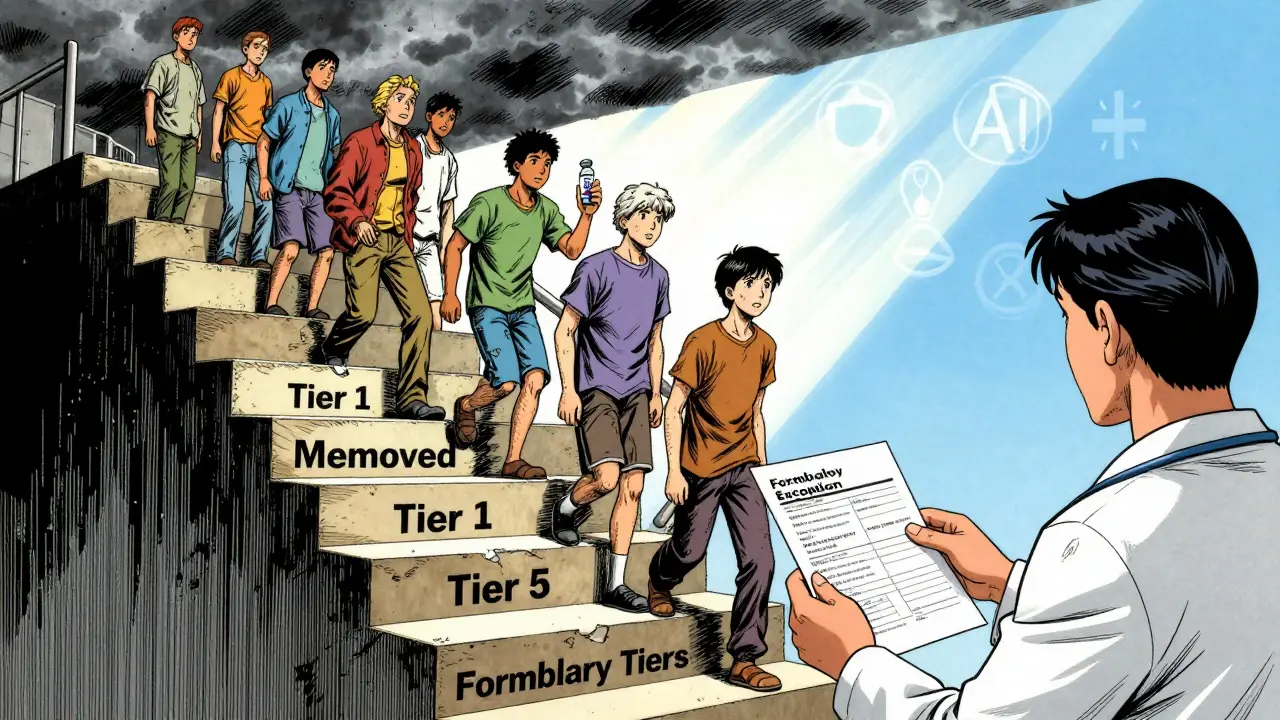
If your drug isn’t covered, you’re not out of options. You can ask for a formulary exception. This means your doctor submits paperwork explaining why you need this specific drug-maybe because other drugs caused side effects, or didn’t work at all.In 2023, 67% of Medicare Part D exception requests were approved. For urgent cases (like cancer treatment), you can get a decision in as little as 24 hours. Standard requests take about 72 hours.
Another option: ask your doctor for an alternative. Many formularies include multiple drugs in the same class. For example, if your preferred statin isn’t covered, there are usually 3-5 others that are. Your pharmacist can help you compare options.
And don’t forget: generic drugs are just as effective. The FDA requires them to be identical to brand-name versions in strength, safety, and how they work. Switching to a generic could cut your costs by 80%.
How to Check Your Formulary
You don’t have to guess whether your drug is covered. Every insurer publishes their full formulary online. Here’s how to find it:- Go to your insurance plan’s website (Medicare, Blue Cross, etc.)
- Look for “Drug List,” “Formulary,” or “Prescription Coverage”
- Search for your medication by name
- Check the tier and any restrictions (prior auth, step therapy)
For Medicare Part D users, use the Medicare Plan Finder tool. It lets you compare formularies across plans and see how much each drug costs under each option. It’s updated every October for the next year’s coverage.
Pro tip: Always double-check your formulary the day you fill a prescription. A drug that was covered last month might not be today.
The Bigger Picture: Why Formularies Exist
Critics say formularies limit choice. And sometimes, they do. But they also keep drug prices down for everyone. Without formularies, insurers would pay full list price for every drug-costs that would get passed on to you in higher premiums.Formularies help steer patients toward drugs with the best outcomes. A 2024 NIH study found that formularies improve health by encouraging the use of proven, cost-effective treatments. For example, insulin is now capped at $35/month on Medicare Part D thanks to formulary rules. That’s saving thousands of lives.
At the same time, new trends are making formularies smarter. Biosimilars-lower-cost versions of biologic drugs-are being added to formularies faster than ever. AI tools are being tested to predict which drugs will work best for individual patients based on their history. And more plans are moving toward “value-based” formularies, where drugs that deliver better results get priority.
Still, the system isn’t perfect. Patients with rare diseases often hit dead ends. One advocate put it bluntly: “If your life-saving drug isn’t on the list, you’re stuck between a rock and a hard place.”
That’s why knowing your rights matters. You have the right to request exceptions. You have the right to ask for alternatives. And you have the right to check your formulary before you pay.
Real Stories: What Patients Say
On social media, patients share both frustration and relief:- “My immunotherapy was on Tier 4. I was paying $5,000 a month. My plan covered it for $95. It saved my life.”
- “I had to switch from my asthma inhaler because my new plan didn’t cover it. Took me three months to get back on track.”
- “I never knew about step therapy. I was denied twice before my doctor fought for me.”
These aren’t rare cases. In 2023, 31% of insured patients had a medication denied because it wasn’t on the formulary. But 68% said they checked their formulary before filling a prescription-meaning more people are catching issues early.
What to Do Next
If you’re on prescription medication:- Find your plan’s formulary now-don’t wait until you’re at the pharmacy.
- Write down every drug you take and check its tier and restrictions.
- Ask your pharmacist or doctor: “Is this on the formulary? Is there a cheaper alternative?”
- During open enrollment, compare formularies if you’re switching plans.
- If you’re denied coverage, ask for an exception. Your doctor can help.
Understanding your formulary isn’t about becoming a pharmacy expert. It’s about protecting your health and your wallet. The system isn’t simple-but with the right info, you can navigate it.
What happens if my drug isn’t on the formulary?
If your medication isn’t on the formulary, your insurance won’t cover it-or will charge you full price. You can ask your doctor to request a formulary exception, which requires clinical justification. Approval rates are around 67% for Medicare Part D plans. You can also ask for a similar drug that is covered.
Can a drug be removed from the formulary during the year?
Yes. Plans can remove or change a drug’s tier at any time, but federal law requires them to notify you 60 days in advance. This is why checking your formulary annually-and even mid-year-is important. Some changes happen because of new generics, safety alerts, or cost negotiations.
Why do some plans cover the same drug differently?
Each plan negotiates its own deals with drug manufacturers. A drug might be Tier 2 on one plan and Tier 3 on another because one plan got a better price. Medicare Part D plans must cover at least two drugs per category, but beyond that, they decide what to include. That’s why comparing formularies during enrollment matters.
Are generic drugs really as good as brand-name drugs?
Yes. The FDA requires generics to have the same active ingredients, strength, dosage, safety, and effectiveness as brand-name drugs. They’re tested to be bioequivalent. The only differences are in inactive ingredients (like fillers) and cost. Generics save patients an average of 80% on prescriptions.
What is step therapy, and why does it matter?
Step therapy means you must try one or more lower-cost drugs before your plan will cover the one your doctor prescribed. It’s meant to prevent overuse of expensive drugs. But it can delay treatment, especially for chronic conditions. If step therapy doesn’t work for you, your doctor can request an exception.
Lorna Brown
March 13, 2026 AT 01:39Formularies are this weird middle ground between capitalism and healthcare, and honestly? It’s a miracle anyone gets treated at all. I used to think insurance was just a payment system-turns out it’s a gatekeeper with a spreadsheet. The tier system makes sense on paper, but when your life depends on a drug that’s on Tier 5? It feels like being held hostage by a corporate flowchart.
And don’t even get me started on step therapy. I had a friend with MS who had to try three cheaper drugs that made her sicker before they’d approve the one that actually worked. That’s not cost control-that’s cruelty disguised as policy.
Rex Regum
March 14, 2026 AT 05:28Oh please. You people act like formularies are some evil invention. Newsflash: drugs are expensive because pharmaceutical companies are greedy. Formularies are the ONLY thing keeping prices from being 10x worse. If you want free access to every drug ever made, go live in a fantasy world where CEOs donate their yachts to charity.
Generic drugs work. They’re FDA-approved. Stop whining and take the $15 pill instead of the $300 one. Your wallet-and your premiums-will thank you.
Kelsey Vonk
March 14, 2026 AT 18:30Yesss this is so important 😭 I just switched plans last year and didn’t check my formulary until I got to the pharmacy and they said my anxiety med wasn’t covered. I cried in the parking lot. Then I called my doctor, we switched to a generic, and now I pay $7 a month. I didn’t even know generics were this good!
Also-did you know some plans have a ‘preferred pharmacy’ network? If you fill at the wrong one, you pay double. So many hidden traps 😅
Check your formulary. Always. Like, right now. I’ll wait. 💙
Emma Nicolls
March 16, 2026 AT 12:39so i just found out my insulin went from tier 2 to tier 3 and my copay went from 10 to 50 and i was like wow ok so i asked my dr if there was another one and she said yes and i switched and now its 7 dollars a month like what the heck why didnt anyone tell me this sooner
also generics are literally the same i swear i had a friend who swore brand name was better and then she tried the generic and said ohhhhhhhhhhhhhhhhh
Jimmy V
March 16, 2026 AT 13:55Formularies aren’t perfect-but they’re necessary. Without them, insulin would cost $500. Now it’s $35. That’s not a loophole. That’s a win.
Step therapy? Yes, it delays care. But it also stops doctors from prescribing $10,000 drugs for a headache. Use the exception process. 67% approval rate. You’re not powerless.
Check your formulary. Every. Single. Year. And if your plan removes a drug? File an appeal. You have rights. Use them.
Richard Harris
March 16, 2026 AT 15:40Interesting post, really helpful. I’m from the UK so our system’s different, but I’ve got a friend in the States who’s been through this nightmare. I didn’t realize how much variation there is between plans. The tier system makes sense, but I can see how confusing it must be. Thanks for the practical tips-will share this with her.
ps: i spelt formulary wrong in my notes earlier. oops.
Kandace Bennett
March 17, 2026 AT 19:20OMG I’m so glad someone finally said this 🙌 I’ve been saying for years that Americans need to stop acting like they’re entitled to luxury drugs. If you can’t afford the $300 pill, take the $15 one. They’re the same thing. Period.
Also-why are we still using brand names? It’s 2025. We have generics. We have biosimilars. We have AI. Stop being lazy. Your doctor isn’t your bestie. They’re a gatekeeper too.
PS: I’ve saved over $2,000 a year by switching. You can too. 💅
Tim Schulz
March 19, 2026 AT 04:53Wow. Just… wow. You wrote an entire essay on how insurance companies are basically the new mafia. ‘We’ll cover your meds… unless we don’t. And if you don’t like it? Well, here’s a 60-day notice. Good luck finding a new job with cancer.’
Step therapy? More like step to the back of the line. And don’t even get me started on how PBMs negotiate deals behind closed doors while patients bleed out.
At least we still have Reddit. And sarcasm. And this post. Thank you. I needed this.
Sabrina Sanches
March 19, 2026 AT 21:05