

Ever wonder why you're willing to pay double, or even triple, for a pill with the exact same active ingredient as a cheaper version? You're not alone. While the science says they're the same, our brains often tell us otherwise. This is brand loyalty in medications, a powerful psychological tug-of-war between our wallets and our need for certainty. For many, the brand name isn't just a label; it's a promise of safety and consistency that a generic version-no matter how certified-struggles to match.
The Quick Take: Why We Prefer Brands
- Psychological Comfort: Familiarity reduces the anxiety associated with health risks.
- Perceived Quality: Many believe brand-name drugs are "purer" or more effective.
- Fear of Fluctuation: Concerns that generic inactive ingredients might change how a drug works.
- Physician Influence: Doctors' preferences often bleed into patient beliefs.
The "Placebo" of the Brand Name
When we talk about Brand Loyalty is the tendency of consumers to consistently purchase the same brand of a product regardless of the availability of cheaper, identical alternatives, we're really talking about trust. In the world of pharmaceuticals, this trust is amplified because the stakes are our lives.
It's a strange paradox. In the U.S., Generics (drugs with the same active ingredients as brand names) make up about 90% of prescriptions by volume. Yet, brand-name drugs still rake in roughly 78% of the total revenue. Why? Because for a huge chunk of the population, the brand name acts as a psychological safety net. A 2022 Fortune survey found that 62% of Gen Z consumers trust brand names specifically for quality and safety, and 57% actually perceive them as more effective, even though clinical data proves they are bioequivalent.
Why the Brain Fears the Generic Switch
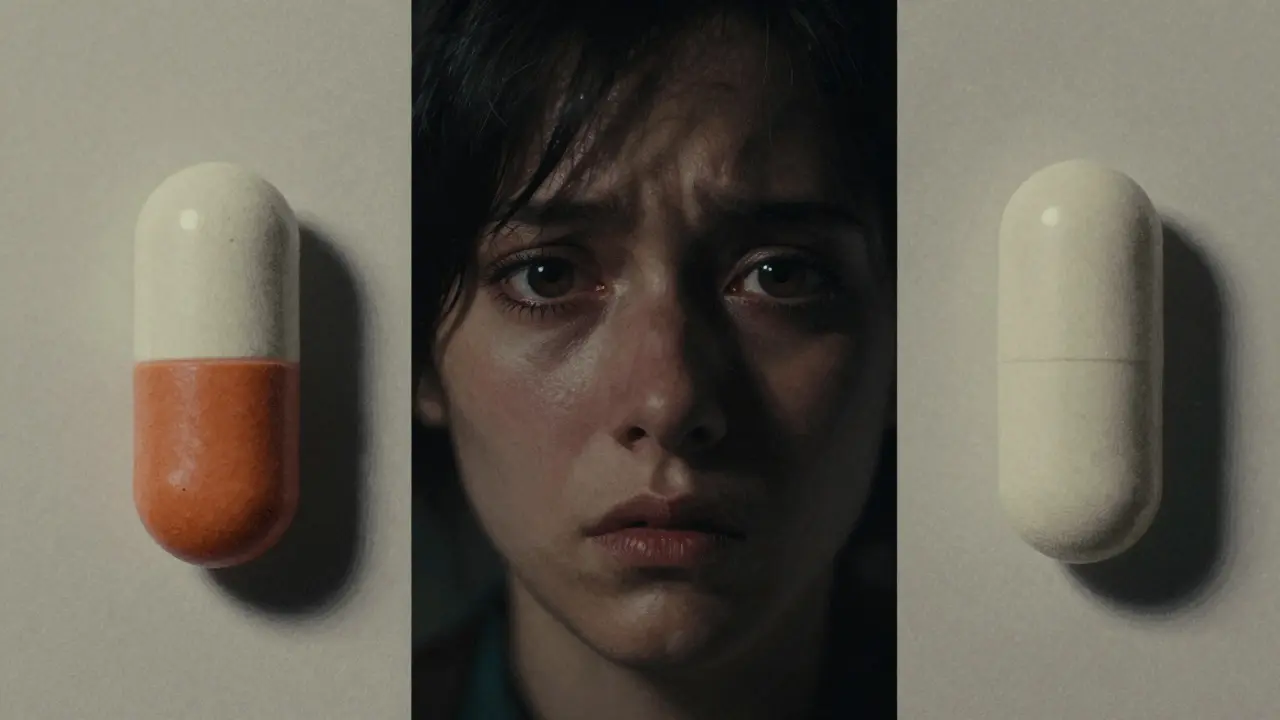
If a drug is "the same," why does switching feel like a gamble? It often comes down to the "inactive" ingredients. While the active medicine is identical, the fillers, dyes, and binders-the things that make the pill a certain color or shape-differ between manufacturers.
For most people, this doesn't matter. But for those taking psychiatric medications or drugs for chronic conditions, these tiny differences can feel like a mountain. On platforms like Reddit, patients often share stories of "therapeutic fluctuations," where a different generic version of an antidepressant feels slightly "off." This isn't always a chemical failure; often, it's the brain reacting to a change in routine and appearance, which then triggers anxiety about the medication's effectiveness.
This is why you'll see nearly 100% generic use for something like a blood pressure medication (calcium channel blockers), but much higher brand loyalty in antiepileptics. When the cost of a "wrong" dose is a seizure versus a slightly higher blood pressure reading, the psychological drive to stick with the "original" becomes overwhelming.
The Doctor's Dilemma: Prescription Bias
We like to think our doctors are purely objective, but they're human too. A 2023 GlobalData survey showed that about 40% of physicians would prefer to prescribe branded drugs if cost wasn't an issue. This isn't necessarily about money; it's about their own experiences with patient outcomes.
| Country | % of Physicians Preferring Brands | Primary Driver |
|---|---|---|
| Japan | 57% | Regulatory approval differences |
| Spain | 50% | Perceived quality consistency |
| Italy | 45% | Patient trust and preference |
When a doctor writes "Dispense as Written" (DAW) on a prescription, it sends a strong signal to the patient: "This specific version is better for you." This creates a feedback loop where the patient's trust in the doctor reinforces their loyalty to the brand.
The Education and Age Gap
Who is most likely to stay loyal to a brand? Surprisingly, it's not always the wealthiest. Research from a 2023 PMC study suggests that consumers with lower education levels are actually 1.54 times more likely to remain brand-loyal regardless of price changes. This often stems from a lack of confidence in navigating the complexities of Bioequivalence is the property of two pharmaceutical substances to be therapeutically equivalent, meaning they have the same effect in the body. If you don't fully understand how the FDA or EMA approves generics, the safest-feeling bet is to stick with what you know.
Interestingly, Gen Z is carving out their own path. About 35% prefer brand names, but they describe it as "value-driven trust." They aren't loyal because their parents were; they're loyal because they've researched the brand's reputation for innovation and reliability. They are willing to pay a premium-sometimes 79% more-if they believe the brand provides a superior experience or a more reliable supply chain.

The Financial Toll of "Peace of Mind"
Let's be real: the biggest downside of brand loyalty is the hit to your bank account. In the U.S., the Hatch-Waxman Act of 1984 paved the way for generics to enter the market, but it didn't stop the original brands from keeping prices high.
For a patient, the difference can be thousands of dollars a year. On r/personalfinance, users frequently point out that switching to generics can save an average of $4,000 over a decade for common chronic medications. Yet, the emotional attachment-what Dr. Rajiv Kumar calls "emotional mediation"-often overrides this logical financial incentive. We aren't just buying a chemical compound; we're buying the feeling of being "safe."
How to Move Past the Brand Bias
If you're feeling anxious about switching to a generic, the best move is to talk to your pharmacist. They have access to the Orange Book is an FDA publication that lists approved drug products with therapeutic equivalence evaluations, which tells them exactly if a generic is "A-rated" (meaning it's therapeutically equivalent to the brand).
Studies show that 67% of patients are happy to switch after a detailed explanation from their pharmacist. The trick is to ask about the specific generic manufacturer. Not all generics are made by the same company; if one doesn't sit well with you, another one might be perfectly fine. This removes the "all or nothing" mentality of Brand vs. Generic.
Are brand-name drugs actually better than generics?
Pharmacologically, no. Regulatory bodies like the FDA require generics to be bioequivalent, meaning they deliver the same amount of active ingredient to the bloodstream at the same rate. However, inactive ingredients (fillers) can differ, which may cause rare allergic reactions or slight differences in how some patients absorb the drug.
Why do some people feel different effects when switching to a generic?
This is often due to the "nocebo effect," where the expectation that a cheaper drug will be less effective actually causes a perceived decline in health. In some cases, differences in inactive ingredients can affect the drug's dissolution rate, which is why some psychiatric patients prefer a specific brand's consistency.
Does the price difference reflect a difference in quality?
No. The higher price of brand-name drugs covers the initial research, development, and massive marketing budgets of the original company. Once the patent expires, generic companies can produce the same drug without those R&D costs, allowing them to sell it much cheaper.
Can I ask my doctor to only prescribe the brand name?
Yes, you can. Your doctor can mark the prescription "Dispense as Written" (DAW). Keep in mind, however, that your insurance company may refuse to cover the cost if a generic alternative is available, leaving you to pay the full retail price.
What are biosimilars, and is brand loyalty higher for them?
Biosimilars are the "generics" of complex biological drugs (like insulin or monoclonal antibodies). Because these are grown in living cells rather than mixed in a lab, they are more complex. Brand loyalty is significantly higher here; roughly 78% of patients are hesitant to switch to biosimilars due to the complexity of the medication.