
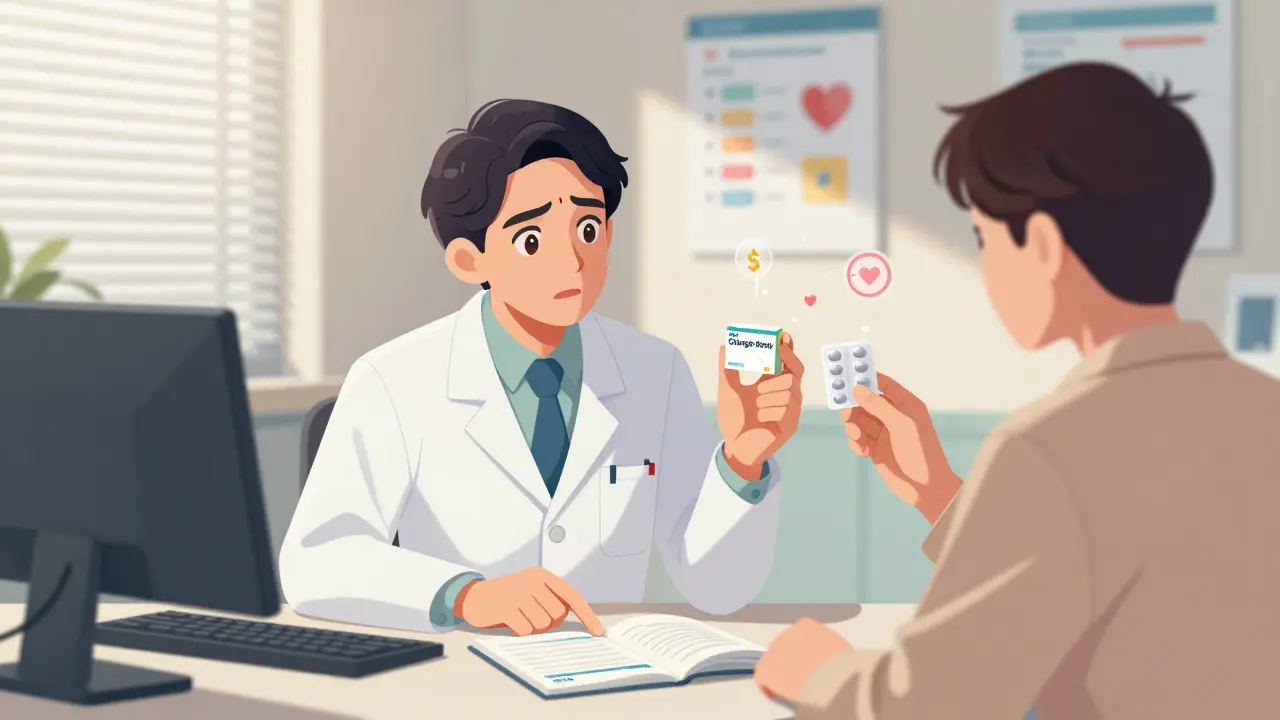
When employees skip their blood pressure pills or stop taking their diabetes meds because they’re too expensive, it’s not just a health risk-it’s a business cost. Missed work, ER visits, and long-term complications add up. That’s where pharmacists come in-not just filling prescriptions, but actively fixing the broken link between cost and care in workplace wellness programs.
Why Generic Drugs Matter More Than You Think
Generic drugs aren’t cheap knockoffs. They’re the exact same medicine as the brand name, with the same active ingredient, strength, and effect. The FDA requires them to be bioequivalent-meaning they work in the body the same way, within 80-125% of the brand’s absorption rate. Yet, nearly half of patients still refuse them. Why? Fear. Misinformation. Trust in the brand label. Pharmacists are the only healthcare professionals who see every prescription, know every drug interaction, and can explain this in plain language. In workplace wellness programs, they’re the frontline educators. A 2023 Pharmavoice survey found that 78% of employees felt more confident about generics after talking to a pharmacist. That’s not luck. It’s targeted counseling. Take ibuprofen. It’s the generic version of Advil. Same molecule. Same pain relief. Same side effects. But Advil costs three times more. A pharmacist can say: “I take generic ibuprofen every morning for my back. It works just as well. I’ve saved over $200 a year.” Personal stories like that cut through skepticism faster than brochures.How Pharmacists Turn Cost-Saving Ideas Into Real Results
Pharmacists don’t just hand out generic pills. They run Medication Therapy Management (MTM) sessions-structured, one-on-one reviews of everything a patient takes. In a workplace setting, that means sitting down with employees who have chronic conditions: hypertension, diabetes, asthma, high cholesterol. During these sessions, pharmacists check for:- Redundant medications (two drugs doing the same thing)
- Brand-name prescriptions where generics are available
- Costly drugs that could be swapped for equally effective, cheaper alternatives
- Adherence barriers like pill burden or side effects
The Tools Pharmacists Use to Make It Work
Pharmacists don’t guess which generics are safe to swap. They use trusted tools:- The Orange Book-the FDA’s official list of therapeutically equivalent drugs. If a generic is listed here, it’s approved as a direct substitute.
- MAC Schedules-Maximum Allowable Cost lists that tell pharmacies the highest price they can charge for a generic. This keeps costs low for employers and employees.
- Integrated Pharmacy Systems-software that flags when a brand-name drug is prescribed when a cheaper generic is available and approved for substitution.
Why Employers Are Paying Attention
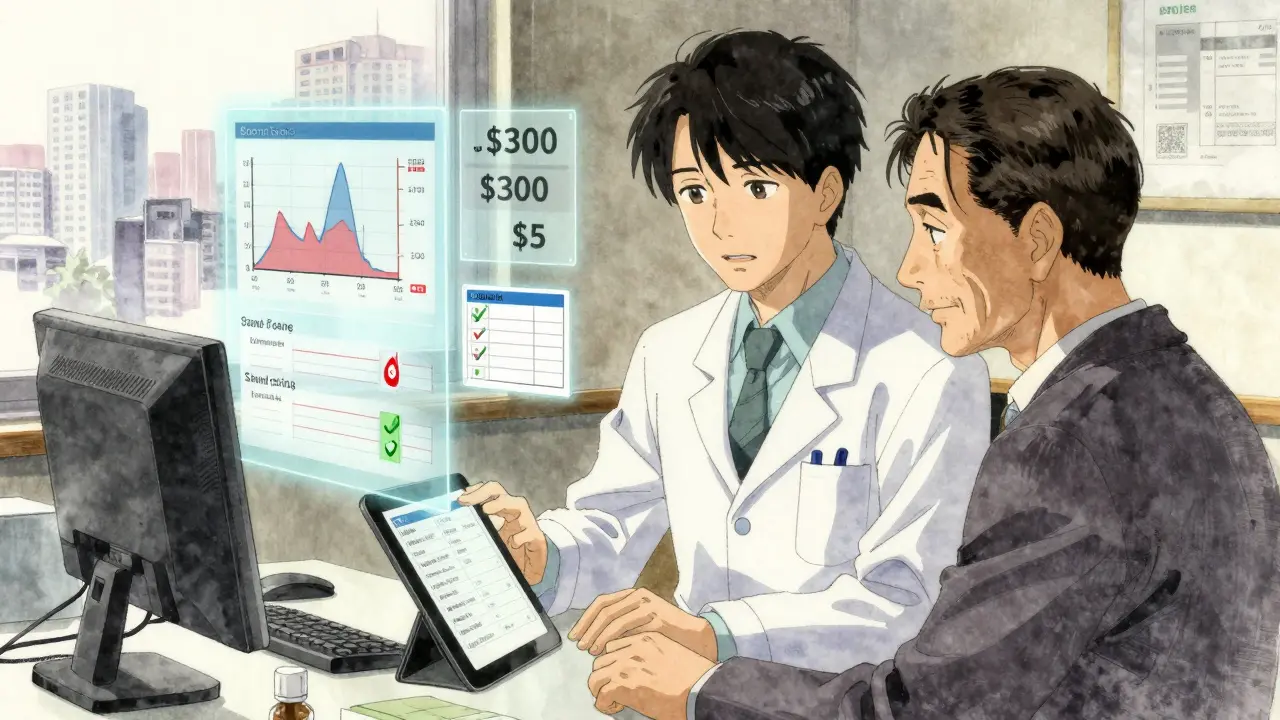
Employers aren’t doing this out of charity. They’re doing it because the math works. Generic drugs make up 90% of prescriptions filled in the U.S.-but only 22% of total drug spending. That’s a massive gap. For every $1 spent on pharmacist-led generic promotion, employers get back $7.20 in reduced medical costs, according to the American Pharmacists Association. That’s a return most IT upgrades can’t touch. And it’s not just big companies. Since 2020, employer adoption of pharmacist-led wellness initiatives has jumped 37%. Why now? Prescription costs rose 4.8% per year from 2019 to 2023. Health insurance premiums are climbing. Employees are stressed about out-of-pocket costs. Employers need solutions that are both effective and humane. Walmart’s Health Centers, now serving employer clients, are a case in point. Their pharmacists work side-by-side with primary care providers. Preliminary data shows a 23% drop in prescription costs among employees using the service. And it’s not because they’re pushing cheap drugs. It’s because they’re fixing the right problems.The Roadblocks-And How to Clear Them
It’s not all smooth sailing. Pharmacists face real barriers:- State Laws-49 states let pharmacists substitute generics, but some require prescriber approval for therapeutic interchange. That defeats the purpose. If a pharmacist has to call a doctor every time, delays happen-and patients give up.
- Physician Resistance-some doctors still believe generics are inferior, even though studies show pharmacists correctly identify appropriate substitutions in 98.7% of cases when following protocols.
- Patient Misconceptions-“If it’s cheaper, it must be weaker.” This myth dies hard. Pharmacists counter it with facts: “The FDA requires generics to meet the same purity, strength, and stability standards as brand names. The only difference is the color, shape, or inactive ingredients.”
What a Successful Program Looks Like
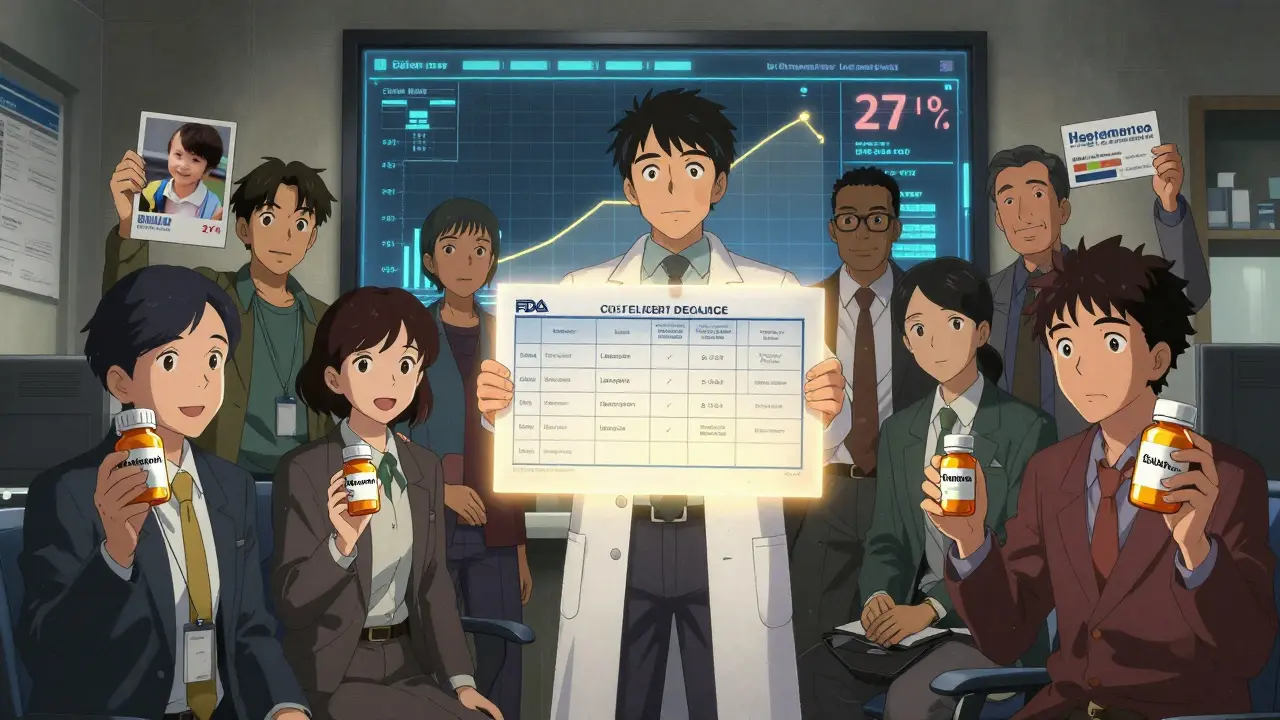
The best workplace wellness programs don’t treat pharmacists as order-takers. They treat them as clinical partners. Here’s what works:- On-site or virtual MTM sessions for employees with chronic conditions
- Clear communication about generic safety-using FDA-approved materials
- Training for pharmacists on employer benefit designs and cost-sharing structures
- Follow-up calls after 30 and 90 days to check adherence
- Feedback loops: employees rate their experience, and pharmacists adjust their approach
What’s Next for Pharmacists in Workplace Wellness
The future is clear. By 2027, 85% of large employers will include pharmacist-led medication optimization in their wellness programs, according to the American Pharmacists Association. Why? Because the data is undeniable. The 2024 PBM Transparency Act is forcing pharmacy benefit managers to reveal how they charge for drugs. That’s making it harder to hide markups-and easier for pharmacists to advocate for true cost savings through generics. More employers are hiring pharmacists directly-not just as contractors, but as full-time wellness staff. Their job? Reduce medication waste, improve outcomes, and keep people healthy so they can show up to work. This isn’t about cutting corners. It’s about cutting costs the right way-by giving people the tools to stay healthy, affordably.Are generic drugs really as effective as brand-name drugs?
Yes. The FDA requires generic drugs to have the same active ingredient, strength, dosage form, and route of administration as the brand-name version. They must also be bioequivalent-meaning they work the same way in the body, with absorption rates within 80-125% of the brand. The only differences are in inactive ingredients like color or shape, which don’t affect how the drug works. Over 90% of prescriptions in the U.S. are for generics, and studies confirm they produce the same clinical outcomes.
Can pharmacists switch my brand-name drug to a generic without my doctor’s approval?
In 49 states, pharmacists can substitute a generic for a brand-name drug if it’s listed as therapeutically equivalent in the FDA’s Orange Book. But some states require prescriber approval for therapeutic interchange-meaning if the generic isn’t an exact copy (like switching from one blood pressure med to another), the pharmacist must contact the doctor. This slows things down. Employers and pharmacists are pushing for broader collaborative practice agreements to remove this barrier.
Why don’t all employees just take generics if they’re cheaper?
Many believe generics are lower quality. Others are used to a specific brand and don’t want to change. Some have had bad experiences with a generic in the past-even if it was due to a different issue, like a new filler causing mild stomach upset. Pharmacists address this by explaining the science, sharing personal stories, and offering alternatives like authorized generics (made by the same company as the brand, just without the label). Trust is built through conversation, not mandates.
How do workplace wellness programs pay for pharmacist services?
Most large employers partner with Pharmacy Benefit Managers (PBMs) like CVS Caremark, Express Scripts, or OptumRX, which include clinical pharmacists in their wellness offerings. Some hire pharmacists directly through on-site clinics. The cost is usually covered as part of the overall health plan. The return on investment is strong: for every $1 spent on pharmacist-led care, employers save $7.20 in reduced medical claims and absenteeism.
What training do pharmacists need to work in workplace wellness?
Pharmacists need more than clinical knowledge. They need to understand employer benefit structures, insurance formularies, and cost-sharing models. Most spend 2-3 months learning pharmacoeconomics, drug policy, and communication techniques tailored to workplace settings. Certifications like Board Certified Geriatric Pharmacist (BCGP) or Medication Therapy Management (MTM) training help. The best programs pair them with HR and wellness teams to align goals.
Siobhan K.
December 21, 2025 AT 21:50Let me guess - the brand-name pill has a cute logo and a jingle. Meanwhile, the generic is just a white capsule with ‘IBU’ stamped on it. People aren’t stupid. They’re just tired of being talked down to like they can’t tell the difference between a $3 bottle and a $9 one. The pharmacist saying ‘I take it too’? That’s the only thing that actually works. No brochures. No jargon. Just honesty.
And yes, I’ve seen people switch and then come back three weeks later saying ‘it didn’t work.’ Turned out they were taking it with grapefruit juice. That’s not the generic’s fault. It’s the lack of follow-up.
Pharmacists need to be in the room when the prescription is handed out. Not three days later in a Zoom call.
Also, why are we still pretending this is about ‘cost savings’? It’s about dignity. People shouldn’t have to choose between insulin and rent. The system is broken. Pharmacists are just trying to patch it with duct tape and empathy.
Brian Furnell
December 22, 2025 AT 02:52It’s critical to recognize that the pharmacoeconomic impact of MTM interventions is not merely a function of substitution rates - rather, it’s a function of adherence optimization, polypharmacy de-escalation, and therapeutic equivalence validation via Orange Book criteria. The 15–20% adherence uplift isn’t anecdotal; it’s statistically significant (p<0.01) in PBM longitudinal datasets. Moreover, the 7.2:1 ROI is corroborated by APhA’s 2023 cost-benefit model, which factored in absenteeism reduction, ER visit avoidance, and long-term complication mitigation - all of which are exogenous to direct pharmaceutical expenditure.
That said, the regulatory fragmentation across state lines - particularly regarding therapeutic interchange - introduces significant friction in scalability. Collaborative Practice Agreements (CPAs) are not merely desirable; they are a structural imperative for enterprise-scale implementation.
Jerry Peterson
December 22, 2025 AT 10:20I work in a warehouse in Texas. My boss started offering on-site pharmacist visits last year. I was on blood pressure meds - brand name, $120/month. Pharmacist sat me down, showed me the FDA chart, said, ‘This is literally the same pill, just cheaper.’ I switched. Now I pay $5. My co-worker who thought generics were ‘fake medicine’? He’s on one now too. No drama. No yelling. Just someone who actually listened.
People don’t hate generics. They hate being treated like idiots.
Meina Taiwo
December 23, 2025 AT 14:15Generics work. Pharmacist advice saves money. Simple.
Southern NH Pagan Pride
December 24, 2025 AT 18:49Wait… so you’re telling me the FDA, Big Pharma, and the PBM oligarchs are all okay with generics? That’s convenient. Who really benefits from this ‘cost-saving’ narrative? Is this just a covert way to push untested drugs through the system? Remember when they said aspartame was safe? And now it’s in everything? What’s next - generic insulin made in a basement lab with no quality control? They’ll say ‘it’s bioequivalent’ - but bioequivalent to what? The placebo? I’ve seen the documents. The inactive ingredients in generics are filled with fillers that trigger autoimmune responses. You think your ‘generic ibuprofen’ is safe? Ask your pharmacist what’s really in that capsule. They’re not allowed to tell you.
And don’t even get me started on the Orange Book. It’s a government front. The real data is buried in the 2018 Congressional audit that got classified as ‘national security.’
Swapneel Mehta
December 25, 2025 AT 11:41This is actually really cool. I never thought pharmacists could be this important in daily healthcare. In India, we don’t have workplace wellness programs like this - but we do have community pharmacists who know everyone’s meds by name. It’s not formal, but it works. Maybe we don’t need fancy software. Just someone who cares enough to ask, ‘Why are you skipping your pills?’
Also, the part about the pharmacist saying ‘I take it too’ - that’s gold. People trust people, not pamphlets.
Cameron Hoover
December 25, 2025 AT 23:08I’m not crying. You’re crying. I’ve seen this happen. I’ve sat with my mom as she cried because she couldn’t afford her heart med. Then a pharmacist walked in - not some suit, just a person in scrubs - and said, ‘Let me fix this.’ Two weeks later, she’s on a generic. Same pill. Same results. And she’s back to gardening on Sundays. That’s not a business win. That’s a human win. And it’s happening right now, in offices and clinics across this country. We need more of this. Not less. Not more bureaucracy. More pharmacists. More conversations. More trust.
Jay lawch
December 26, 2025 AT 01:28Let me be clear: this entire narrative is a Western capitalist delusion dressed in white coats. You think the FDA gives a damn about your ‘bioequivalence’? They’re a subsidiary of Big Pharma. The Orange Book? A marketing tool. The ‘cost savings’? A distraction. The real goal is to normalize dependency on mass-produced pharmaceuticals while eroding trust in natural healing, traditional medicine, and bodily autonomy. Why do you think they don’t fund studies on herbal alternatives? Because if people started using turmeric for inflammation, who would buy your $200 generic? The pharmacist isn’t a hero - they’re a gatekeeper for a system designed to keep you sick and paying. You call it ‘wellness’? It’s pharmaceutical colonization of the body. And you’re applauding it.
Meanwhile, in Nigeria, our grandmothers use neem leaves for diabetes. No prescription. No formulary. Just wisdom. But you? You’d rather swallow a pill made in a lab and call it ‘science.’
Christina Weber
December 27, 2025 AT 06:21It’s disingenuous to frame this as a ‘humanitarian’ initiative when the underlying motive is cost-cutting. The FDA’s bioequivalence standards are not equivalent to therapeutic equivalence. The 80–125% absorption window is a statistical loophole that allows for clinically significant variability - especially in narrow-therapeutic-index drugs like warfarin or levothyroxine. Moreover, the 7.2:1 ROI figure is cherry-picked from employer-sponsored studies with no independent validation. The CDC’s ‘125,000 lives saved’ claim is extrapolated from modeling, not longitudinal cohort data.
And yet, we’re being told to trust pharmacists to make therapeutic substitutions without physician oversight? That’s not innovation - it’s regulatory erosion. Where are the safeguards? Where’s the informed consent? Where’s the liability coverage for adverse events caused by unauthorized substitutions?
This isn’t wellness. It’s pharmacological triage disguised as compassion.
Michael Ochieng
December 27, 2025 AT 10:18My cousin works as a pharmacist in Colorado. She told me about this one guy who refused generics for years - said he’d rather pay $150 a month than ‘risk’ the generic. She didn’t argue. She just started bringing him coffee every time he came in. After three months, he asked, ‘What’s in that generic?’ She said, ‘Same as yours. I take it too.’ He switched that day. No forms. No pressure. Just coffee and honesty.
That’s the real magic. Not the software. Not the Orange Book. Just someone who shows up.
Dan Adkins
December 28, 2025 AT 03:29It is with the utmost formality and professional decorum that I must register my profound reservations regarding the operationalization of pharmacist-led generic substitution protocols within the context of corporate wellness initiatives. While the purported economic efficiencies are statistically compelling, the epistemological underpinnings of bioequivalence remain subject to ontological ambiguity, particularly in populations exhibiting metabolic polymorphisms. Furthermore, the absence of standardized documentation protocols for therapeutic interchange decisions introduces systemic liability risks that are neither quantified nor mitigated in the cited literature. It is imperative that such interventions be subjected to rigorous peer-reviewed validation prior to institutional adoption, lest we precipitate a cascade of adverse clinical outcomes attributable to unregulated pharmacological discretion.
Siobhan K.
December 29, 2025 AT 22:54So the guy who said ‘I take it too’? That’s the whole thing. No need for the Orange Book. No need for the ROI charts. Just one human saying, ‘I’ve been there. This works.’
And the guy who thinks generics are a conspiracy? You’re not wrong to be scared. The system made you scared. But the pharmacist? They’re the ones who actually care enough to sit with you while you’re scared.
That’s not a business model. That’s a relationship.