
Beers Criteria: What It Is and Why It Matters for Older Adults
When you're over 65, your body handles medicine differently. That’s where the Beers Criteria, a list of medications that may be risky for older adults due to side effects or poor benefit-risk balance. Also known as the American Geriatrics Society Beers Criteria, it’s updated every few years by top geriatric experts to help doctors make smarter prescribing choices. It’s not a ban—it’s a warning label. Some drugs on the list work fine for younger people but can cause falls, confusion, kidney damage, or even death in seniors.
The polypharmacy, the use of multiple medications at once, often seen in older adults with several chronic conditions problem makes this even more urgent. A senior might be on five, ten, or more pills. Each one adds risk. The inappropriate drugs in seniors, medications flagged by the Beers Criteria as high-risk for older patients due to age-related changes in metabolism and organ function include older antihistamines like diphenhydramine, certain sleep aids, and some painkillers. Even common drugs like benzodiazepines or long-acting sulfonylureas can cause serious problems. The geriatric pharmacology, the study of how medications affect older adults differently due to changes in body composition, liver and kidney function, and brain sensitivity behind this isn’t theoretical—it’s based on real hospital data showing who ends up in the ER because of a pill that shouldn’t have been prescribed.
Doctors don’t always know the Beers Criteria by heart. Patients rarely hear about it. But if you or a loved one is on multiple meds, it’s worth asking: "Is this one on the Beers list?" Some drugs on the list are still used because alternatives are expensive or harder to get. But that doesn’t mean they’re safe. The real goal isn’t to stop all meds—it’s to stop the ones that do more harm than good. Below, you’ll find real cases where people were switched off risky drugs and saw real improvements: better balance, clearer thinking, fewer falls. These aren’t abstract guidelines—they’re life-saving tools used by real clinicians every day.
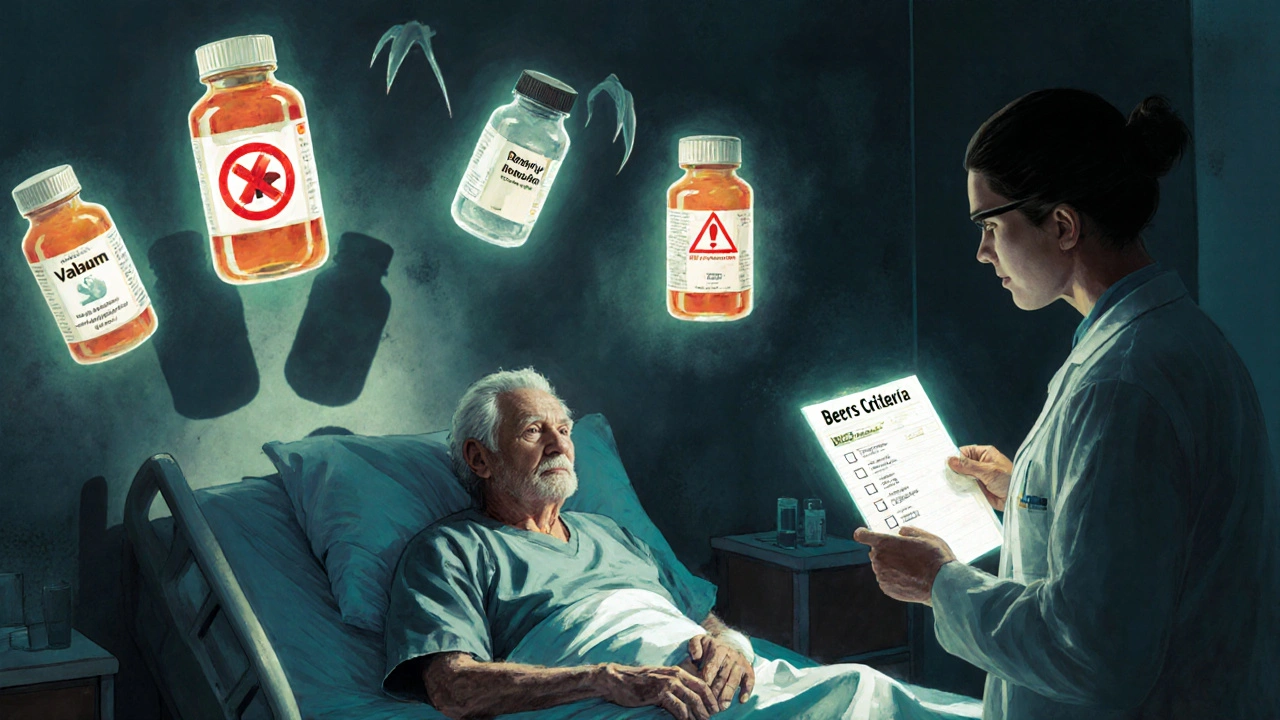
Beers Criteria: Potentially Inappropriate Drugs in Older Adults Explained
The Beers Criteria identify potentially dangerous drugs for adults over 65. Learn which medications to avoid, why they're risky, and how to talk to your doctor about safer options.