
Demyelination: What It Is, How It Affects Nerves, and What Treatments Exist
When your nerves lose their demyelination, the process where the protective myelin sheath around nerve fibers breaks down. Also known as myelin loss, it disrupts how signals travel between your brain and body—leading to numbness, muscle weakness, or even trouble seeing. This isn’t just one disease; it’s a biological event that shows up in several conditions, most notably multiple sclerosis, an autoimmune disorder where the immune system attacks the myelin sheath. Think of myelin like the insulation on an electrical wire. If it wears away, the signal gets messy—or stops entirely.
Demyelination doesn’t happen overnight. It often starts quietly, with tingling in your hands or blurred vision that comes and goes. Over time, if the damage builds up, you might struggle with balance, fatigue, or bladder control. It’s not always caused by MS, though. Other triggers include autoimmune disorders, conditions where the body mistakenly targets its own tissues, certain infections like Lyme disease, or even rare genetic disorders. Some medications and toxins can also strip away myelin, but those cases are less common. The key is catching it early—because once the nerve fiber itself is damaged, recovery becomes much harder.
What you’ll find in the posts below isn’t a textbook on neurology. It’s real-world info from people who’ve dealt with side effects, drug choices, and how medications interact with nerve health. You’ll see how demyelination connects to immune-related reactions from cancer drugs, why some medications cause swelling that mimics nerve issues, and how switching generics can impact stability in chronic conditions. There’s no fluff here—just clear links between what’s happening in your body and what’s in your medicine cabinet.
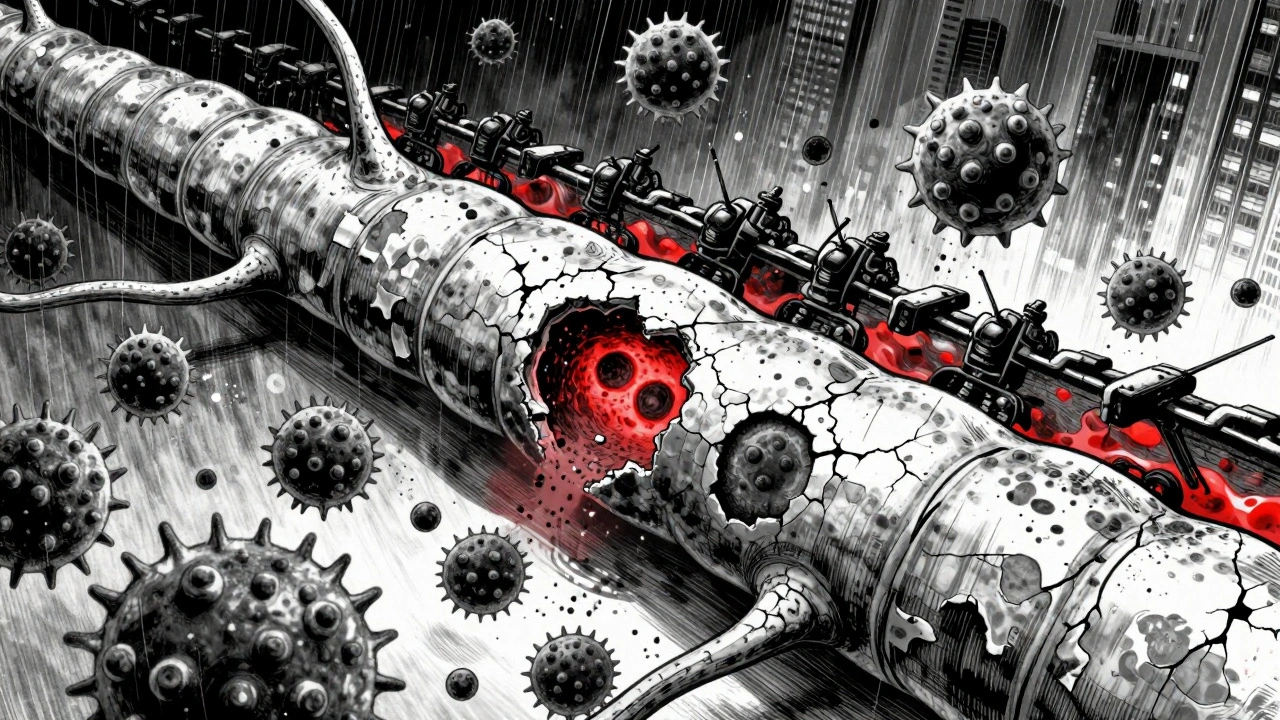
Multiple Sclerosis: How the Immune System Attacks the Nervous System
Multiple sclerosis is an autoimmune disease where the immune system attacks the nervous system, destroying myelin and disrupting nerve signals. Learn how it starts, what it does, and how modern treatments are changing outcomes.