
Expired Inhalers: Are They Safe to Use and What Are the Risks?
When you find an expired inhaler, a medical device designed to deliver medication directly to the lungs, often used for asthma or COPD. Also known as a rescue inhaler, it’s meant to give fast relief during breathing attacks. But if it’s past the date on the label, is it still safe to use? Many people keep old inhalers tucked in their bag, desk, or car, hoping they’ll work when needed. The truth? Most inhalers retain some potency for years after expiration—if stored properly. But that doesn’t mean they’re reliable.
Rescue inhalers, like those containing albuterol, are critical for sudden asthma attacks. If your inhaler is expired and doesn’t spray properly, you could be at serious risk. Studies show that after expiration, the dose delivered can drop by up to 40%, meaning you might get less than half the medicine you need. That’s not just inconvenient—it’s dangerous. Drug expiration dates, the date manufacturers guarantee full potency and safety under proper storage aren’t arbitrary. They’re based on testing, but real-world data shows many drugs, including inhalers, remain stable longer. Still, inhalers are different: they rely on pressurized canisters and valves that can leak or clog over time, even if the medicine inside is fine.
Medication potency, how strong and effective a drug remains over time matters most when you’re gasping for air. A 2020 study by the FDA found that some albuterol inhalers still delivered adequate doses up to 15 years past expiration—when kept dry and at room temperature. But that’s not a guarantee. Humidity, heat, and physical damage ruin inhalers faster. If your inhaler looks rusty, the spray feels weak, or it doesn’t make its usual hissing sound, don’t risk it. Replace it. Even if you’re out of money, many drug manufacturers offer free or low-cost replacement programs for people with chronic conditions.
Don’t confuse expired inhalers with expired pills. Inhalers are devices, not just medicine. Their delivery system fails before the drug does. That’s why you shouldn’t rely on an old one during an emergency. Keep track of your inhaler’s expiration date. Write it on the case with a marker. If you’ve used it more than the labeled number of doses, throw it out—even if the date hasn’t passed. And always have a backup. Keep a spare in your go-bag, your car, or at work. When your breathing is on the line, you need to know your tool works.
Below, you’ll find real stories and science-backed facts about how medications behave after their labeled dates, what happens when inhalers fail, and how to manage your respiratory meds safely—whether you’re using them daily or just in emergencies.
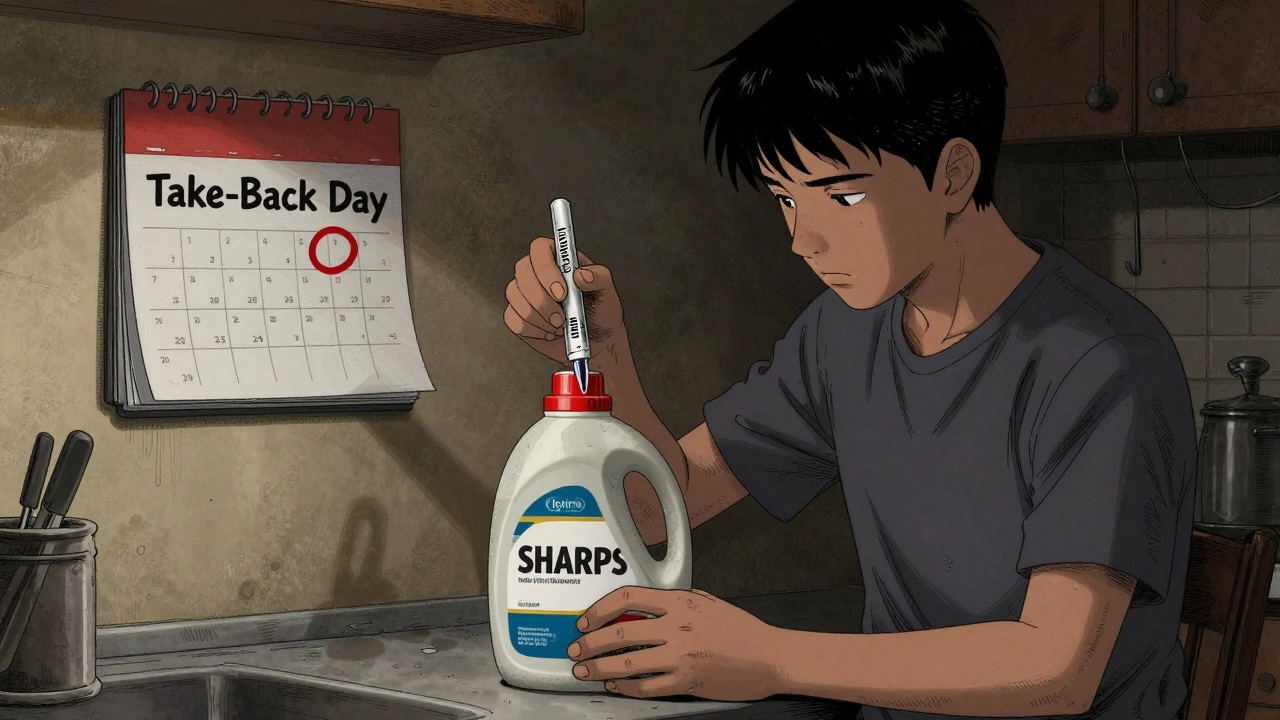
How to Safely Dispose of Expired EpiPens, Inhalers, and Patches
Learn how to safely dispose of expired EpiPens, inhalers, and medicated patches to protect your family, pets, and the environment. Follow FDA, DEA, and EPA guidelines for sharps, aerosols, and transdermal patches.