
Generic Drug Copay: How to Lower Your Prescription Costs
When you hear generic drug copay, the amount you pay out-of-pocket for a generic medication under your insurance plan. Also known as generic prescription cost, it’s often the first place people look to save money on meds. But here’s the truth: your copay isn’t always low just because the drug is generic. Some plans charge the same copay for generics and brand names. Others make you pay more if you don’t use their preferred pharmacy. And if you’re on Medicare or have no insurance? The sticker shock can be real.
That’s where prescription assistance programs, free or low-cost medication support offered by drug manufacturers come in. Companies like Pfizer, Novartis, and others run these programs to help people who can’t afford even generics. You can get up to 100% off your copay with a copay card, a discount card issued by drug makers that reduces your out-of-pocket cost at the pharmacy. These aren’t coupons—they’re official manufacturer tools, often accepted at major pharmacies like CVS or Walgreens. You don’t need to be poor to qualify. Many people with insurance still get help, especially for high-cost generics like those for diabetes, cholesterol, or autoimmune conditions.
But not all generics are created equal. Some, like seizure meds or blood thinners, have a narrow therapeutic index—tiny changes in dose can cause big problems. That’s why generic substitution, when a pharmacist swaps a brand drug for a generic without asking your doctor isn’t always allowed. Your doctor might block it if you’re on one of those sensitive drugs. And if you’ve noticed your generic looks different this month? That’s not a mistake. Multiple manufacturers make the same generic, and switching between them can sometimes cause side effects—even if the FDA says they’re identical.
So how do you actually lower your generic drug copay? Start by asking your pharmacist if there’s a cheaper generic version available. Check if your drug is on your plan’s preferred list. Use a copay card—you can find them on the drug maker’s website or through sites like GoodRx. And if you’re still struggling, apply for a patient assistance program. These aren’t hard to get. Most just need a form signed by your doctor and proof of income. No credit check. No bureaucracy. Just help.
It’s not about being lucky. It’s about knowing where to look. The system isn’t perfect, but you have more power than you think. Whether you’re paying $10 or $100 a month for your meds, there’s almost always a way to cut that cost. The posts below show you exactly how—real stories, real savings, and real steps you can take today to pay less for the drugs you need.
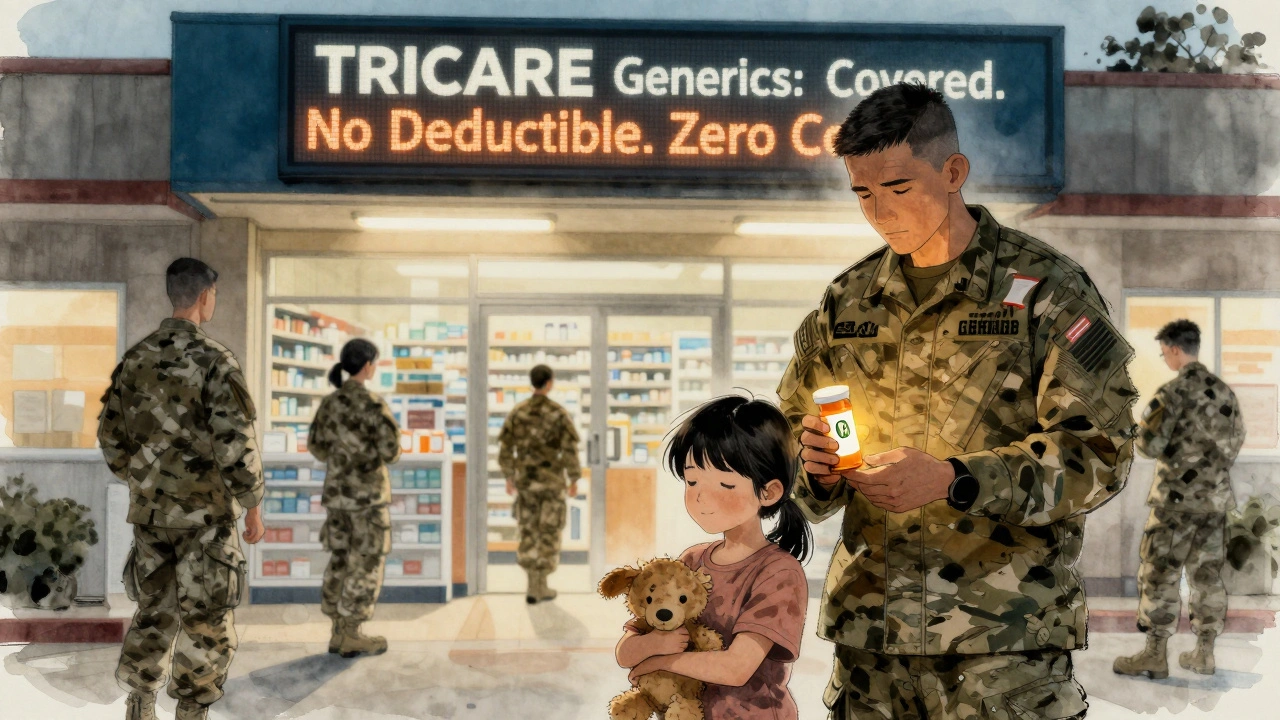
TRICARE Coverage for Generics: What Military Families Need to Know in 2025
TRICARE covers 92% of prescriptions as generics, with $0 copays at military pharmacies and $13-$16 elsewhere. Learn how to check coverage, avoid surprise costs, and maximize savings in 2025.