
Military Pharmacy: How Medications Are Managed in the Armed Forces
When you think of military pharmacy, the specialized system that provides, controls, and delivers medications to service members under extreme conditions. Also known as combat pharmacy, it’s not just about filling prescriptions—it’s about survival. In a combat zone, a soldier might need painkillers, antibiotics, or anti-seizure drugs within minutes. There’s no time for insurance forms or pharmacy waits. The military pharmacy system has to be faster, tougher, and smarter than civilian pharmacies—because lives depend on it.
This system works across three key areas: military medication protocols, standardized rules for drug use in field and garrison settings, VA pharmacy, the network that handles long-term care for veterans after service, and combat drug supply, the logistics of getting stable, shelf-stable meds to remote outposts. These aren’t separate systems—they’re connected. A soldier gets a prescription for PTSD in a forward operating base, then transitions to VA care after discharge. The same drug, same dosage, same tracking system. That’s the point.
What makes military pharmacy different? For starters, they use fewer brand-name drugs. Generics are the standard—because they’re cheaper, reliable, and already approved by the FDA. They also carry special formulations: crushable pills for soldiers who can’t swallow, liquid antibiotics that don’t need refrigeration, and auto-injectors for nerve agent antidotes. The battlefield pharmaceuticals, medications designed specifically for trauma, infection, and stress in combat are often developed with input from military medics and pharmacists working side-by-side.
And it’s not just about the drugs—it’s about the people. Military pharmacists aren’t just behind counters. They’re embedded in units, advising commanders on drug shortages, managing pain control during long missions, and preventing addiction before it starts. They track every pill issued, every refill, every side effect. That’s why the VA pharmacy system can pick up where the front lines leave off—because the data never stops.
You won’t find this level of coordination in civilian pharmacies. No one else has to ship insulin to a desert outpost or ensure a Marine with a traumatic brain injury gets the same mood stabilizer six months later in a VA clinic. Military pharmacy doesn’t just deliver meds—it delivers continuity. It’s the quiet backbone of troop health, from boot camp to retirement.
Below, you’ll find real-world insights into how these systems work—from the challenges of approving complex generics for troops, to how veterans access affordable meds through assistance programs, to why certain drugs are banned in service because of their side effects. These aren’t theoretical discussions. These are the stories behind the pills soldiers rely on every day.
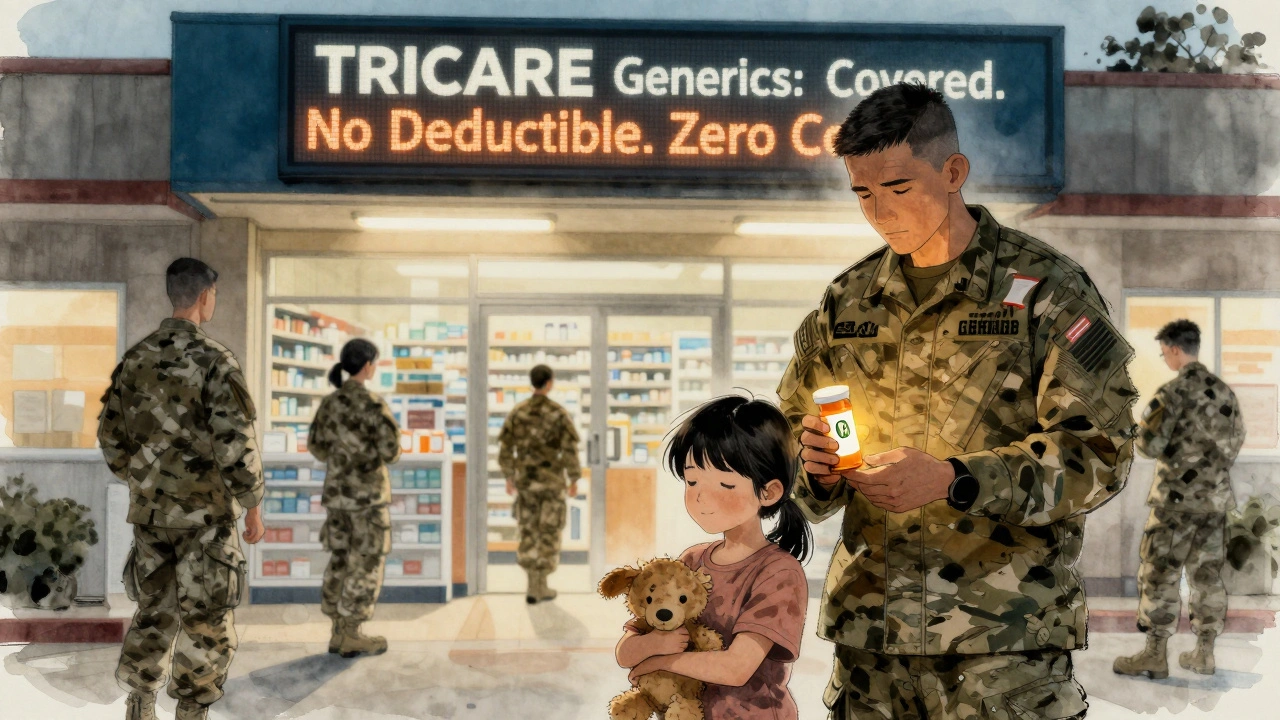
TRICARE Coverage for Generics: What Military Families Need to Know in 2025
TRICARE covers 92% of prescriptions as generics, with $0 copays at military pharmacies and $13-$16 elsewhere. Learn how to check coverage, avoid surprise costs, and maximize savings in 2025.