
Older Adults and Medications: Safe Use, Common Risks, and Smart Choices
When you're an older adult, a person typically aged 65 or older who may be managing multiple health conditions and medications. Also known as seniors, this group makes up a growing portion of prescription drug users—and faces unique risks because of how aging changes the body’s response to medicine. Your liver and kidneys don’t process drugs the way they did in your 30s. That means a pill that was safe at 40 might be too strong at 70. Even common over-the-counter meds like ibuprofen or sleep aids can pile up and cause dizziness, confusion, or falls. The problem isn’t the drugs themselves—it’s how they’re used.
Many drug interactions, when two or more medications react in harmful ways inside the body happen because older adults take five, six, or even ten pills a day. A blood pressure drug might clash with a painkiller. An antidepressant could make a heart rhythm medication dangerous. And if you’re taking something for arthritis, sleep, or acid reflux, you might not even realize it’s making your memory worse. medication safety, the practice of using drugs correctly to avoid harm, especially in vulnerable populations isn’t just about following labels—it’s about understanding how your body changes and asking the right questions.
It’s not all bad news. With the right info, you can cut risks and keep taking what you need. Many older adults successfully manage their meds by using pill organizers, keeping a simple list of everything they take (including vitamins and herbs), and checking with their pharmacist before adding anything new. Some drugs, like nitrofurantoin or tizanidine, need special caution if you have liver or kidney issues—both common in aging. Others, like statins or antihistamines, come in forms that are easier on the body as you get older. And knowing when a drug has expired—or even if it’s still safe to use—can save money and prevent confusion.
You’ll find real-world advice here on what works, what doesn’t, and what to watch out for. From how hydrophilic statins affect muscle pain differently than lipophilic ones, to why Clarinex might be better than older antihistamines for seniors, to how to build a go-bag with meds that won’t fail in an emergency—this collection cuts through the noise. No fluff. No marketing. Just what you need to stay safe, feel better, and take control of your prescriptions as you age.
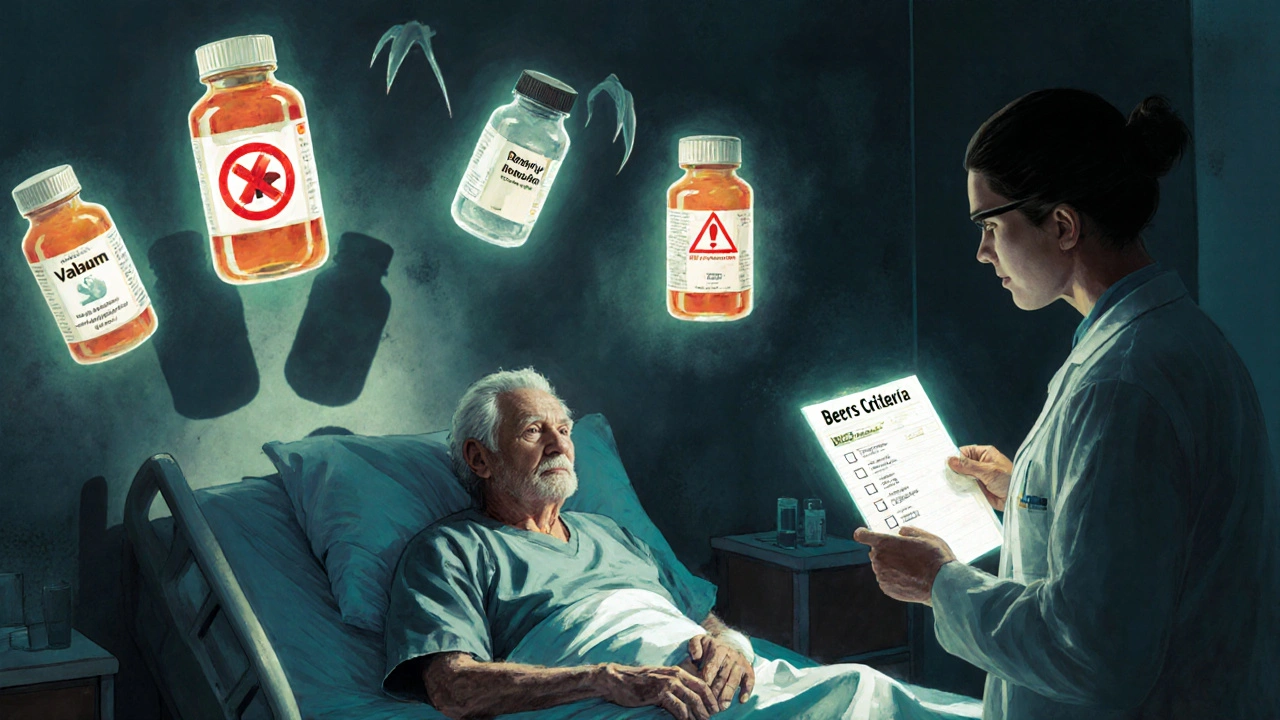
Beers Criteria: Potentially Inappropriate Drugs in Older Adults Explained
The Beers Criteria identify potentially dangerous drugs for adults over 65. Learn which medications to avoid, why they're risky, and how to talk to your doctor about safer options.