
Rescue Inhaler: What It Is, How It Works, and When You Need It
When your airways suddenly tighten and breathing becomes a struggle, a rescue inhaler, a fast-acting medication device used to open constricted airways during acute breathing episodes. Also known as a quick-relief inhaler, it delivers medicine directly to your lungs in seconds—often reversing symptoms before they become an emergency. This isn’t just for people with asthma. People with COPD, exercise-induced bronchoconstriction, or even severe allergies might rely on one too. It’s not meant for daily use—it’s your emergency tool, like a fire extinguisher for your lungs.
The most common medicine in a rescue inhaler is albuterol, a short-acting beta-agonist that relaxes the muscles around the airways. It kicks in within minutes and lasts 4 to 6 hours. Other options include levalbuterol or pirbuterol, but albuterol is the go-to because it’s effective, affordable, and widely available. These aren’t steroids—they don’t reduce long-term inflammation. That’s what your daily controller inhaler is for. A rescue inhaler doesn’t fix the root problem; it buys you time until you can get help or calm down.
Knowing how to use it matters just as much as having it. If you shake it wrong, inhale too fast, or don’t hold your breath afterward, you might not get the full dose. Many people think their inhaler is broken when it’s really just being used wrong. A spacer can help, especially for kids or anyone struggling with timing. And if you’re using your rescue inhaler more than twice a week (outside of exercise), your condition isn’t under control. That’s a sign to talk to your doctor—not to grab another canister.
Some people keep two on hand—one at home, one in their bag. That’s smart. Emergencies don’t wait. If you’ve ever felt your chest tighten during a walk, a workout, or even while sleeping, you know how fast things can go wrong. A rescue inhaler isn’t optional for those who need it. It’s a lifeline.
You’ll find posts here that dig into how these inhalers interact with other meds, what side effects to watch for, why some people overuse them, and how to tell the difference between a rescue inhaler and a maintenance one. There’s also info on when to call 911 instead of relying on the inhaler alone. This isn’t just about drugs—it’s about recognizing danger, using tools right, and staying in control when your breathing fails.
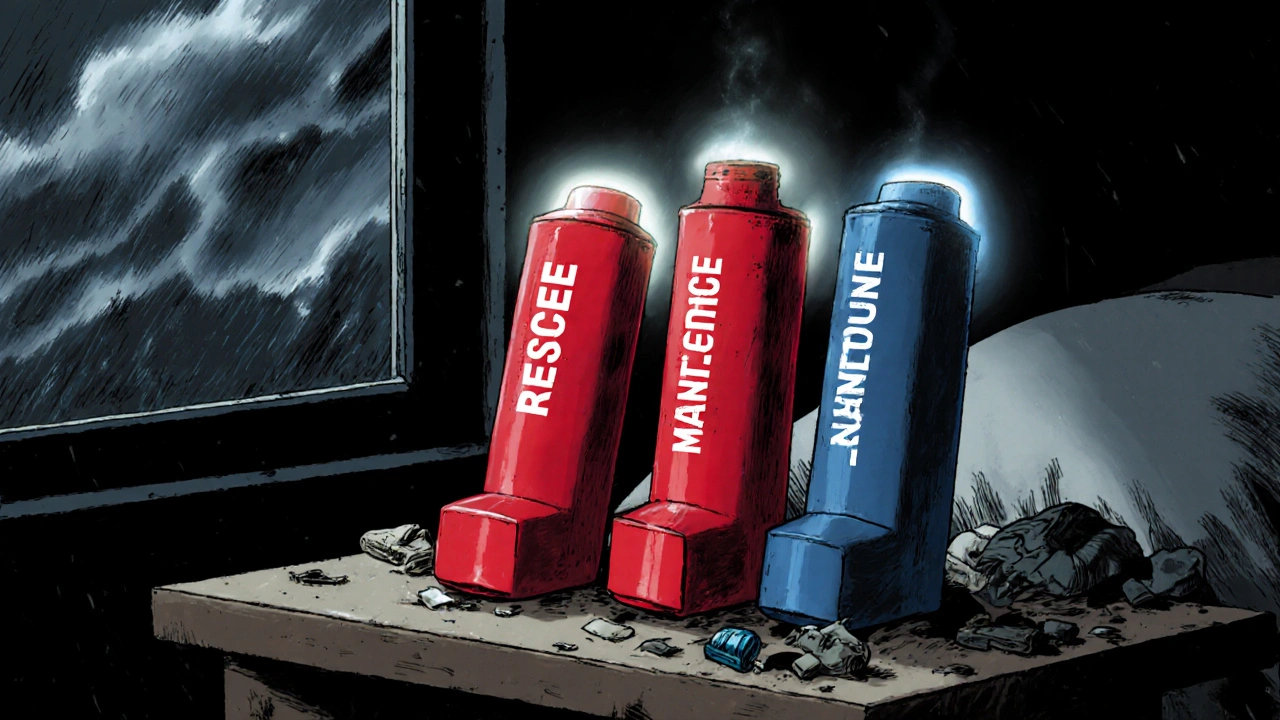
Inhalers Explained: Rescue Inhalers vs. Maintenance Inhalers
Rescue inhalers give quick relief during asthma attacks, while maintenance inhalers prevent symptoms by reducing lung inflammation. Knowing the difference can save your life.