
Sharps Disposal: Safe Ways to Handle Needles and Medical Waste
When you use a needle, syringe, or lancet, the job isn’t done until it’s safely thrown away. Sharps disposal, the process of safely discarding used medical needles and sharp devices to prevent injury and infection. Also known as needle safety disposal, it’s not just a rule—it’s a necessity for anyone using injectable medications at home, whether for diabetes, insulin, or other treatments. Improper disposal puts family members, trash workers, and even pets at risk. A single needle left in a regular trash bin can cause a needlestick injury, which might lead to serious infections like hepatitis or HIV.
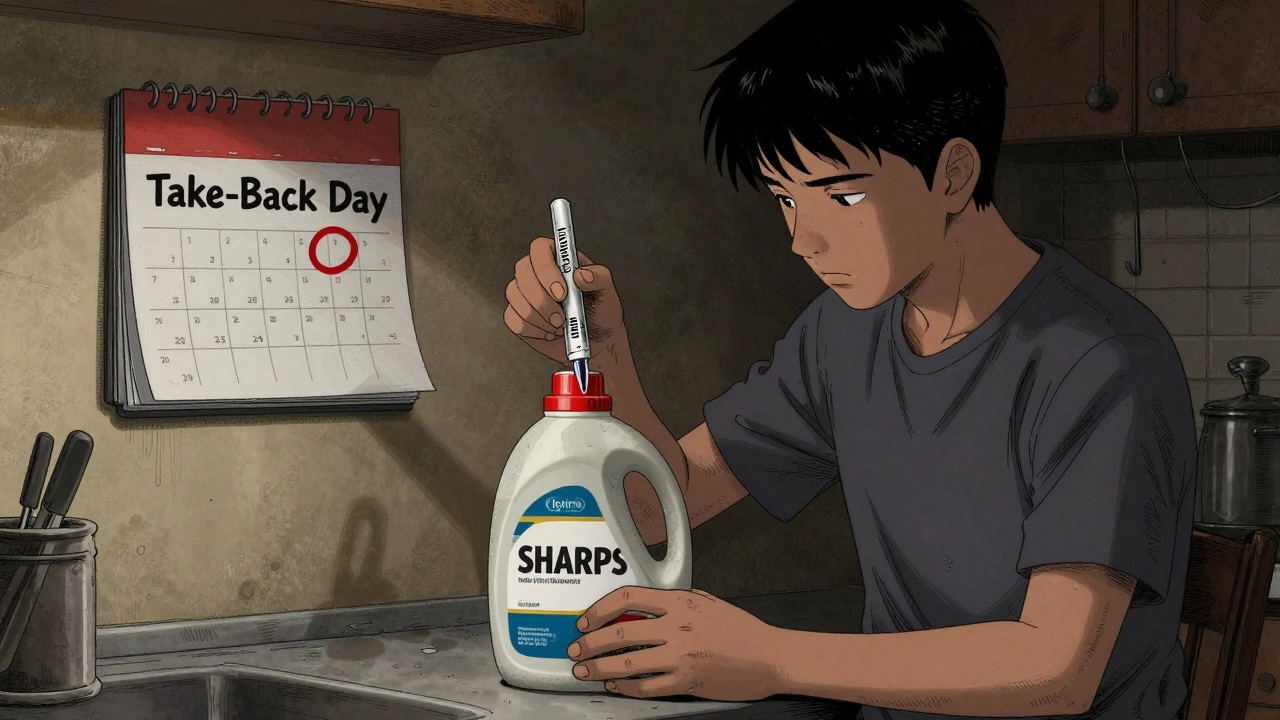
That’s why sharps containers, sturdy, puncture-resistant bins designed specifically for holding used needles and sharps are required by law in most places. These containers are usually red or labeled with a biohazard symbol, but you don’t need to buy a fancy one. Many pharmacies and health departments offer free or low-cost containers, or you can use a heavy-duty plastic bottle like a laundry detergent jug—just make sure it’s sealed tightly and labeled "Do Not Recycle." Medical waste, including used sharps, test strips, and other contaminated items can’t go in your regular trash unless your local rules say otherwise. Some areas allow sealed containers in household trash; others require drop-off at pharmacies, hospitals, or special collection sites.
It’s not just about the container. How you handle the sharp matters too. Never recap needles, bend them, or try to remove them from syringes. That’s how most injuries happen. After use, drop the sharp directly into the container—no fumbling. Keep the container out of reach of children and pets, and never fill it past the fill line. Once full, seal it with heavy-duty tape and write "Used Sharps" on the outside. Then check your city’s website or call your local health department to find out where to drop it off. Some places offer mail-back programs, others have permanent drop boxes at clinics or fire stations.
People with chronic conditions like diabetes rely on sharps every day. Over 37 million Americans use insulin, and most manage it at home. That means millions of needles are being used and disposed of weekly. If even a fraction of those aren’t handled right, the risk adds up fast. It’s not a "someone else’s problem"—it’s your responsibility, and it’s easier than you think.
Below, you’ll find real advice from people who’ve been there—how to store sharps safely, what to do if you accidentally get stuck, how to talk to your landlord or trash service about disposal, and where to get free containers. No fluff. Just what works.
How to Safely Dispose of Expired EpiPens, Inhalers, and Patches
Learn how to safely dispose of expired EpiPens, inhalers, and medicated patches to protect your family, pets, and the environment. Follow FDA, DEA, and EPA guidelines for sharps, aerosols, and transdermal patches.