
TRICARE Formulary: What Drugs Are Covered and How to Get Them
When you’re on TRICARE, the health program for U.S. military members, retirees, and their families. Also known as military healthcare coverage, it provides prescription benefits through a structured list called the TRICARE formulary, which determines exactly which drugs are covered and at what cost. This isn’t just a list of pills—it’s your roadmap to affordable, approved medications without unexpected denials or high out-of-pocket costs.
The TRICARE formulary, the official list of medications approved for coverage under TRICARE plans is built around safety, cost, and clinical effectiveness. It includes thousands of generic and brand-name drugs, but not everything. Some medications require prior authorization, step therapy, or are restricted to certain conditions. For example, if you’re on a chronic medication like carbamazepine or acitretin, you might need extra paperwork. But if you’re using a common generic like loratadine or desloratadine (Clarinex), you’ll likely get it with little to no hassle. The formulary also follows FDA guidelines closely, so drugs with black box warnings or those flagged in the Beers Criteria for older adults may be limited or require special review.
TRICARE’s formulary doesn’t just change randomly—it’s updated regularly based on new evidence, drug pricing, and input from military health experts. That’s why a drug covered last year might need prior auth this year, or why a generic version of a complex combination product might finally be approved. The same logic applies to medications like voriconazole for fungal keratitis or nitrofurantoin for UTIs—coverage depends on whether they’re listed as preferred, non-preferred, or excluded. If you’re using a statin, whether it’s hydrophilic or lipophilic can affect your copay, because TRICARE often favors the cheaper, equally effective option.
And here’s the thing: most people don’t realize that TRICARE formulary decisions are tied to broader trends in generic drug adoption. Thanks to the Hatch-Waxman Act and decades of FDA oversight, generics now make up the bulk of TRICARE prescriptions—saving billions. But that doesn’t mean every generic is automatically approved. Complex generics, especially those with drug-device combinations or narrow therapeutic indices, still face delays. That’s why you might see a gap between what’s available in pharmacies and what TRICARE will pay for. Prescription assistance programs from drug makers can help fill those gaps, especially if you’re on Medicare or have no other coverage.
Understanding your TRICARE formulary isn’t about memorizing a list—it’s about knowing how to ask the right questions. Is there a cheaper generic? Does this drug need prior auth? Are there alternatives that are preferred? The posts below break down real cases: how people got their medications approved, what to do when a drug is denied, why some generics are harder to get, and how to avoid surprises at the pharmacy counter. Whether you’re managing multiple sclerosis, GERD, or just seasonal allergies, this collection gives you the tools to navigate TRICARE’s system without guesswork.
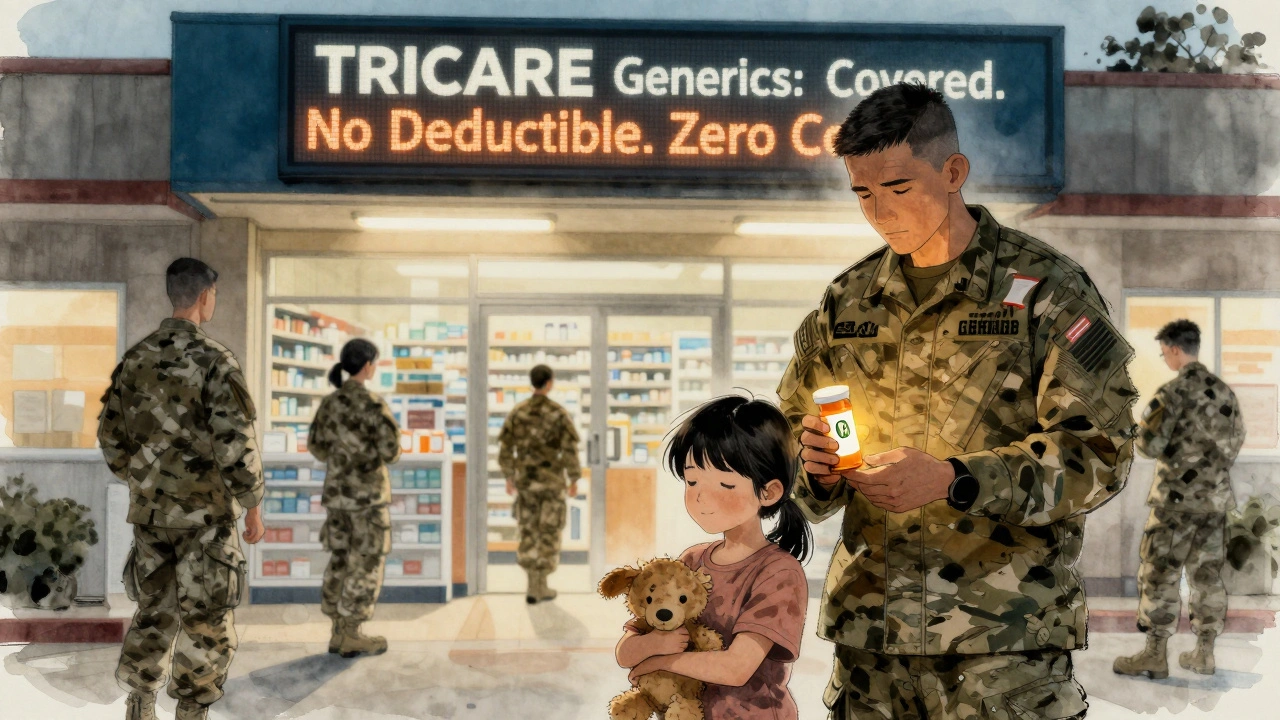
TRICARE Coverage for Generics: What Military Families Need to Know in 2025
TRICARE covers 92% of prescriptions as generics, with $0 copays at military pharmacies and $13-$16 elsewhere. Learn how to check coverage, avoid surprise costs, and maximize savings in 2025.