
TRICARE Prescription Coverage: What’s Covered and How to Save on Meds
When you or a family member rely on TRICARE prescription coverage, the health benefit program for U.S. military personnel, retirees, and their families. Also known as TRICARE pharmacy benefits, it’s designed to make essential medications affordable and accessible—whether you’re on active duty, retired, or a dependent. But not all drugs are treated the same. Some need prior authorization, others have higher copays, and a few aren’t covered at all. Understanding how TRICARE’s formulary works can save you hundreds—or even thousands—each year.
Many people assume all prescriptions are covered equally under TRICARE, but that’s not true. The program uses a TRICARE formulary, a list of approved medications grouped by tier. Also known as preferred drug list, it prioritizes generics and lower-cost brand-name drugs. For example, a common blood pressure pill like lisinopril might cost $5 a month, while a newer brand-name version could cost $150 unless you get an exception. If you’re taking a drug that’s not on the list, you can request a formulary exception, but you’ll need your doctor to prove it’s medically necessary.
Another big factor is where you fill your prescriptions. TRICARE has a network of pharmacies, including retail chains like CVS and Walgreens, plus its mail-order service. Using a network pharmacy cuts your copay significantly. If you fill a 90-day supply through mail order, you often pay less than you would for a 30-day refill at a local pharmacy. And if you’re on Medicare too, TRICARE For Life kicks in as a secondary payer, covering what Medicare doesn’t—often leaving you with zero out-of-pocket cost for covered drugs.
There are also programs to help if you’re struggling to pay. Prescription assistance programs, offered by drug manufacturers to help people afford high-cost meds. Also known as patient assistance programs, these can slash prices on drugs like insulin or cancer treatments—even if you have TRICARE. You don’t need to be uninsured to qualify. Many veterans use these alongside TRICARE to cover drugs that have high copays or aren’t on the formulary.
TRICARE doesn’t cover everything. Over-the-counter drugs, weight loss pills, and some fertility treatments are excluded. Even some common meds like certain antidepressants or erectile dysfunction drugs may require special approval. But if you’re on a chronic condition like diabetes, asthma, or multiple sclerosis, TRICARE generally covers the key treatments—especially generics. That’s why switching to a generic version, when possible, is one of the smartest moves you can make. The FDA says they’re just as safe and effective as brand names, and TRICARE rewards that choice with lower costs.
What you’ll find below are real, practical guides on how to navigate this system. From understanding why some generic drugs are harder to approve, to knowing when to ask for a formulary exception, to spotting which medications might trigger black box warnings—these posts give you the tools to make smarter choices. Whether you’re managing GERD, dealing with muscle spasms from tizanidine, or trying to cut costs on a chronic condition, the info here is built for people who use TRICARE—and want to get the most out of it.
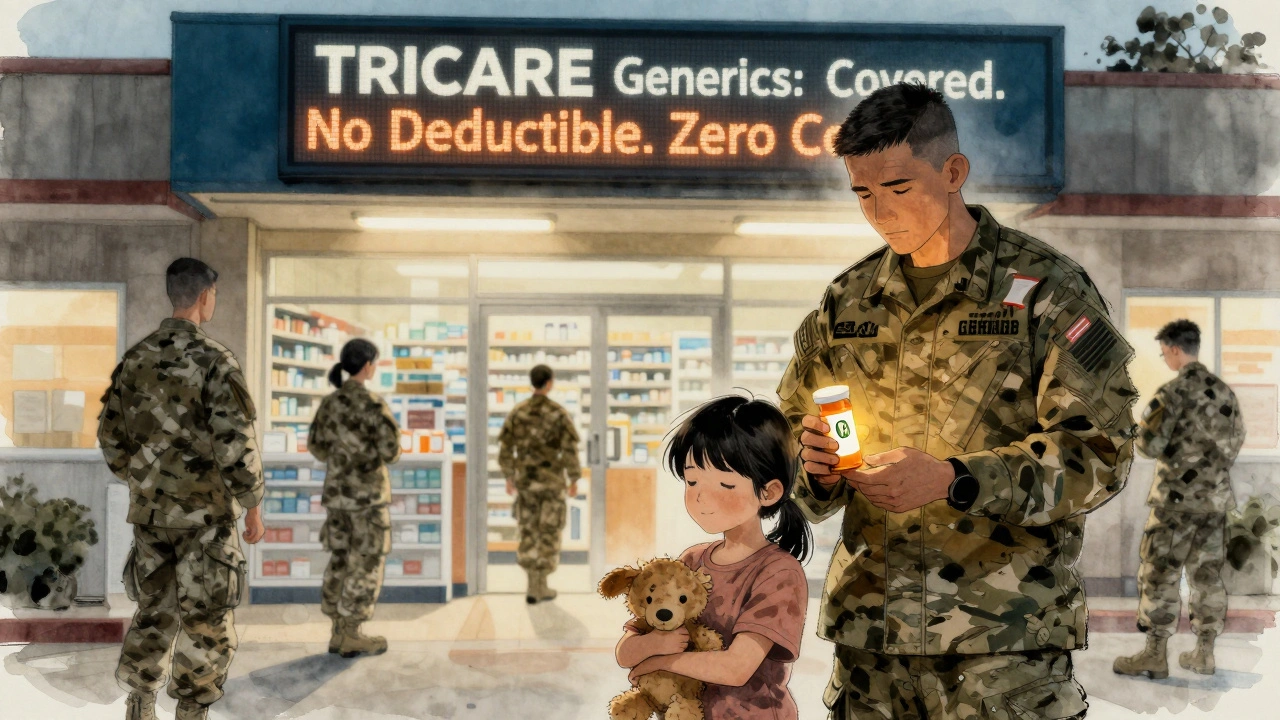
TRICARE Coverage for Generics: What Military Families Need to Know in 2025
TRICARE covers 92% of prescriptions as generics, with $0 copays at military pharmacies and $13-$16 elsewhere. Learn how to check coverage, avoid surprise costs, and maximize savings in 2025.